Frisbee Dog!

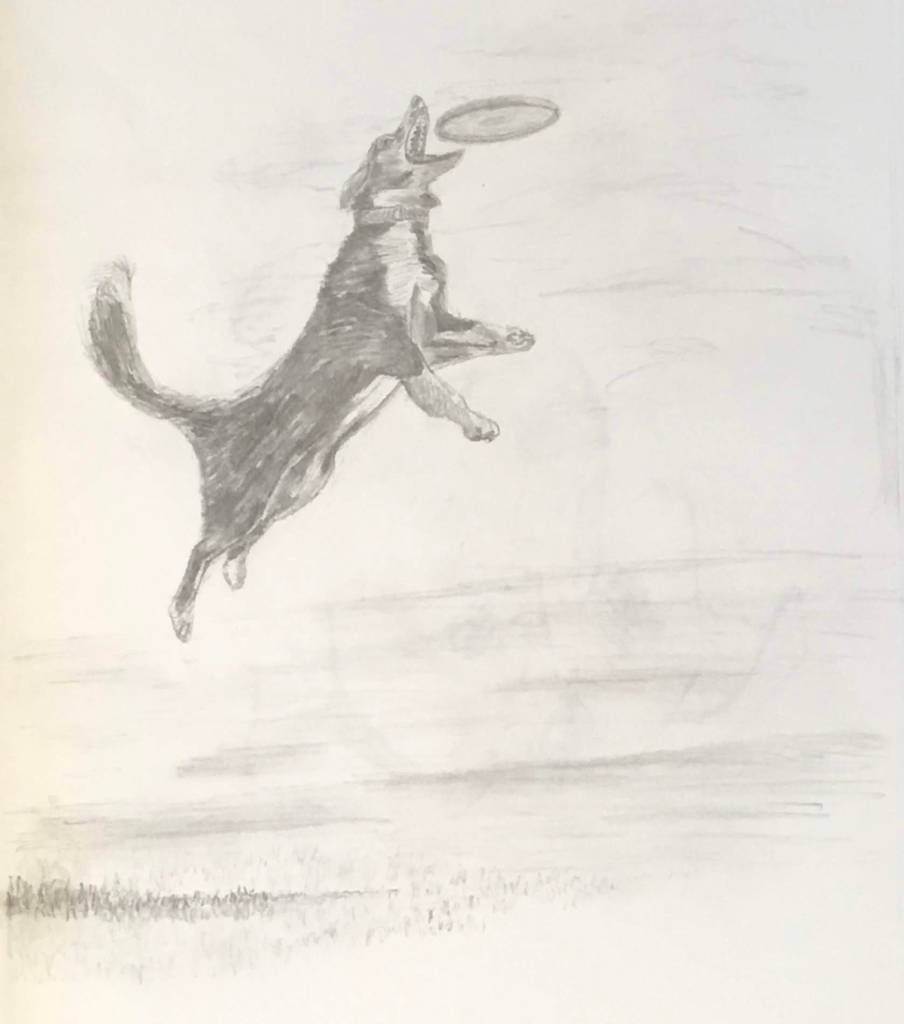
Frisbee Dog | Graphite on Paper

One of my dogs, Zip, is obsessed with 2 things in life: food and anything thrown. I used to think her love was exclusive to tennis balls, but over the years I’ve learned that not unlike her willingness to eat anything thrown into her food bowl, she will retrieve anything thrown across her yard. The day she trained me to sling a frisbee was a fond day indeed… for both of us. It’s her insatiable drive (dare I say “lust”?) to retrieve that inspired this drawing of Frisbee Dog

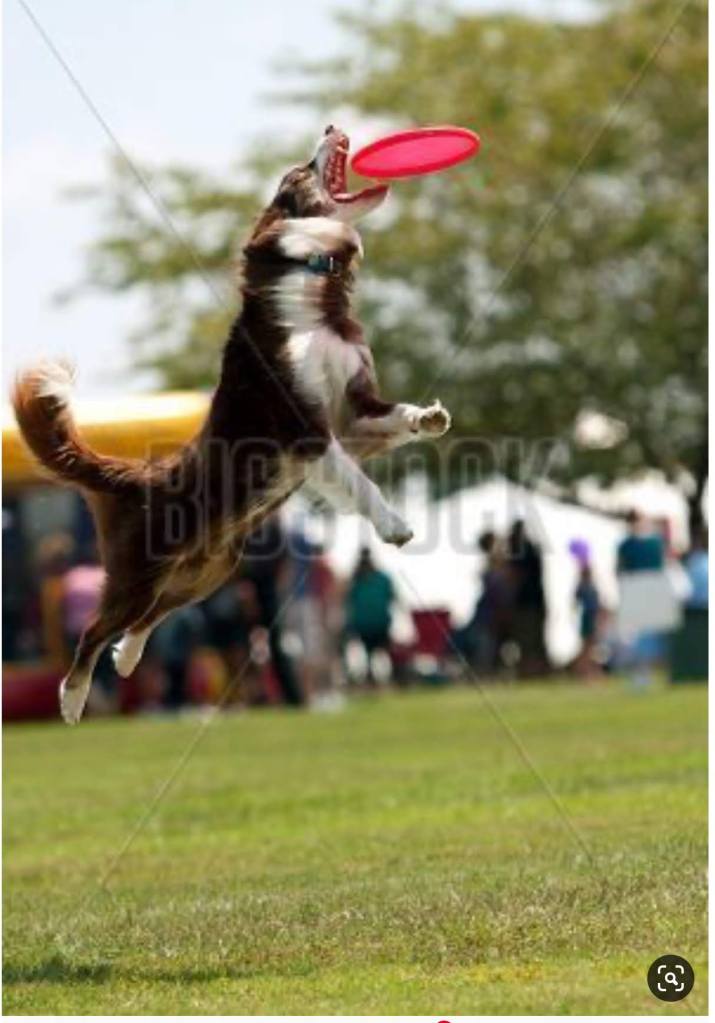
No, this is not Zip, but the reference photo captures all the key elements of a dog in motion doing her thing. The face is particularly tricky, in large part because it’s obscured and squinty, which mutes distinguishing features like eyes and ears. But you gotta love the open mouth and all those frisbee hungry teeth! 

The gallery includes a reference photo and two versions of the drawing. Granted, the drawing is a rough study and not intended to be a refined composition, I thought it was interesting to see how different photo settings can change the look and feel of a piece of art. Using the same source photo of the final drawing, one is set to sharper detail while the other uses a soft setting to remove some of the detail of the pencil strokes. Bear in mind this drawing is done in my sketch book on thin, see-through pages; there’s not a lot of teeth in the paper, thus the relatively rough nature of the drawing. Also, the entire piece was done with only 3 pencils – 2B, HB, and H. 
I think this type of subject would make for a good painting.

I’ll try a few more drawings of frisbee dogs and then make the jump to the canvass. 

Squirrel Watch

Pivoting from painting to drawing last week and finally made the time to finish this one. Squirrel Watch is pretty self explanatory – Wolfgang, my 3 year old rescue mutt, sitting in the yard watching the tree tops for the infiltrators! 

One of my artistic goals this year is to improve my dog related art skills. I’m not a big fan of dog portraits, however, I thoroughly enjoy what I like to call “dogs doing stuff”, creating intrigue through motion and activity. Over the coming months I’ll work on various dog related pieces that capture the essence of dogs being dogs as they do their thing. 

Squirrel Watch | graphite on paper

Squirrel Watch was done over the course of a few weeks – I have no idea how long it took, but I wouldn’t be surprised if I spent 6 hours on this relatively small piece. There were a lot of mistakes along the way, but nothing an eraser and some patience couldn’t remedy. 

This isn’t a piece I would frame and hang, but I’m pleased with it from a progress perspective. It’s also riddled with lessons learned, so if you zoom in to see the details you can spot various styles and techniques.

Here’s what I learned and need to remember for future drawings:

  • It’s not necessary to draw hair detail throughout the subject. In this piece, the emphasis should have been on shading and shape foremost, whereas hair detail should be secondary. 
  • Draw hair details with a clear understanding of actual direction of the hair on the dog.
  • Work hair dark to light. 
  • Most of the hair detail can be accomplished using 2B, HB, and H pencils.
  • Show wrinkles in the coat by changing the density of hairs, i.e. closer together or further apart.
  • Dog paws are hard to draw, dammit! 
  • Blades of grass can be done by either individual strokes or by lifting out shading with a thin eraser. 

PB&K

Say hello to PB&K the latest addition to the Dog Toys series, although it might be more appropriate to start a new sub-category called “Cheeky Still Life”.

The Kong was done with a painting knife to give it the subtle texture of a well worn, go-to Fido favorite. As any dog lover would attest, especially the big chewers, a peanut butter stuffed Kong is a great source of entertainment… and protein. Even the most hearty chewers have trouble putting a dent in one of these rubber wonders, but they do lose their sheen and get a roughed up look over time. By contrast, the (creamy) peanut butter and the remainder of the composition is all impasto-free brushwork.

Ultimately, the intent of the composition is to make every dog parent look, nod, and laugh at the reality of what we’re all willing to do for our lovable canine companions.

  • Oil on canvas paper, 8″x10″
  • Palette knife and an array of brushes (rounds and flats)
  • Key colors
    • Peanut Butter – Yellow Ochre, Naples Yellow
    • Kong – Ivory Black + Ultramarine Blue, Burnt Sienna + Ultramarine Blue

A Stuffed Kong and Its Dog

I recently saw a question on Quora asking “when does drawing end and painting begin?”, which was a timely inquiry given a new approach I’ve been taking with some recent paintings. It’s always a bit tricky and, frankly, pretty intimidating to take on a new type of composition. For me, that tends to be something that involves shapes and/or subject matter that’s new or unfamiliar. In one of my current projects, A Stuffed Kong and Its Dog, I came to realize that while the subject of a dog toy was not a new compositional challenge, the complexity of a dog chewing and pawing something was really friggin’ hard!

My normal process, and what’s been reinforced at workshops by artists far more experienced and talented than myself, is to do a study of the subject to help get a feel for the composition (see Dances With Squirrels blog post for more on studies). I prefer sketching as opposed to small paintings, largely because I like to sketch, it’s more expedient than painting, and it’s more flexible, i.e. erasing graphite is infinitely easier than wiping out paint. Lately, however, I’ve been refining this process whereby I still do an initial sketch before starting the painting, but as I work through the project and run into challenges, I go back to the sketch and either do another or simply refine the one I was working on earlier.

In hindsight it’s frankly a brilliant idea, of which I don’t have many, because the pause from the painting a) makes me breathe as I gather my thoughts to overcome the problem, and b) let’s me return to an existing sketch and figure out how to navigate a solution based on a similar composition. What I’ve found thus far is that I often find the same problem in the original sketch, kicking myself for not having seen the problem in the first place, but I can quickly figure out how to make changes and move forward.

In A Stuffed Kong and Its Dog, you can see the original sketch being reworked (I forgot to take a picture of the original state of the sketch) when I ran into 2 problems. First, there was something fundamentally wrong with the Kong dog toy shape, which became clear when I returned to the sketch and saw that the bottom planes of the humps were misaligned. Secondly, I thought the size of the Black Lab’s right paw was too big once I painted it, but when I returned to the sketch and redrew it, I found that the size was actually fine and the issue was the related to the size of the black fur shadow gaps between the toes. Clear as mud, right?

The final painting will need a few minor refinements, but I want to let it dry before I make those updates. I’ll update this post when it’s really done. The intrigue with this piece is to make the viewer wonder what in the world is in that stuffed dog toy Kong! It was very hard to translate the focus and excitement of the dog as it diligently worked to get to the yummy treats out of this toy. While the focal point is the Kong, the supporting cast is the nose and that huge right paw, which in combination should convey the canine treat obsession.

Lastly, I’m not pleased with the sketch or the painting. The sketch is not supposed to be a finished work, and is muddled with various experiments to see what was going to work, so I’m. not flustered it. However, the finished painting, while not intended to be a refined piece of exceptional artwork, is ultimately a composition that doesn’t work well. The angle of the nose looks wrong relative to the muzzle, but it’s actually accurate as most dogs are able to bend that nose around in weird ways. That said, it doesn’t convey well in the painting. The large paw also creates visual confusion and seems out of place even though it’s proportionally accurate.

This exercise has taught me that all compositions aren’t destined for a “real painting”, but that’s why we do studies and small pieces to see how it plays out. I’ve also learned that my dog portrait skills need a lot of work, something I knew already, but this work has highlighted the gap and is proving to be quite motivating to start sketching my dogs’ faces!


Dances With Squirrels

Dances With Squirrels (study)
6″x8″, Oil on canvass paper
This simple study piece is done, although I invested more time in the composition than originally planned. I rarely do a study as a painting (if you’re not familiar with the term “study” in this context, here’s a short summary on Wikipedia here), opting for a drawing instead (which I had already done previously, as noted in the Meteors and Squirrels post last week), but my goal was to practice the brushwork needed to capture a dog in motion from a short distance. I also wasn’t sure how well this composition would translate to the canvass. I learned a lot in this exercise. 

First, I was surprised that the dog (Wolfgang) portion of the painting wasn’t very difficult, probably due in part to the various practice sketches done previously. The trick was to apply the darker parts of his coat last, which might technically be incorrect, but it was easier to manipulate the black shapes on his coat if it was the last step.
 
There are a number of compositional changes that will need to be made for the “real” piece:
  • The fence was both boring, distracting, and worst of all had many of the same values and hues of the trees and the dog, which made it hard to work into the layout effectively. I think the fence will be removed going forward. 
  • The trees were tricky from a color perspective. In real life, they’re a weird gray black, basically a color graveyard, so making them interesting took time. The other problem, which I haven’t yet solved, is ensuring their coloring isn’t too similar to the Wolfgang’s black and golden brown coat. 
  • ​The coloring of the grasses are fine, but the shadows will need more attention in a formal composition. They’re a real highlight of the work because they give a more comprehensive feel of the height and breadth of the tree tops, which are out of the frame.
  • Last but not least, that pesky squirrel. I was so focused on how to paint the dog that I hadn’t given any thought to the squirrel. Have you tried to paint a squirrel? The good news is that my lack of practice painting rodents might have worked to the benefit of the composition because the squirrel is very hard to see against the light blue sky background, so the viewer has to follow the gaze of the dog to find the squirrel. And there’s our compositional intrigue!
I’m going to wait a few weeks before firing up an actual painting based on this study, but I think it’ll be an eye catching, tall, narrow canvass layout that should be fun to create.
Thanks for visiting! ​

Meteors and Squirrels

It’s been a couple months since I worked multiple pieces simultaneously. I like having the ability to bounce between works in progress for a number of reasons, not the least of which is the fact that alternating allows me to shift gears and keep my focus fresh on the piece in front of me, rather than getting burnt out banging away on the same composition for multiple days. Thus far in 2020 I’ve been working on small pieces that don’t take a long time to finish, so I’ve not had the opportunity to work in parallel. Well, that changes this week​, means blog updates will have more progress updates along the way and not necessarily include the finished product in a singular post.  
 
Last week I started 2 new pieces. I’m still waiting for inspirational names, but for now we’ll call them Meteor Spray and Squirrel Dancing Meteor Spray is an actual Mars meteor impact crater, which will be a mix of realism and abstraction. Compositionally I’m already excited, in large part because the splatter inspired block-in stage turned out to be damn near good enough to stand on it’s own as a monochromatic painting. The colors in the reference photo are wild, but might be tricky to replicate. The plan will also incorporate knife work and impasto to build up the texture of the Mars surface. This is a larger piece, oil on canvass board, 24″x30″. 

 
Back on planet Earth, Squirrel Dancing is a study more than a formal composition, at least for now. I want to improve my skills in painting dogs in motion, so the study will focus heavily on the body language of the dog in an effort to capture an element of motion that gives the piece intrigue. In the case of Squirrel Dancing, the focus is the dog ready to spring into action when the squirrel makes a move. I’ve included a couple of sketches that helped me get a handle on the composition structure. Based on these sketches, I opted for the zoomed out approach that captures the height and separation between the taunter and the taunted. The painting study is 6″x8″ oil on paper. Before painting Wolfy into the study I did a small practice version before committing it to the composition – see the picture with these side by side. 

 
I’ll keep working on these 2 pieces over the coming week. Stay tuned!