In the Old Fashioned Way… Plus Smoke

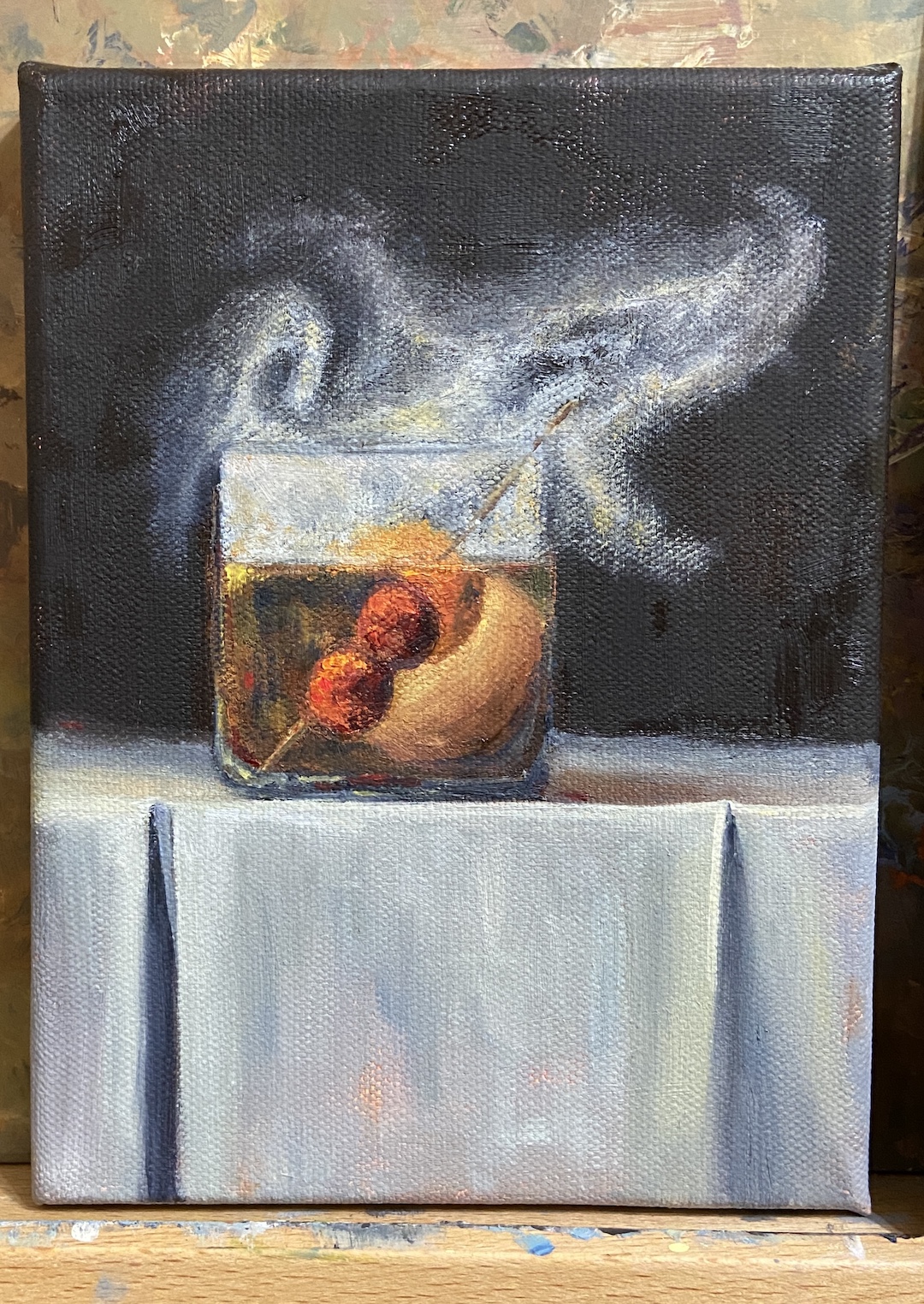
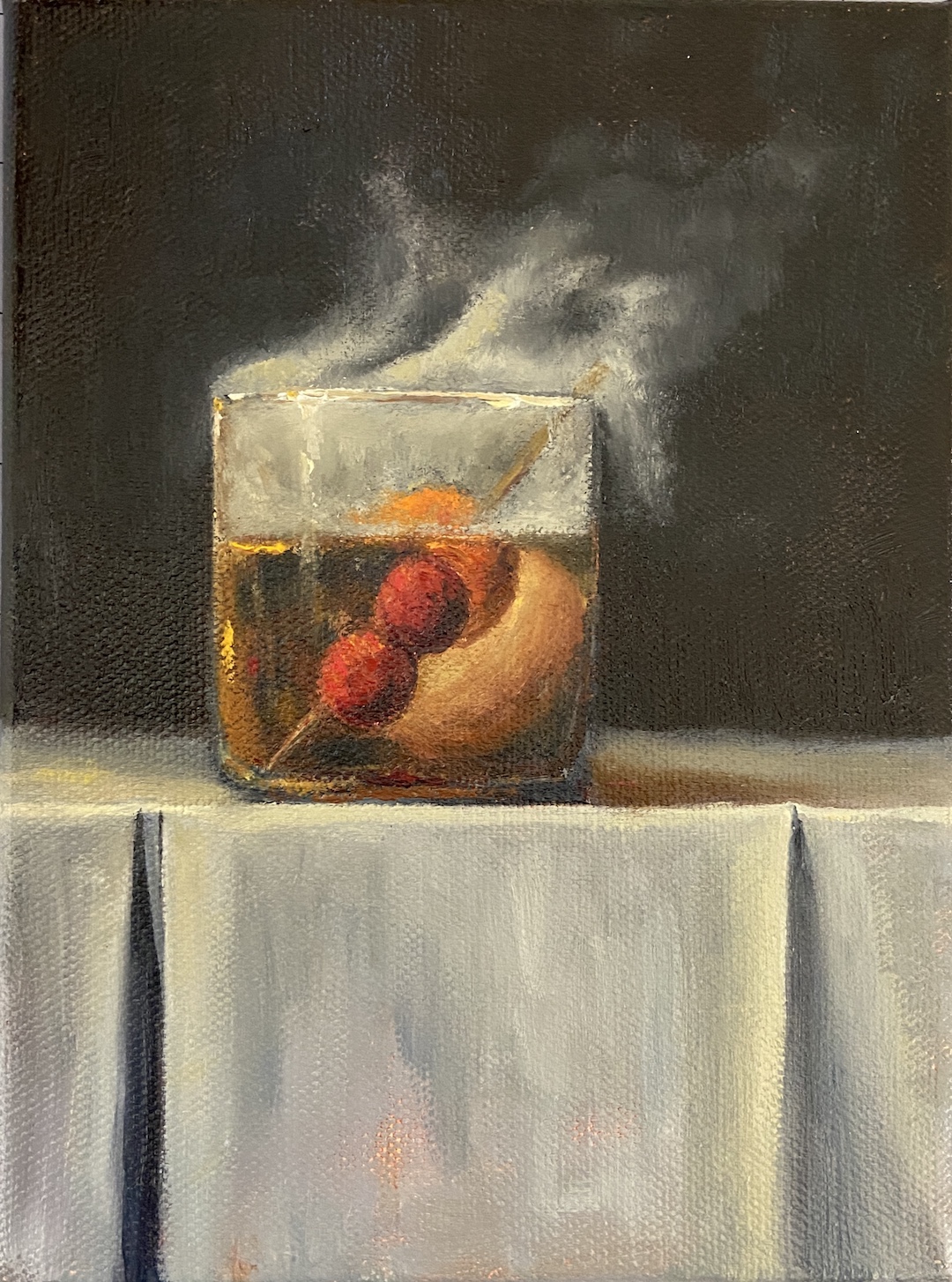
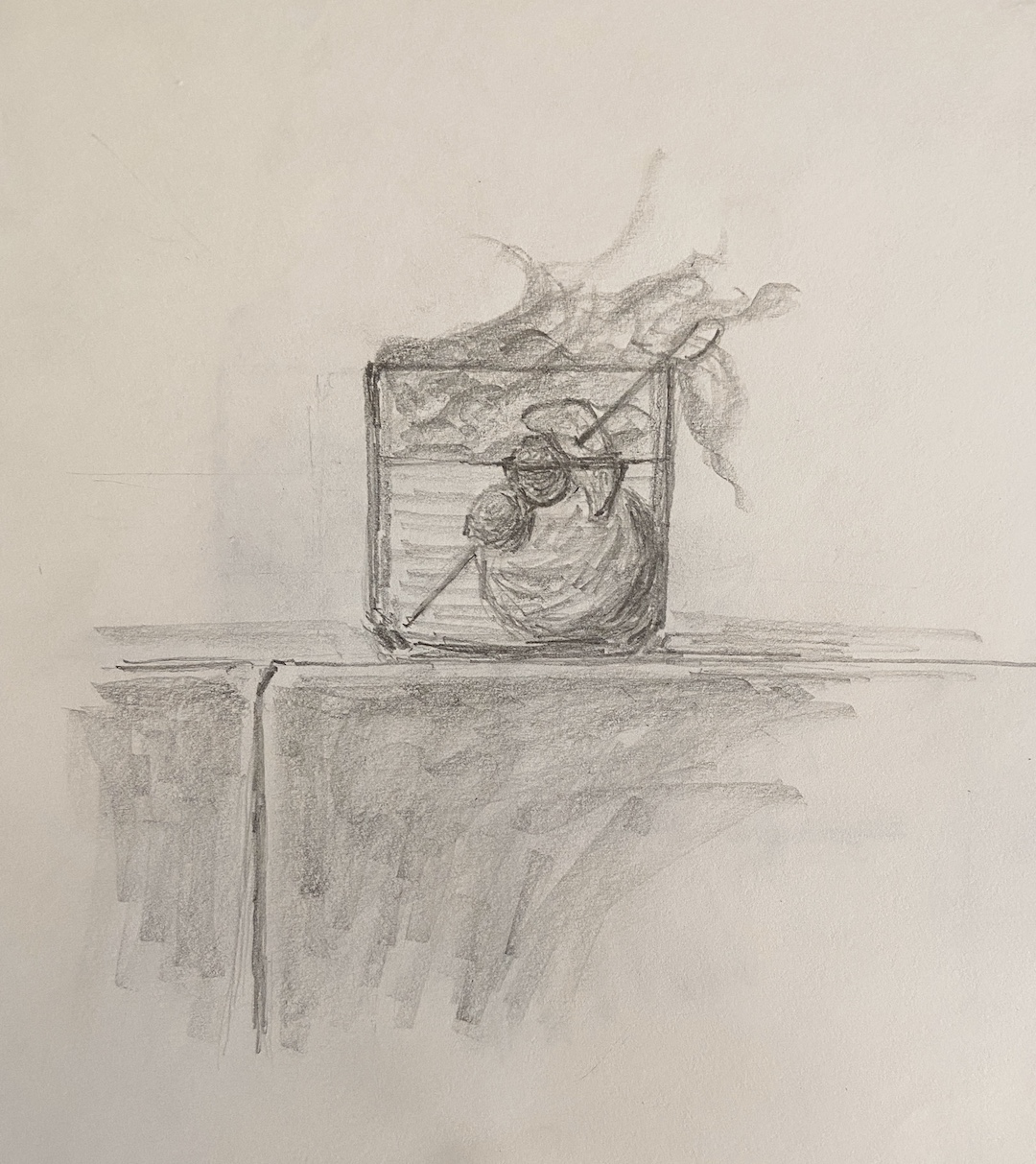
SMOKY OLD FASHIONED | Oil on Canvas | 6×8″

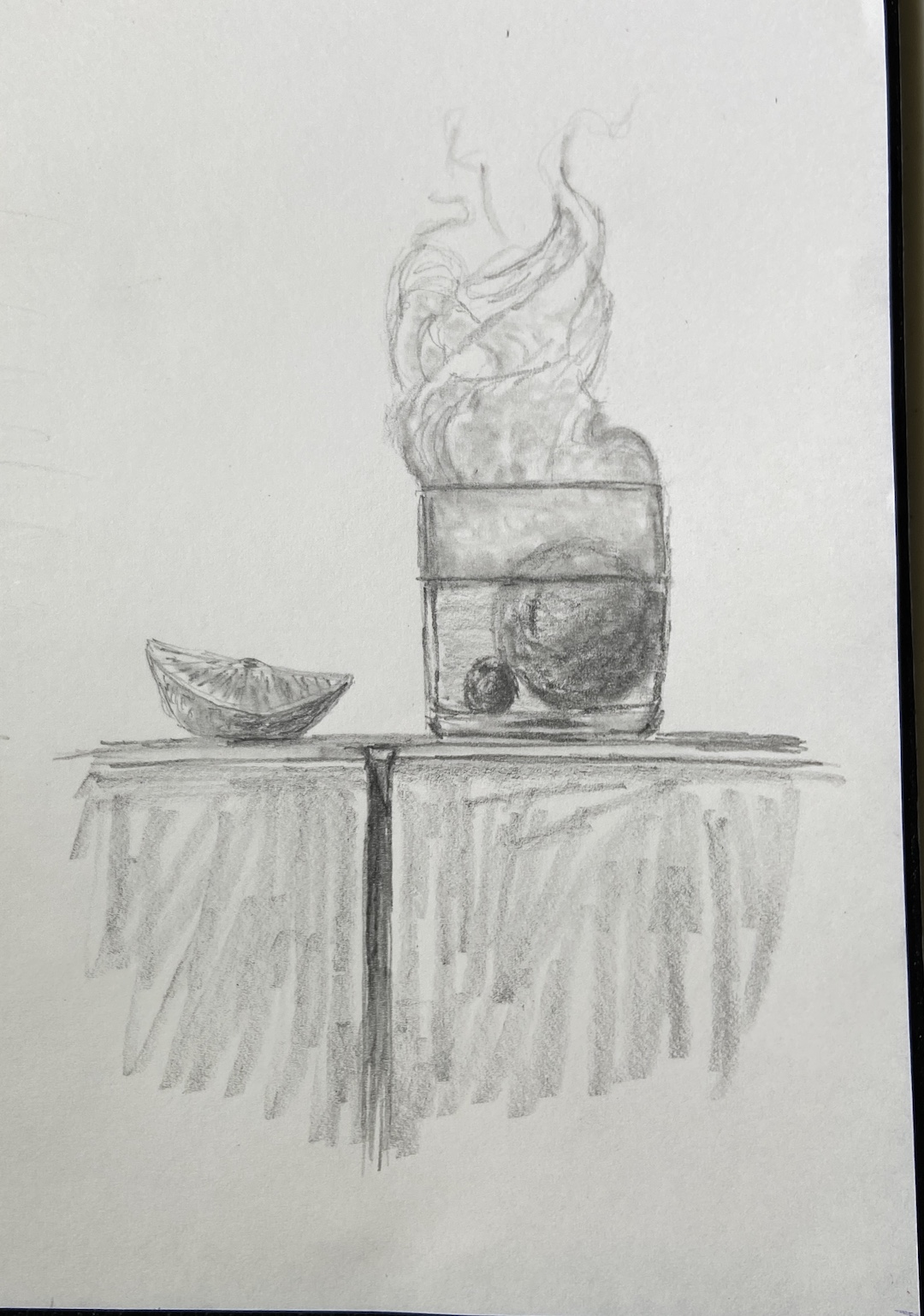
SMOKY OLD FASHIONED is a recent commission piece, something I love doing, especially when it’s for a gift or something sentimental. In this instance, the painting is for a gift for someone who apparently has everything. Painting to the rescue! 

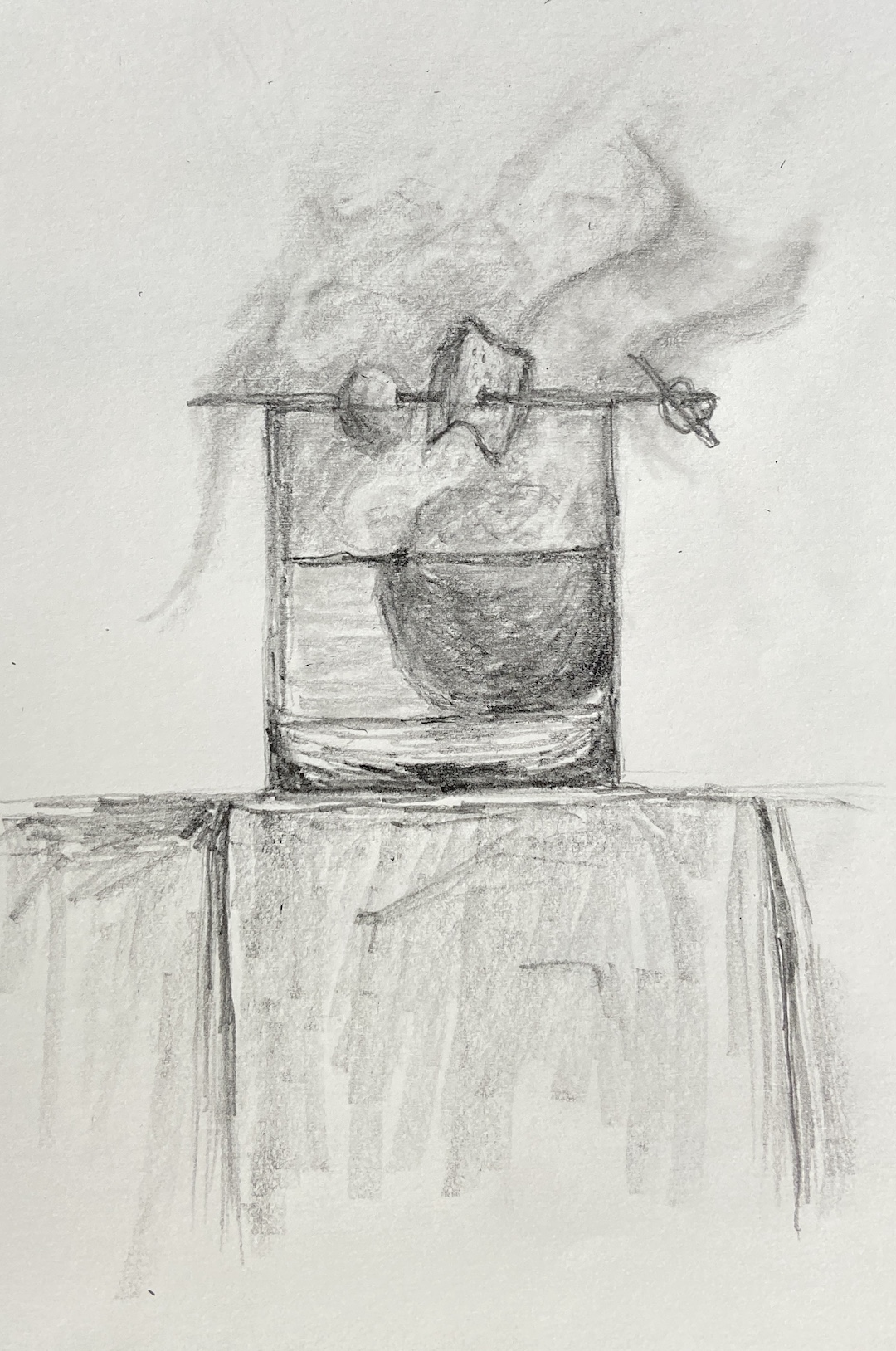
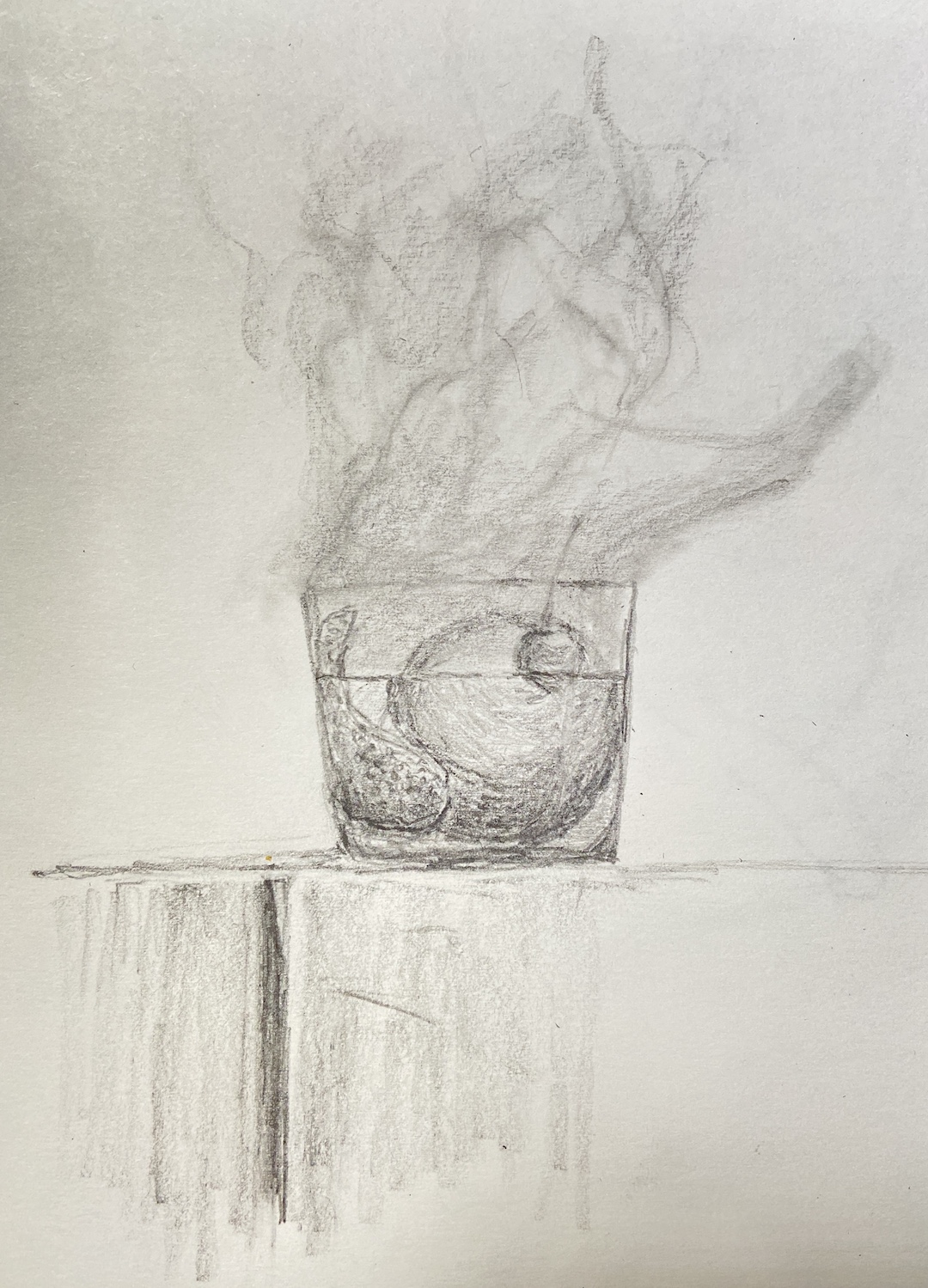
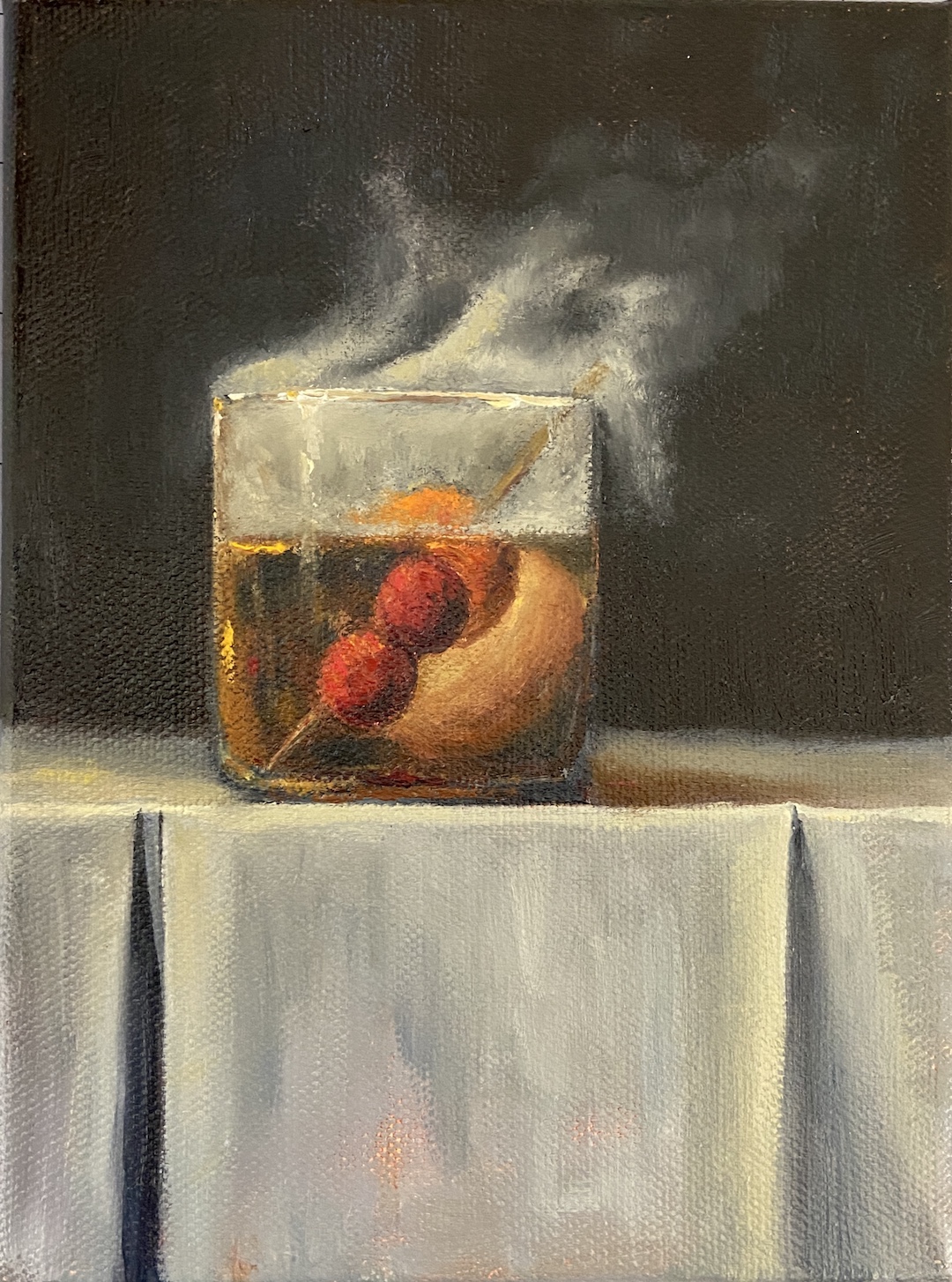
My process for custom work involves a number of preliminary discussions followed by sketches that give compositional options. Just like blocking in the value structure of the actual painting is key to a good outcome, with a custom piece, coming to an agreement on the core elements and structure of the composition is vital. 
I’ve painted a number of libation-based still life compositions, but nothing with smoke. It required me to investigate if painting smoke was similar to creating fog, mist, or larger fire-based plumes.

The answer, it turns out, was an emphatic NO! It seems that once you pump smoke into a cocktail glass, weird shit happens and it becomes lifelike and animated. Looking at reference photos further complicates matters, introducing possibilities of upward windy smoky tendrils, or smoky bits that spill over the edge toward the table. Come to discover both of these considerations are smoked red herrings! Smoky tendrils are “fresh” burning anomalies, and the only smoke that sinks seems to be dry ice based smoke, which you can imagine is in a lot of cocktail glamour shots. 

The trick with this piece was clearly… smoke! But before getting to that challenge, there was the issue of compositional tension. Technically, an Old Fashioned isn’t so much a cocktail as an origins story of composition. The Meehan’s Bartending Guide, my personal true North for all things cocktail, notes “the cocktail was first defined on May 6, 1806, in The Balance and Columbian Repository as ‘a stimulating liquor, composed of spirits of any kind, sugar, water and bitters’. By the time it showed up in a professional bar manual for the first time in Theodore Proulx’s 1888 The Bartender’s Manual, it was already “old-fashioned”.” My personal preference is rye whiskey, simple syrup, bitters, 1 cherry and an orange twist. Now back to the painting…

The request for this piece was to incorporate Luxardo cherries, orange peel, and a large round ice cube. Figuring out how best to structure this as a piece of art was trickier than I thought, even without the smoke. Once you put all that stuff into a lowball glass, it’s impossible to not notice the tension of so many things jammed into a small space. To tackle this problem we simply talked through various sketches that presented different solutions, and we ultimately landed on cherries on a toothpick, angled into the glass, orange peel also on the toothpick but above the whiskey line, and lastly a demotion of the round ice to the background. As a pleasant surprise, once the smoke was added, it significantly improved the compositional structure because it broadened the view and seems to have further reduced the tension, essentially granting the viewer a larger viewing room. 
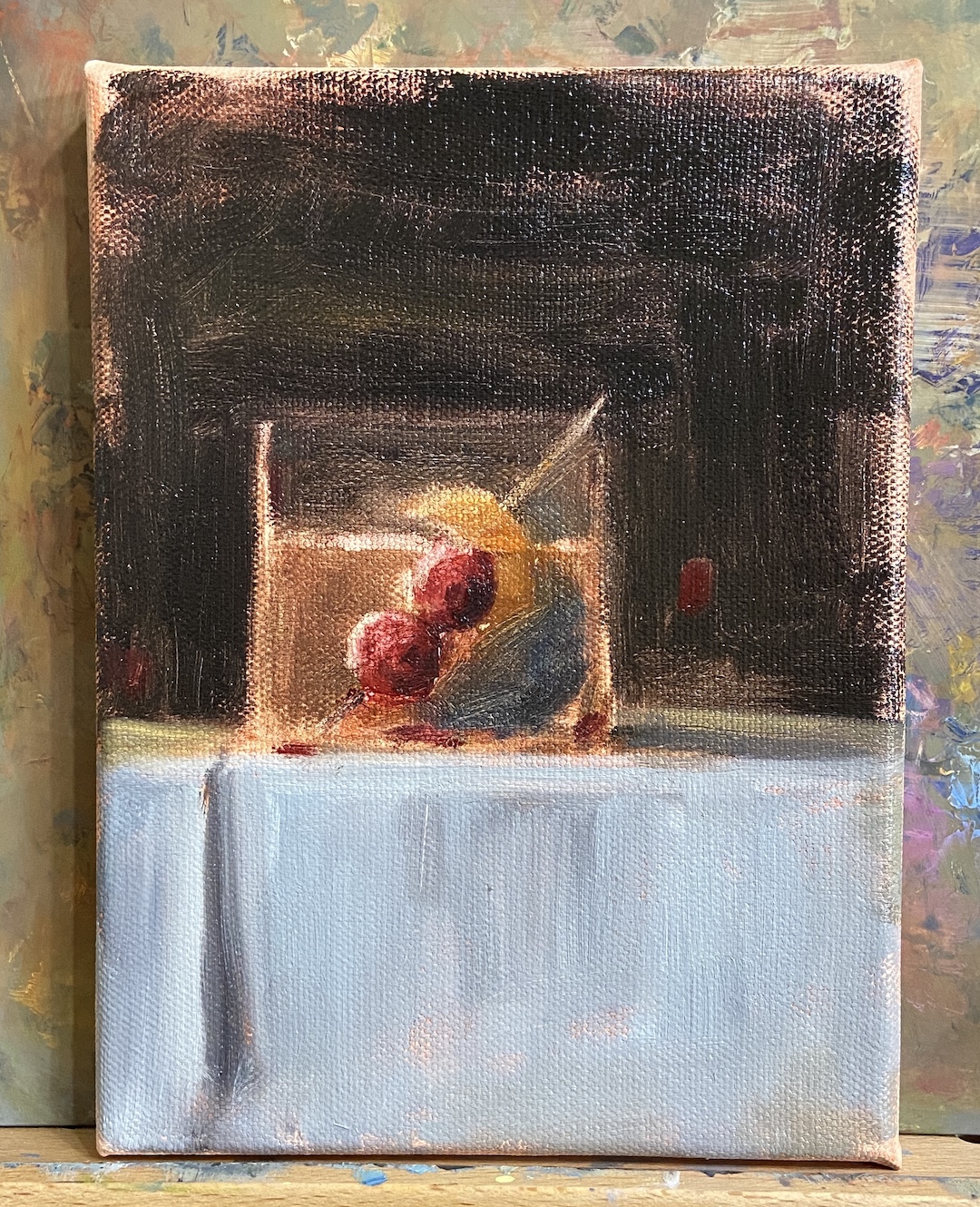
Lastly, the smoke technique. I still need to refine the approach, so stay tuned for more smoky cocktails, but the core approach seems sound. The smoke is not white, that’s the first thing. Turns out it’s about 20 variations of gray, leaning warm (cad yellow deep) above the glass, and a little cool (lemon yellow) below the rim. The brushwork boils down to a lot of push and pull between the light grays and the black background, using a lot of scumbling with an oversized round brush. As the smoke expands above the glass, it was important to make sure there was a very thin layer on the outside edges of the core smoke to lend it a sense of movement. The person who commissioned this piece has a cocktail smoker top, which sits on the top of the glass and is then pulled off in a flourish when the smoking is done, which pulls some of the smoke up and out of the glass. It’s all very entertaining, until you try to paint it!
#oldfashioned #cocktail #bourbon #agedandcharred #thecraftycocktail #cocktailsmokers #buffalotrace #whiskey #whisky #artbern #berntx #crashboomzip #painting #art #abplanalp #austinartists #atxartist #atxart #atxlife #contemporaryart #abplanalp #bernabplanalp #stillife 

A Stuffed Kong and Its Dog

I recently saw a question on Quora asking “when does drawing end and painting begin?”, which was a timely inquiry given a new approach I’ve been taking with some recent paintings. It’s always a bit tricky and, frankly, pretty intimidating to take on a new type of composition. For me, that tends to be something that involves shapes and/or subject matter that’s new or unfamiliar. In one of my current projects, A Stuffed Kong and Its Dog, I came to realize that while the subject of a dog toy was not a new compositional challenge, the complexity of a dog chewing and pawing something was really friggin’ hard!

My normal process, and what’s been reinforced at workshops by artists far more experienced and talented than myself, is to do a study of the subject to help get a feel for the composition (see Dances With Squirrels blog post for more on studies). I prefer sketching as opposed to small paintings, largely because I like to sketch, it’s more expedient than painting, and it’s more flexible, i.e. erasing graphite is infinitely easier than wiping out paint. Lately, however, I’ve been refining this process whereby I still do an initial sketch before starting the painting, but as I work through the project and run into challenges, I go back to the sketch and either do another or simply refine the one I was working on earlier.

In hindsight it’s frankly a brilliant idea, of which I don’t have many, because the pause from the painting a) makes me breathe as I gather my thoughts to overcome the problem, and b) let’s me return to an existing sketch and figure out how to navigate a solution based on a similar composition. What I’ve found thus far is that I often find the same problem in the original sketch, kicking myself for not having seen the problem in the first place, but I can quickly figure out how to make changes and move forward.

In A Stuffed Kong and Its Dog, you can see the original sketch being reworked (I forgot to take a picture of the original state of the sketch) when I ran into 2 problems. First, there was something fundamentally wrong with the Kong dog toy shape, which became clear when I returned to the sketch and saw that the bottom planes of the humps were misaligned. Secondly, I thought the size of the Black Lab’s right paw was too big once I painted it, but when I returned to the sketch and redrew it, I found that the size was actually fine and the issue was the related to the size of the black fur shadow gaps between the toes. Clear as mud, right?

The final painting will need a few minor refinements, but I want to let it dry before I make those updates. I’ll update this post when it’s really done. The intrigue with this piece is to make the viewer wonder what in the world is in that stuffed dog toy Kong! It was very hard to translate the focus and excitement of the dog as it diligently worked to get to the yummy treats out of this toy. While the focal point is the Kong, the supporting cast is the nose and that huge right paw, which in combination should convey the canine treat obsession.

Lastly, I’m not pleased with the sketch or the painting. The sketch is not supposed to be a finished work, and is muddled with various experiments to see what was going to work, so I’m. not flustered it. However, the finished painting, while not intended to be a refined piece of exceptional artwork, is ultimately a composition that doesn’t work well. The angle of the nose looks wrong relative to the muzzle, but it’s actually accurate as most dogs are able to bend that nose around in weird ways. That said, it doesn’t convey well in the painting. The large paw also creates visual confusion and seems out of place even though it’s proportionally accurate.

This exercise has taught me that all compositions aren’t destined for a “real painting”, but that’s why we do studies and small pieces to see how it plays out. I’ve also learned that my dog portrait skills need a lot of work, something I knew already, but this work has highlighted the gap and is proving to be quite motivating to start sketching my dogs’ faces!


1 Hour Challenge – Run Sandpiper, Run

Moving these updates to the blog to motivate myself to do them more frequently. The goal is to hone my drawing skills by doing sketches in 1 hour.

This session is from a reference photo taken by my brother. Very challenging given the need to incorporate movement of the bird and the advancing waves. Oh, and drawing ocean foam is hard as hell. I think the key is to not draw it. 

Loire Valley Landscape

Started a new project today. I’ve sketched this one a few times already, but intend to use this as a reference point for the actual painting whereby I’m going to try to emphasize the storm clouds in the background, add some color to the foreground with flowers, and insert some actual people doing stuff in the village area to draw the viewer into the scene. This first effort will be a quick draft painting on paper to get the values and compositional elements figured out. If that goes well, I’ll parlay this into a larger piece.

IMG_2423
Reference Photo – Loire Valley, France

IMG_3612
Sketch on paper

IMG_3613
Initial block-in. Focus on values and basic color scheme.

iPad sketch with “Paper by 53” app

Used a new art app on my iPad today and it was surprisingly easy to use, yet had a good range of options to create great sketches. 

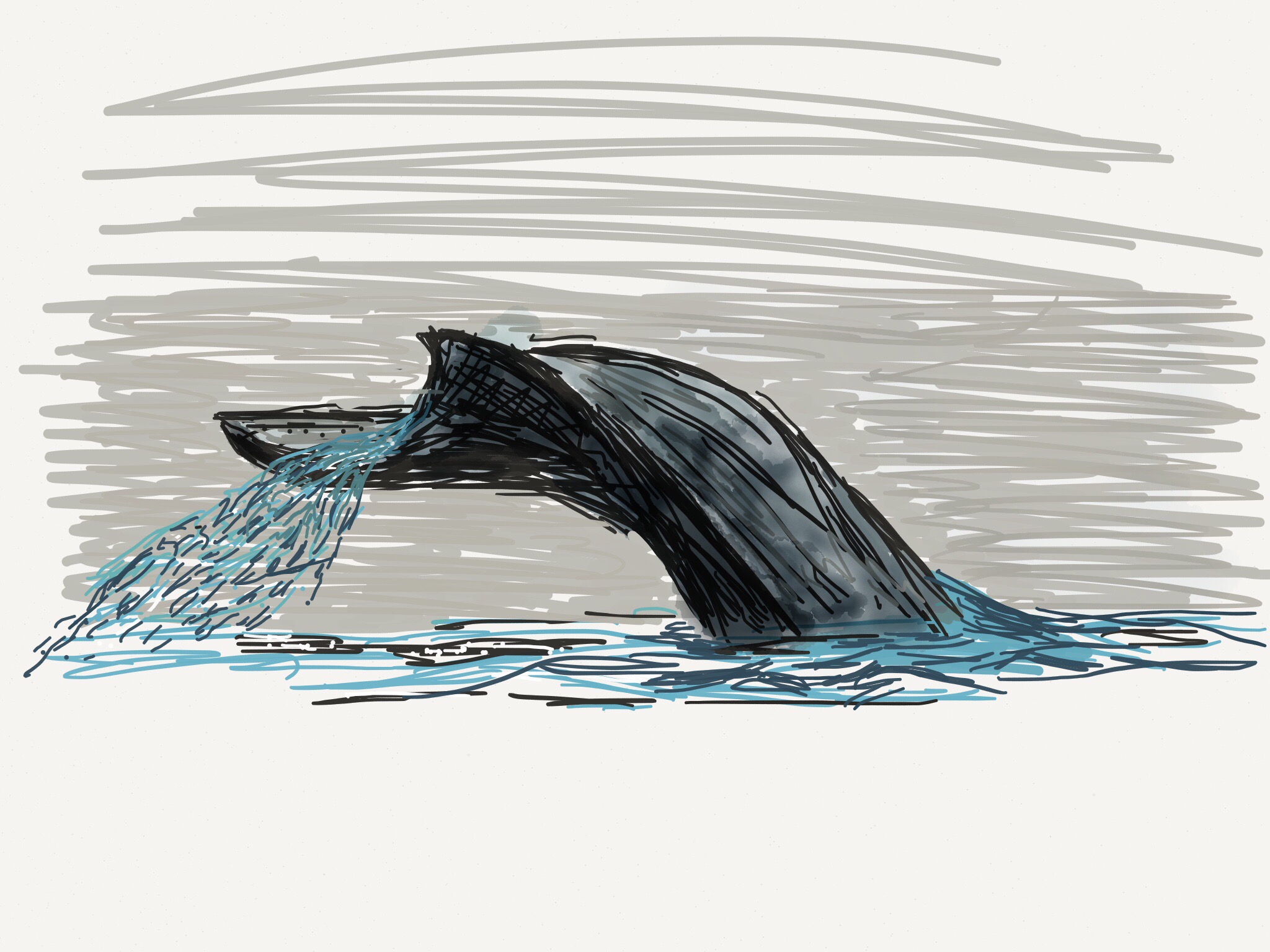
Did this whale tail in about 30 minutes, including fumbling time with the app features. Might prove to be a great way to do quick art on the go while traveling without supplies, or in bed where graphite and eraser debris are unwelcome. It was a lot of fun!