Frisbee Dog!

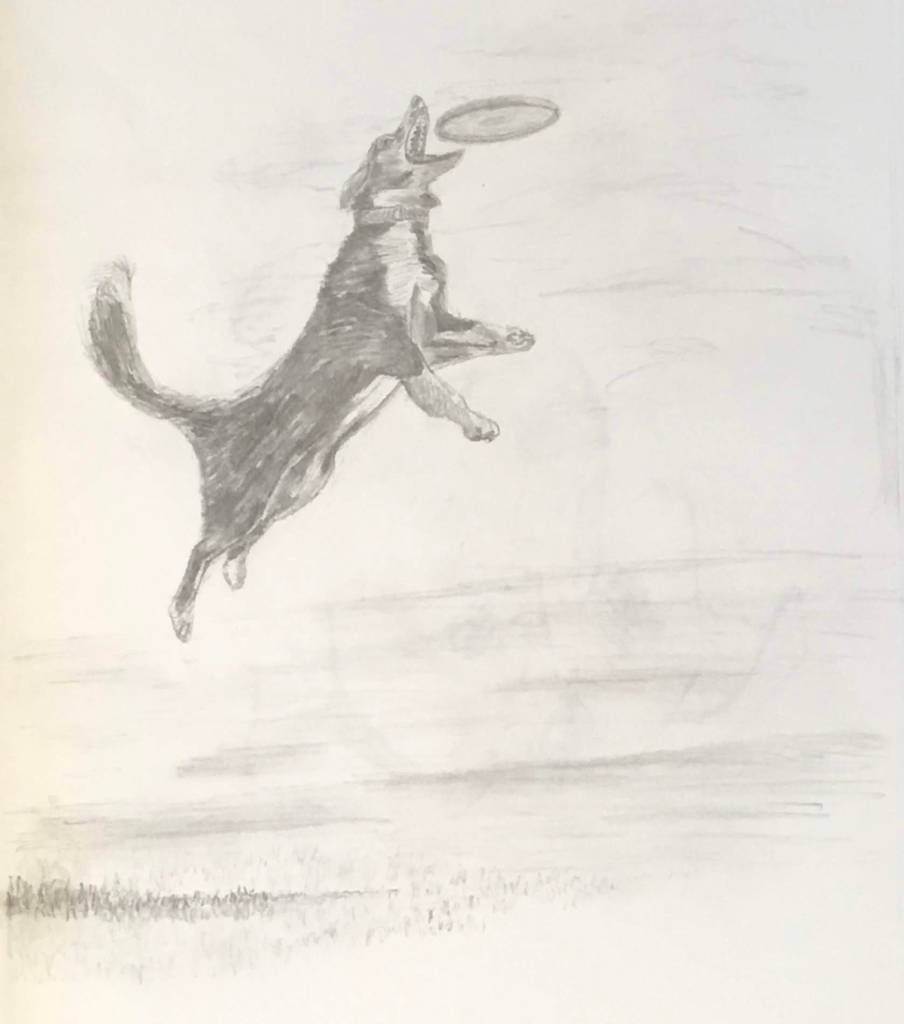
Frisbee Dog | Graphite on Paper

One of my dogs, Zip, is obsessed with 2 things in life: food and anything thrown. I used to think her love was exclusive to tennis balls, but over the years I’ve learned that not unlike her willingness to eat anything thrown into her food bowl, she will retrieve anything thrown across her yard. The day she trained me to sling a frisbee was a fond day indeed… for both of us. It’s her insatiable drive (dare I say “lust”?) to retrieve that inspired this drawing of Frisbee Dog

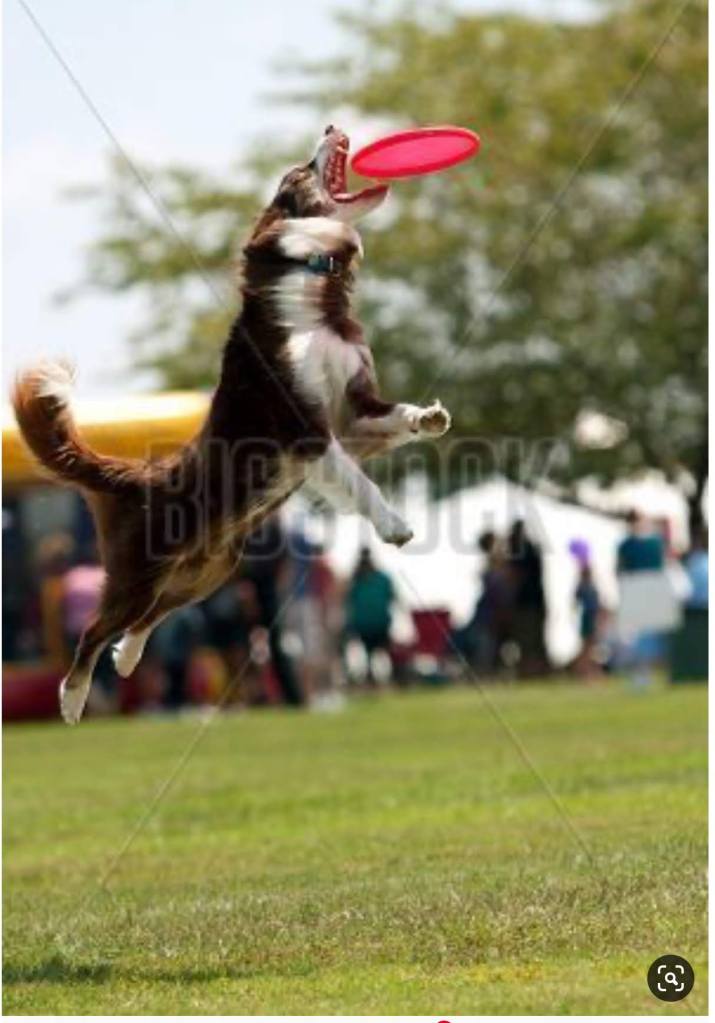
No, this is not Zip, but the reference photo captures all the key elements of a dog in motion doing her thing. The face is particularly tricky, in large part because it’s obscured and squinty, which mutes distinguishing features like eyes and ears. But you gotta love the open mouth and all those frisbee hungry teeth! 

The gallery includes a reference photo and two versions of the drawing. Granted, the drawing is a rough study and not intended to be a refined composition, I thought it was interesting to see how different photo settings can change the look and feel of a piece of art. Using the same source photo of the final drawing, one is set to sharper detail while the other uses a soft setting to remove some of the detail of the pencil strokes. Bear in mind this drawing is done in my sketch book on thin, see-through pages; there’s not a lot of teeth in the paper, thus the relatively rough nature of the drawing. Also, the entire piece was done with only 3 pencils – 2B, HB, and H. 
I think this type of subject would make for a good painting.

I’ll try a few more drawings of frisbee dogs and then make the jump to the canvass. 

Squirrel Watch

Pivoting from painting to drawing last week and finally made the time to finish this one. Squirrel Watch is pretty self explanatory – Wolfgang, my 3 year old rescue mutt, sitting in the yard watching the tree tops for the infiltrators! 

One of my artistic goals this year is to improve my dog related art skills. I’m not a big fan of dog portraits, however, I thoroughly enjoy what I like to call “dogs doing stuff”, creating intrigue through motion and activity. Over the coming months I’ll work on various dog related pieces that capture the essence of dogs being dogs as they do their thing. 

Squirrel Watch | graphite on paper

Squirrel Watch was done over the course of a few weeks – I have no idea how long it took, but I wouldn’t be surprised if I spent 6 hours on this relatively small piece. There were a lot of mistakes along the way, but nothing an eraser and some patience couldn’t remedy. 

This isn’t a piece I would frame and hang, but I’m pleased with it from a progress perspective. It’s also riddled with lessons learned, so if you zoom in to see the details you can spot various styles and techniques.

Here’s what I learned and need to remember for future drawings:

  • It’s not necessary to draw hair detail throughout the subject. In this piece, the emphasis should have been on shading and shape foremost, whereas hair detail should be secondary. 
  • Draw hair details with a clear understanding of actual direction of the hair on the dog.
  • Work hair dark to light. 
  • Most of the hair detail can be accomplished using 2B, HB, and H pencils.
  • Show wrinkles in the coat by changing the density of hairs, i.e. closer together or further apart.
  • Dog paws are hard to draw, dammit! 
  • Blades of grass can be done by either individual strokes or by lifting out shading with a thin eraser. 

A Stuffed Kong and Its Dog

I recently saw a question on Quora asking “when does drawing end and painting begin?”, which was a timely inquiry given a new approach I’ve been taking with some recent paintings. It’s always a bit tricky and, frankly, pretty intimidating to take on a new type of composition. For me, that tends to be something that involves shapes and/or subject matter that’s new or unfamiliar. In one of my current projects, A Stuffed Kong and Its Dog, I came to realize that while the subject of a dog toy was not a new compositional challenge, the complexity of a dog chewing and pawing something was really friggin’ hard!

My normal process, and what’s been reinforced at workshops by artists far more experienced and talented than myself, is to do a study of the subject to help get a feel for the composition (see Dances With Squirrels blog post for more on studies). I prefer sketching as opposed to small paintings, largely because I like to sketch, it’s more expedient than painting, and it’s more flexible, i.e. erasing graphite is infinitely easier than wiping out paint. Lately, however, I’ve been refining this process whereby I still do an initial sketch before starting the painting, but as I work through the project and run into challenges, I go back to the sketch and either do another or simply refine the one I was working on earlier.

In hindsight it’s frankly a brilliant idea, of which I don’t have many, because the pause from the painting a) makes me breathe as I gather my thoughts to overcome the problem, and b) let’s me return to an existing sketch and figure out how to navigate a solution based on a similar composition. What I’ve found thus far is that I often find the same problem in the original sketch, kicking myself for not having seen the problem in the first place, but I can quickly figure out how to make changes and move forward.

In A Stuffed Kong and Its Dog, you can see the original sketch being reworked (I forgot to take a picture of the original state of the sketch) when I ran into 2 problems. First, there was something fundamentally wrong with the Kong dog toy shape, which became clear when I returned to the sketch and saw that the bottom planes of the humps were misaligned. Secondly, I thought the size of the Black Lab’s right paw was too big once I painted it, but when I returned to the sketch and redrew it, I found that the size was actually fine and the issue was the related to the size of the black fur shadow gaps between the toes. Clear as mud, right?

The final painting will need a few minor refinements, but I want to let it dry before I make those updates. I’ll update this post when it’s really done. The intrigue with this piece is to make the viewer wonder what in the world is in that stuffed dog toy Kong! It was very hard to translate the focus and excitement of the dog as it diligently worked to get to the yummy treats out of this toy. While the focal point is the Kong, the supporting cast is the nose and that huge right paw, which in combination should convey the canine treat obsession.

Lastly, I’m not pleased with the sketch or the painting. The sketch is not supposed to be a finished work, and is muddled with various experiments to see what was going to work, so I’m. not flustered it. However, the finished painting, while not intended to be a refined piece of exceptional artwork, is ultimately a composition that doesn’t work well. The angle of the nose looks wrong relative to the muzzle, but it’s actually accurate as most dogs are able to bend that nose around in weird ways. That said, it doesn’t convey well in the painting. The large paw also creates visual confusion and seems out of place even though it’s proportionally accurate.

This exercise has taught me that all compositions aren’t destined for a “real painting”, but that’s why we do studies and small pieces to see how it plays out. I’ve also learned that my dog portrait skills need a lot of work, something I knew already, but this work has highlighted the gap and is proving to be quite motivating to start sketching my dogs’ faces!


The $250 Eraser

I wanted to share an expensive lesson I learned today in hopes that nobody reading this post will be doomed to repeat. For the artists out there, you’ll probably just laugh at this post, as you’ve surely experienced your own “eraser gate”, but if not, read on and take caution.

I’ll cut to the point and back into the details. If you leave a vinyl eraser sitting on a wooden table, it will MELT THE LACQUER FINISH!

I had been drawing in my studio and left my eraser and pencils sitting on the table afterwards. I then got distracted, for many weeks, with other painting interests and didn’t return to the drawing for awhile. When I finally got around to finishing the drawing, I grabbed the eraser and it was stuck to the table! Upon closer inspection, it had actually melted / dissolved the lacquer finish into a gooey mess all the way down to the bare wood. See the picture below to appreciate the damage.

Eraser Burn Zoomed

I finally found a furniture repair company that does house calls and luckily they were able to do a suitable spot repair, which meant that vinyl eraser ultimately cost $250. Like I said, it was a very pricey lesson.

My understanding is that erasers (most but not all) will chemically react with their surroundings over time, so you have to be careful how they’re stored. The $250 eraser I used was vinyl, similar to this one at Jerry’s Artarama, but I believe this can happen with rubber and kneaded erasers, too. My erasers are now stored in their own canvass bag or wrapped in Saran Wrap. Hopefully I’ve seen the last of eraser meltdowns.


1 Hour Challenge – Run Sandpiper, Run

Moving these updates to the blog to motivate myself to do them more frequently. The goal is to hone my drawing skills by doing sketches in 1 hour.

This session is from a reference photo taken by my brother. Very challenging given the need to incorporate movement of the bird and the advancing waves. Oh, and drawing ocean foam is hard as hell. I think the key is to not draw it. 

Daily Sketch #24: San Francisco tower

IMG_0225

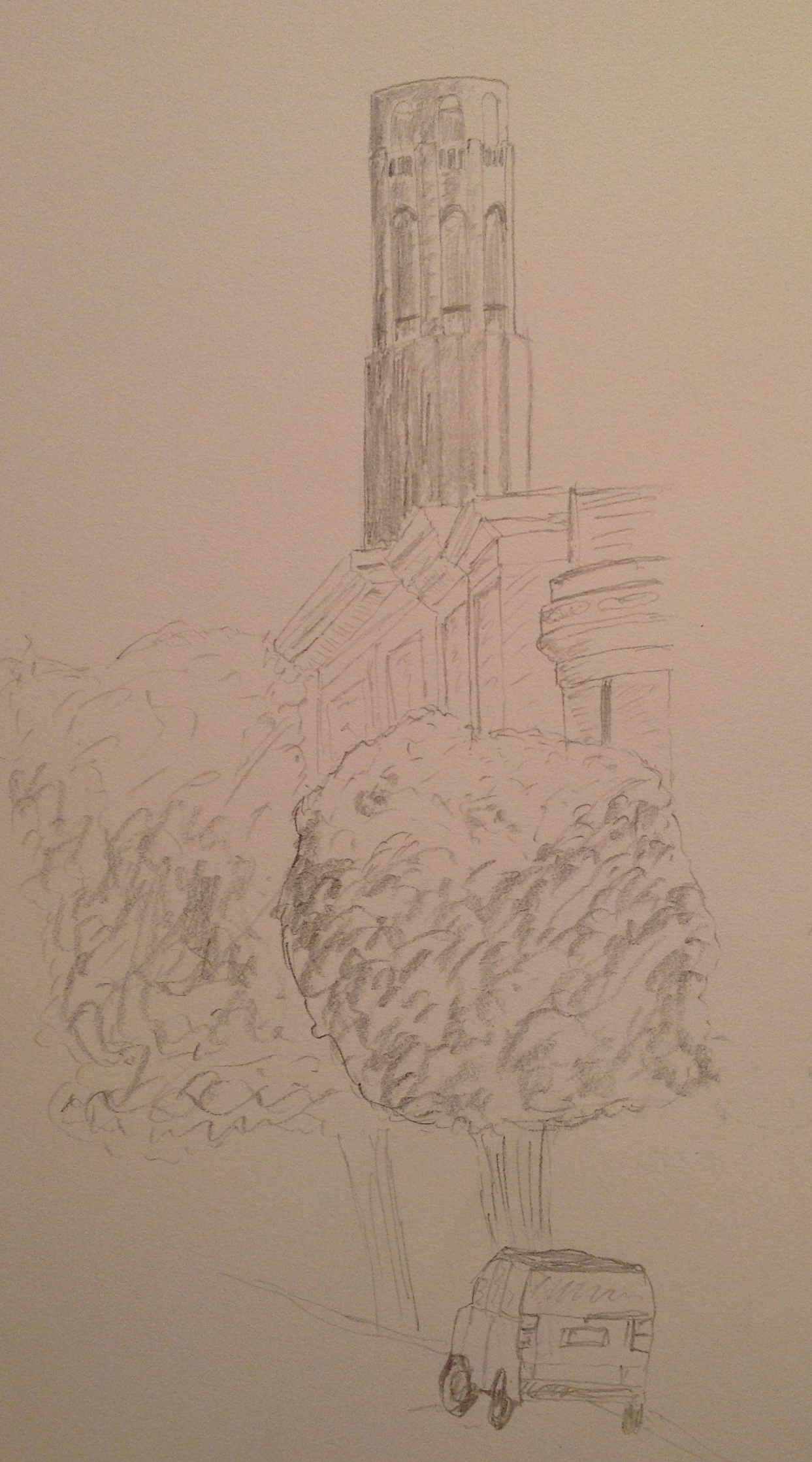
Quick sketch for San Francisco fans. This is Coit Tower, an iconic part of San Francisco, from one of the surrounding neighborhood streets. I think this is on the downslope side that  trickles down to North Beach.

Despite the ridiculous clown car at the bottom, the rest of the sketch holds up pretty well. My challenge tonight was drawing varied perspective very fast. When drawing any of the San Francisco architecture, it’s not long before it loses it’s charm and starts to drive you insane! So many lines, curves, and wickedly detailed bits. And don’t get me started on the cast shadows on a sunny day. That said, it’s very rewarding when you’re done b/c you look up at your drawing and “BAM!”, you’ve got a beautiful urban landscape.

This will likely become a knife painting project in the near future. The colors are simplistic, but there’s a good mix of fun stuff in the shapes and angles that an oil painting would work well.

Daily Sketch #23: Drawing in Reverse

IMG_3166

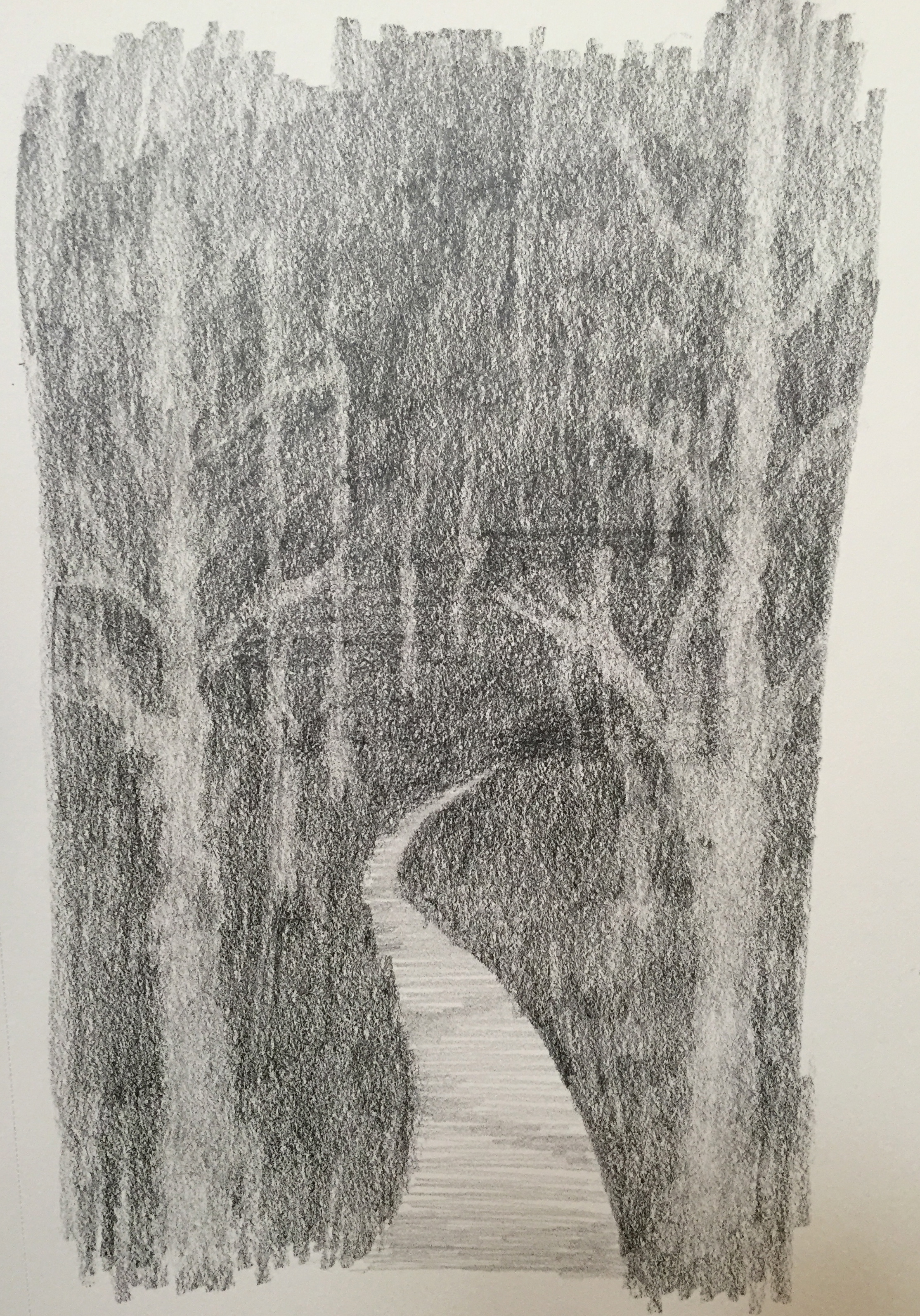
Today’s sketch is inspired by curiosity and experimentation. I thought it would be interesting to do a drawing in reverse, kinda. The idea was to fill the entire page with a graduated value scale that was pretty dark, then remove graphite with a gummy eraser to “draw” the trees.

I’m happy with the result, but it made me think a lot more than I had anticipated. And frankly, this is more complicated than I initially thought it would be. While I only spent about 20 – 30 minutes on this one, it could have easily been a couple of hours. Here are the things I had to consider:

  1. Should the initial value shading be done with the darkest darks (about a 9 on a 10 point scale) in the distance where the pathway fades away, somewhere on the horizon line, or more in the foreground. I opted for somewhere near the end of the pathway, but then spread it out a little further once I got into the sketch details. I thought the horizon line would have been a good idea, but who the hell knows where that really is in this kind of composition.
  2. Trying to fill a large block with darkness wasn’t as easy as I expected. All the drawing lessons I’ve taken, ILT or self paced, you do a lot of shading exercises that have boundaries, shapes, and contrasts. You never do a whole page. Apparently nobody teaches that because you might go insane. Trying to get it laid in well enough to not be distracted by the sketch lines wasn’t easy, but it was a sketch so I didn’t worry about it too much.
  3. Related to #2 above, it was also important to not press the graphite into the paper too hard because I was going to pull off parts of it to “draw” the trees.
  4. Drawing the trees with a gummy eraser is fun, but ever so weird. I’ve used this technique to get texture and shape in clouds, but trees have more definition and sharper lines. It worked pretty well, though.

Overall, the effect is creepy and cool. The pathway is very light, although it darkens as you move further along – might be hard to see in the photo. There is a lot of variation in values in the darkness of the forrest, which is similar to getting just the right subtle mixture of color in an oil painting. It’s nice in this sketch because it gives a sense of atmosphere and prevents it from looking flat. Speaking of which, that was the hardest part with the trees. Pulling off enough graphite with the gummy eraser in just the right places so as to give the impression of trees with shape was the primarily challenge. The outcome is something unusual, deceptively layered, and just a bit eerie.

For the detail oriented, this sketch utilized the whole drawer: HB, 2B, 4B, 8B and an ebony. As mentioned, the gummy eraser was used for the trees.

Daily Sketch #22: Normandy Coast

Tough week on time for sketching, so another 20 minute effort. Wanted to take another whack and getting a quick sketch of rocky coastline done quickly. It forces me to draw loosely and step away from the detail, which is very hard for me to do. But it worked out today. Not the best result, but given the time constraint it works for me.

This is the Normandy coast, similar to an earlier sketch. This is Point du Hoc I believe, but not 100% sure and too tired to go rooting around my notes to confirm. Clear blue sky, calm seas.

HB and 2B only.

Daily Sketch #21: Ball! Ball! Ball!

IMG_0222

For all the dog lovers out there!

Sketched with 2B, HB, and 4B pencils. Quick, loose style done in 20 minutes.

I didn’t have a reference photo, but rather was inspired by a small painting by an artist I really like, Kanna Aoki. The palette she uses is very bright and vibrant, but she’s masterful at capturing that magical California lighting in landscapes.

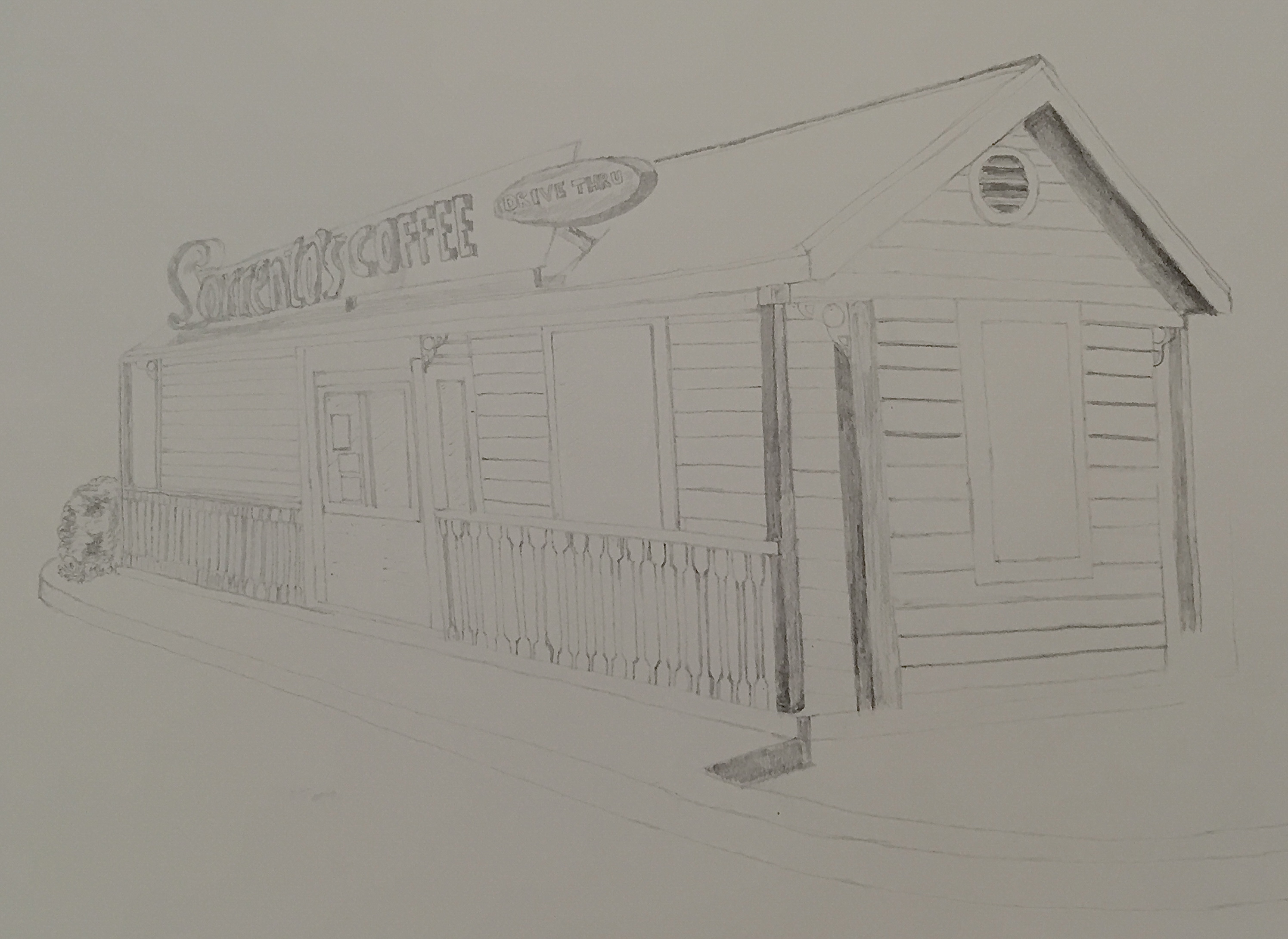
Daily Sketch #20: Daily Buzz

IMG_3158

Sorrento’s is the coffee shack across the street from my office. This is a more complicated sketch than I had time to complete, but this gets it most of the way there. I’ll work on this one some more and perhaps post the final drawing.

I like drawing buildings despite the exactitude of the lines. I used this sketching opportunity to free-hand all the lines instead of using a ruler. It’s good practice and gives the composition a more artistic look, as opposed to an architectural sterility.

I spent a couple hours on this one, using mostly 2B and HB pencils.