Barton Creek Greenbelt is on Life Support

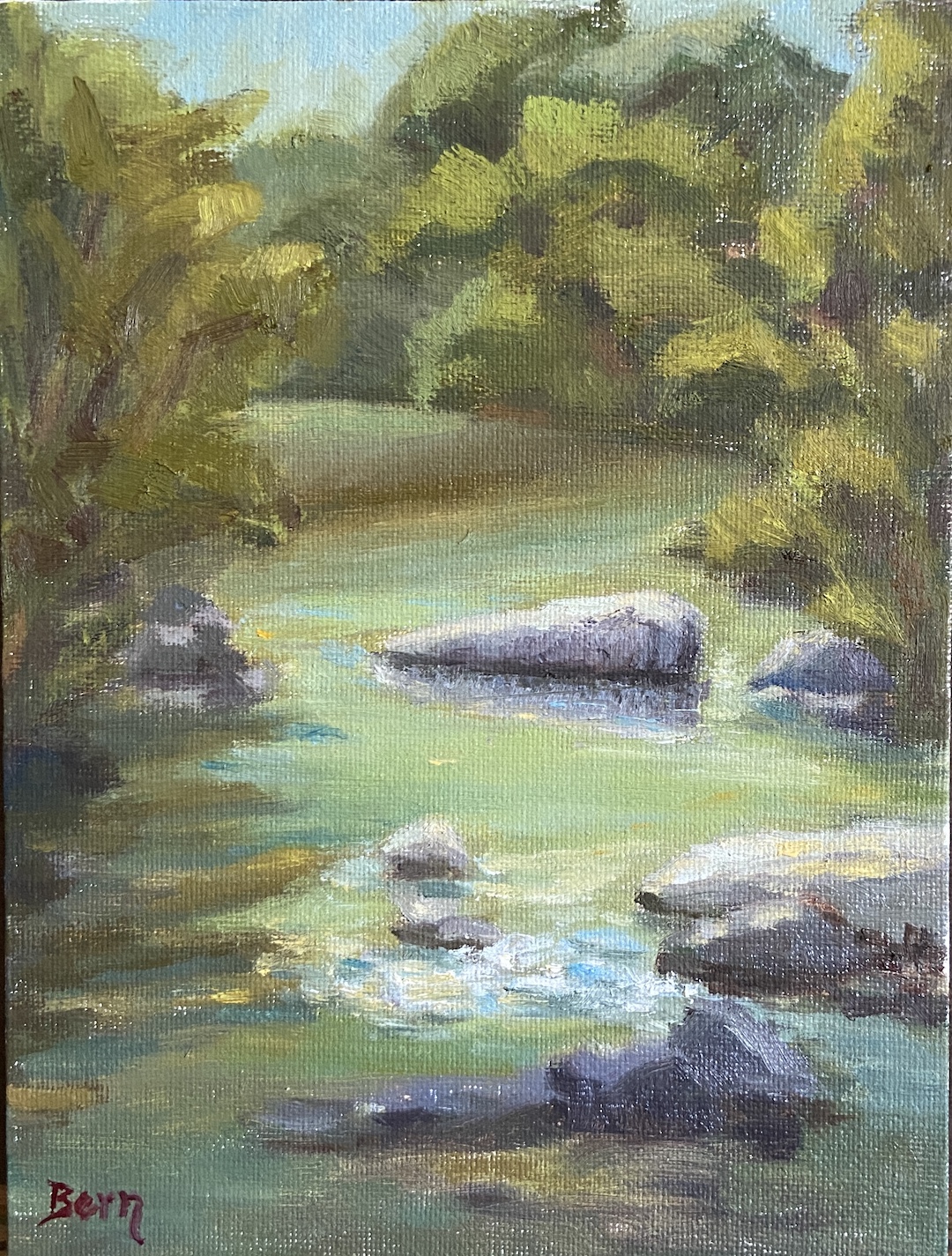
Barton Creek Tree 30°16’11.0″N 97°49’42.5″W | 6 x 8” | Oil on Canvas Board

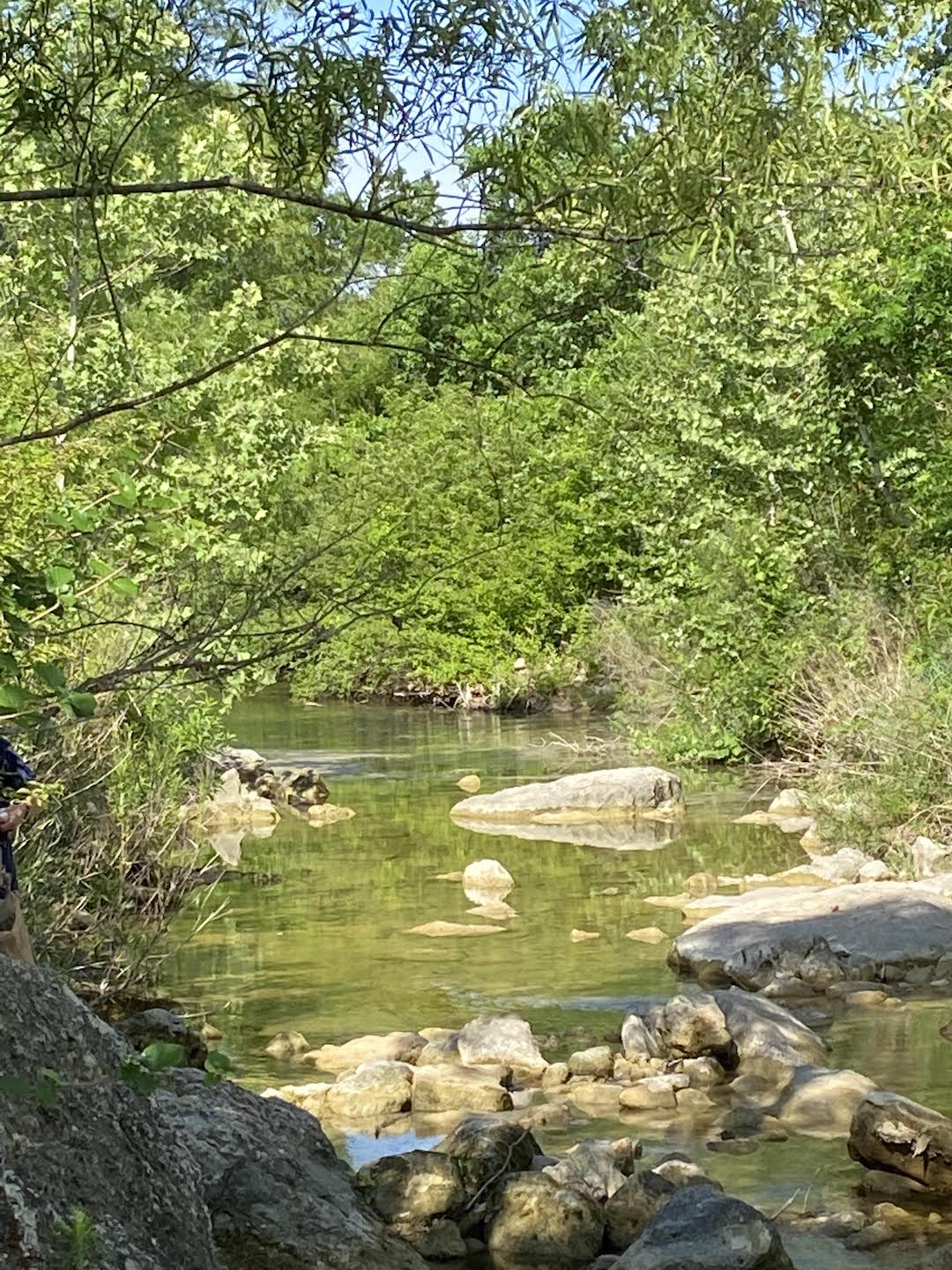
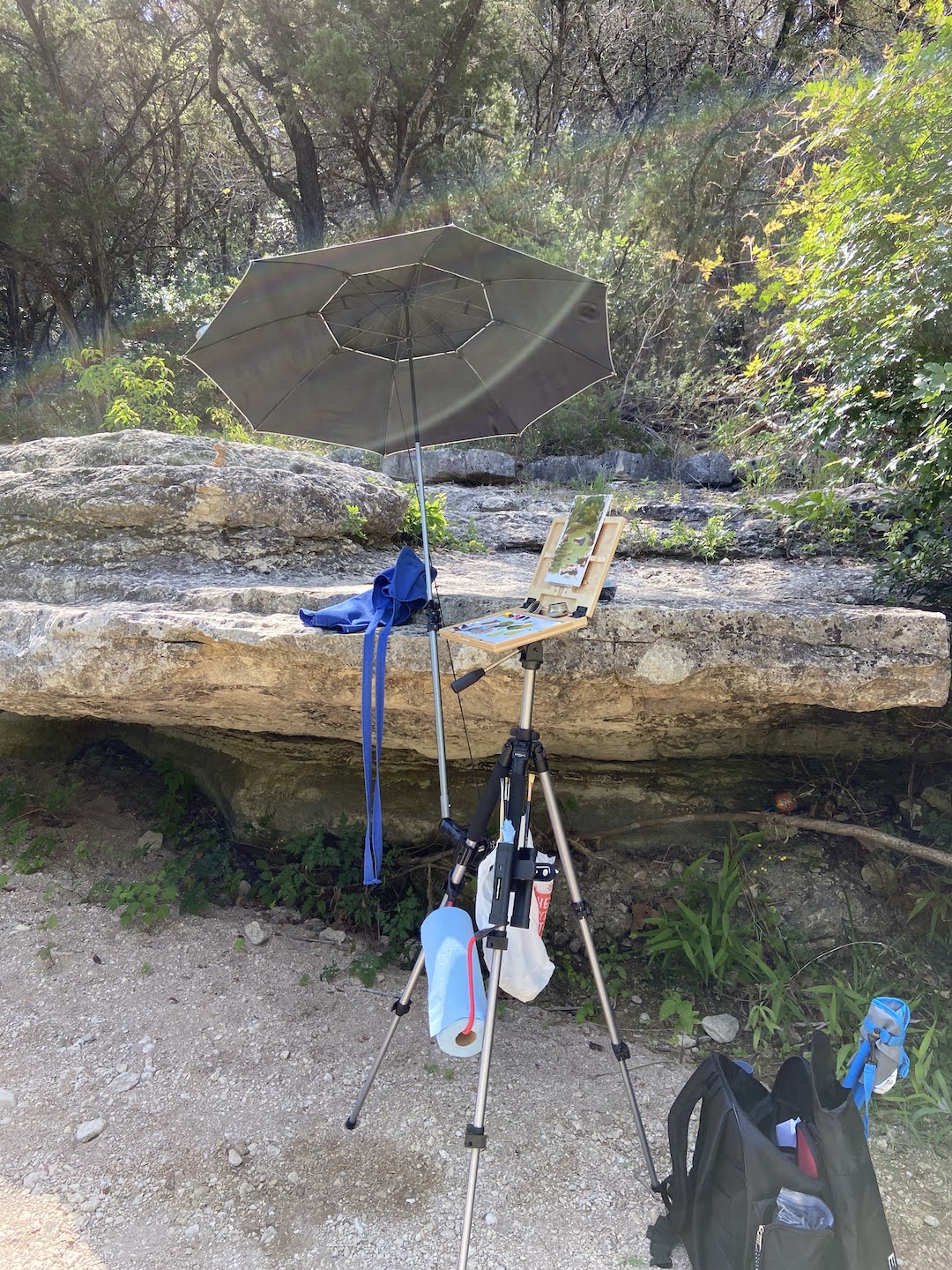
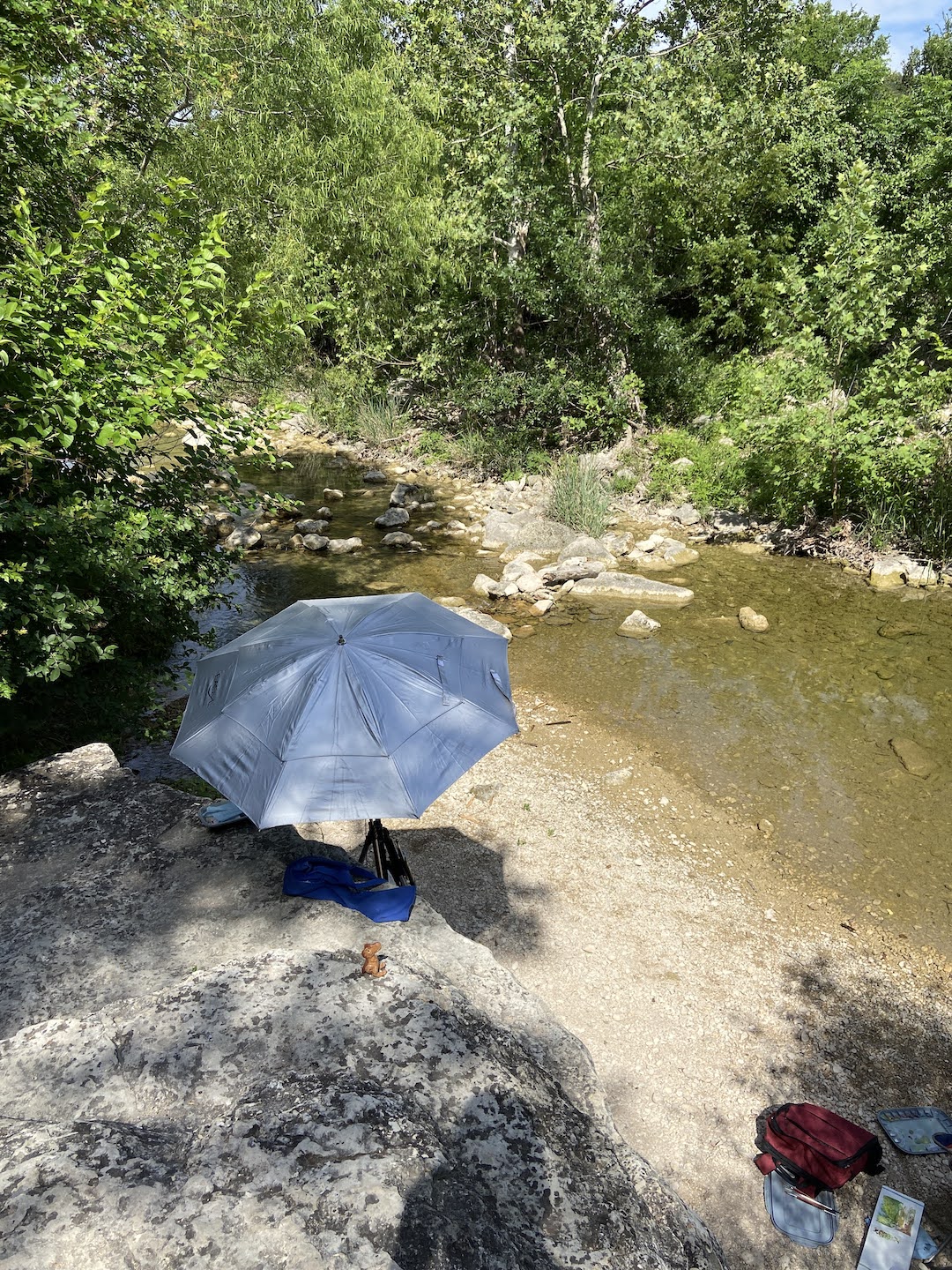
This is another morning plein air session along Barton Creek just down from the base of the Hill of Life. This was the first session at this particular spot, which I originally chose for the water chute between the rocks, but the lighting wasn’t very good for the water, so I opted to focus on a cool tree on the other side of the creek.

I brought along my trusty plein air sidekick, Zip, to help keep the squirrels in check while painted. The heat was pretty bad today, so we had a hard stop at 11am so Zip wouldn’t get overheated on the way back up the trail. She made sure her temperature wouldn’t be an issue by instantly jumping in the water once I let go of the leash to setup my easel. 

I somehow made this piece more difficult than expected. I think the problem was a lack of structure in values and simplification of the greenery from the get go. I used to hate painting trees, but over the past year I’ve managed to get the hang of it and they’re not as frustrating as years past. That said, this composition was tricky because the focal point is a tree within a sea of trees. But I was outside with my dog painting, so I didn’t really care.

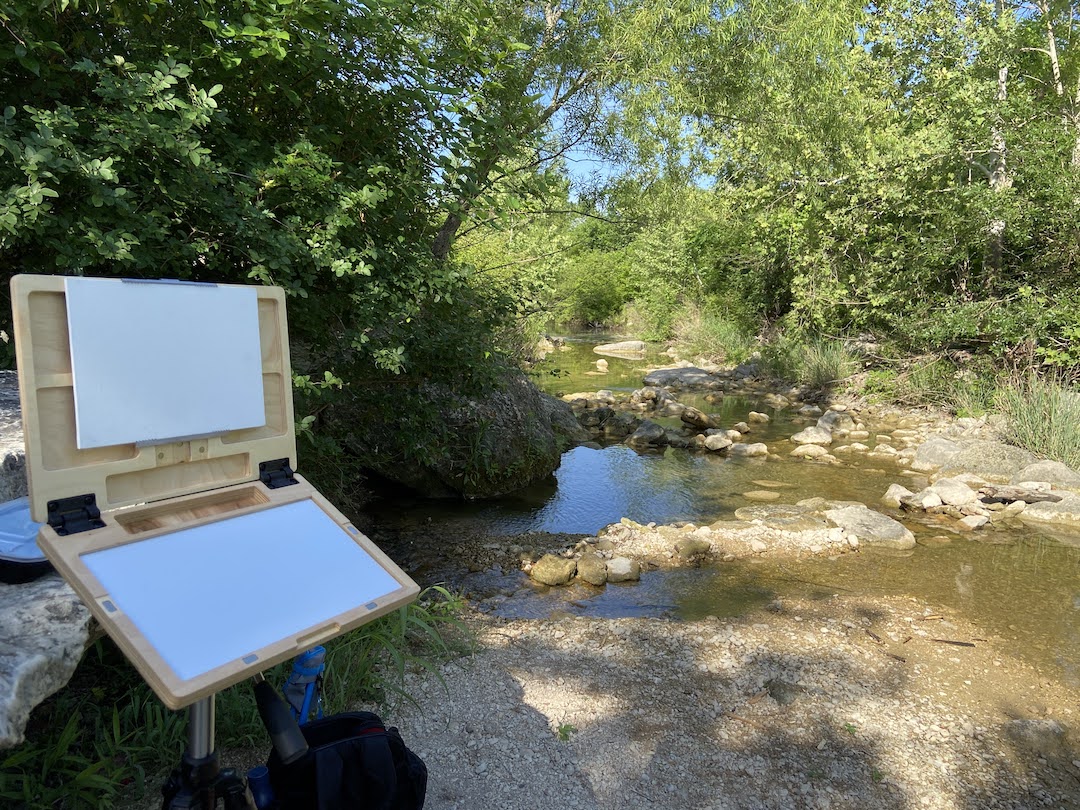
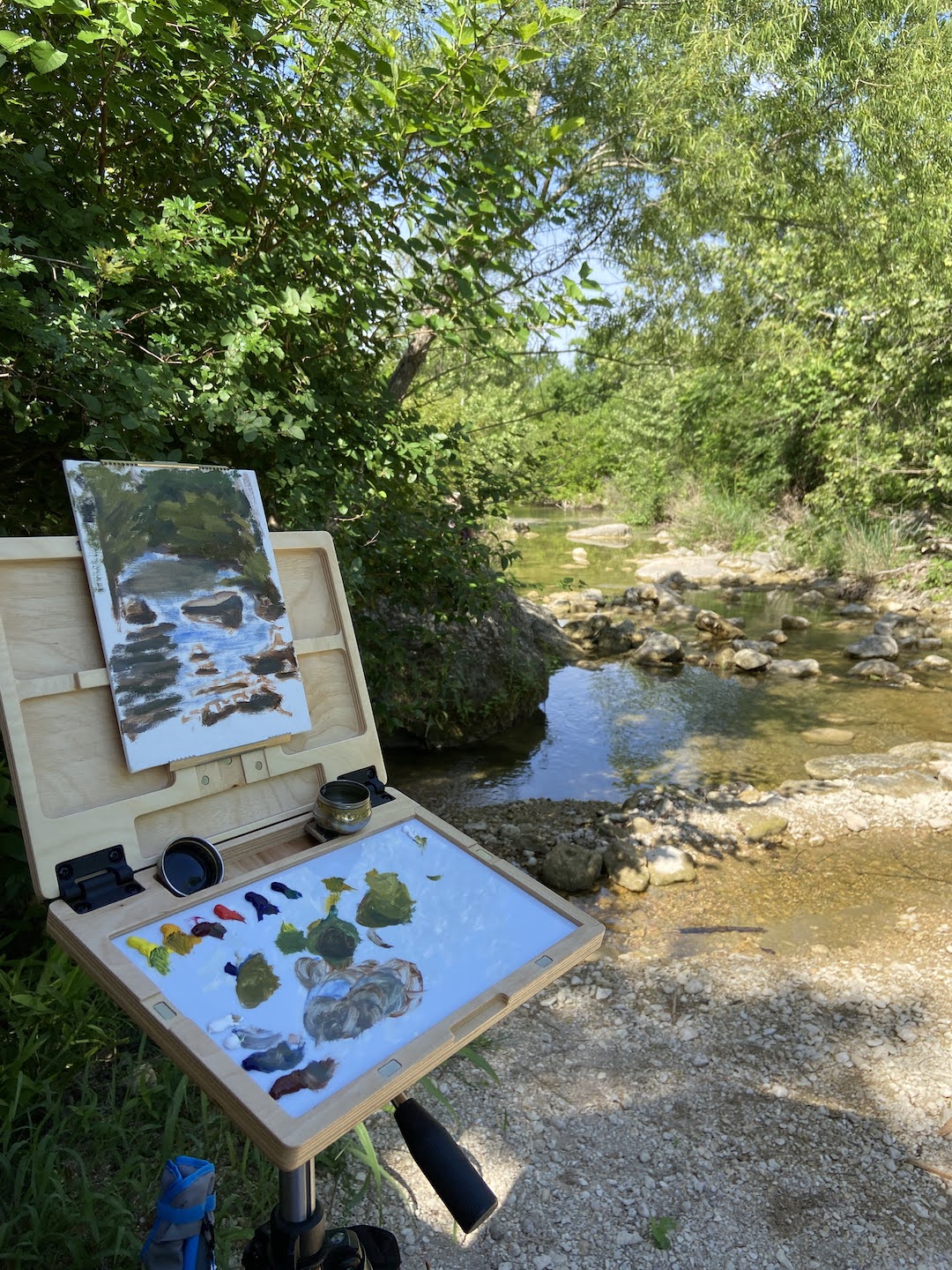
The progression gallery below illustrates the various artistic detours I drove along before finding the finish line. The biggest singular challenge was the lack of foliage on the “real” tree, as you can see from the reference photo, so I improvised some leafy bits in amongst the long, spindly trunks. Initially I balked on the vines, thinking they wouldn’t translate to the viewer, looking more like spaghetti, but after a few failed attempts I managed to weave them in convincingly. 

The last design decision was using a palette knife for finishing the trunk. I didn’t like the blended look using a brush and invariably a palette knife can add texture, which is ideal for rendering bark on a tree. 
If you’re curious about the specific location of this plein air site, I’ve been dropping POI pins on a Google map so I can find my favorite spots in the future. This particular one is located at 30°16’11.0″N 97°49’42.5″W. 

PLEASE NOTE this part of the Barton Creek Trail is severely overrun and trashed, especially during the Spring and Summer months. I found tons of trash, especially beer cans, throughout the area. The stretch of the waterway from Hill of Life Dam Falls (northwest) down to Sculpture Falls (southeast) will continue to suffer environmental degradation at an accelerated rate if the City Council and the various environmental groups in Austin (@SaveOurSprings @sosalliance @austinparksfdn @austintexasgov) don’t institute some level of admission controls. Police enforcement and citations for infractions are helpful, but they don’t address the primary issue which is too many people on this sensitive waterway. And last, but not least, the City of Austin needs to honor their legal commitment with the neighborhood to close the Hill of Life trailhead, which they legally agreed to do when a temporary easement was granted by the neighborhood in 1999. 

#artbern #berntx #crashboomzip #painting #art #abplanalp #bernabplanalp #austinartists #atxartist #atxart #atxlife #hilloflife #HOL #bartonsprings #oilpainting #fineart #contemporaryart #saveoursprings #closehilloflifetrailhead #moveHOLtrailhead #sosalliance #austinparksfoundation #atxparks

Art Education Slap Down

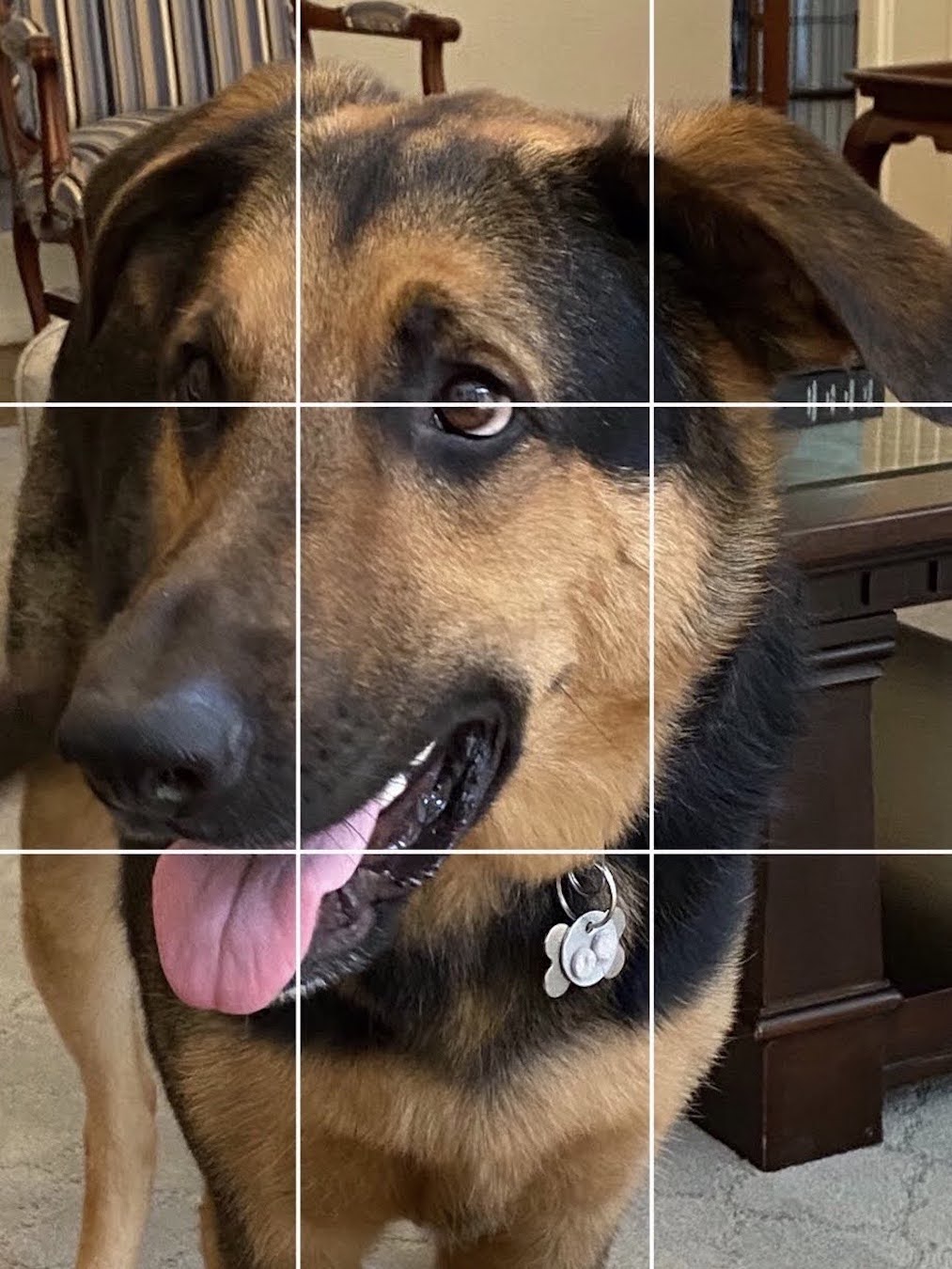
Wolfy Portrait | 9 x 12” | Oil on Canvas Board


Painting is truly a never ending learning process, which is what makes it so intriguing and rewarding, no matter one’s skill level. However, there are times when you pivot to a new thing – subject matter, tools, medium, etc – and realize the education could be a seamless experience, while there are other times when it’s more of a slap down. This portrait of one of my beloved pups, Wolfy, was indeed of the latter variety. 

I’m pretty sure I had a couple things working against me on this one, but let me know what you think in the comments. First, it’s exponentially more difficult to paint (or draw for that matter) a dog that you know really well; getting the expression just right is nearly impossible. Secondly, the reference photo I used was, well, not the best. Wolfy does not like the paparazzi and therefore a workable pose from the furry prince was hard to come by. The third and final challenge was the recognition that Wolfy’s hair and color patterns were new to me and frankly very difficult to figure out. 

You’ll notice the reference photo has a grid overlay, which helped tremendously and led to a few adjustments that were very helpful in terms of portrait accuracy. However, despite the grid and many hours of work on this piece, I feel like the final result leans cartoonish and for the life of me I can’t figure out why. I think it might be the length and width of the snout is simply off, but it might also be the plane of the forehead… or it’s his eyes. I don’t know. Thoughts? 

Despite the challenges, I had a lot of fun with this composition. And although it was a slap down learning experience, I did educate myself alot about what works and what doesn’t. Some of the “what works” highlights that will carry over into future pieces are the brushwork for long fur, the use of reds in brown haired dogs (it’s there, it’s just hard to see), and the realistic texture of a palette knife for the tongue and nose. 

Thanks for reading!

#artbern #berntx #crashboomzip #painting #art #abplanalp #bernabplanalp #austinartists #atxartist #atxart #atxlife #rescuedogs #bestfriends #dogsofinstagram #dogsofinsta #dogstagram #oilpainting #fineart #petsofinstagram #contemporaryart #fosteringsaveslives #dogsofig #austinpetsalive #mutts #muttsofinstagram #snouts #wetnoses #shephers #hugyourdog

Fighting the Heat at Bull Creek

Bull Creek | 8 x 10” | Oil on Canvas Board

I might have chosen the wrong year to ramp up my en plein air experience, case in point the month of May in Austin is already registering 100 degree days. Ugh! Regardless, the mornings are bearable and I had to break in a new pochade box called u.go. by New Wave Art… more on that later.

This session was at Bull Creek Park with a few other painters from Plein Air Austin. For those of you familiar with Austin, this is the northern stretch of Bull Creek near the Spicewood and 360 intersection. For the uninitiated, it’s ideal for painting outside because there’s usually some good water options along the creek and lots of shade. 

The focal point of this composition was the rocks in both the foreground where the shade and light merge, and secondarily the larger rock bathed in sunlight. I was very happy with how this turned out even before I got back into the studio for refinements. I went into this plein air session committed to focusing on values, starting by driving the darks into darkness-of-a-bat-loving-cave kinda dark, then finding high contrast opportunities for the lightest lights. I took some artistic license in this area, fabricating some water movement that wasn’t there, but it made for a more compelling viewing experience in my opinion. 

Additionally I muted the trees on the banks, especially the left side, so as to ensure they didn’t distract from the main focal points in the water. I had initially used much lighter, saturated yellow/greens on the trees, but that muted all the lighter values in the composition, which absolutely killed the scene. I’m pretty sure this is what I’ve done in past plein air sessions that has confounded me. I’ll keep my fingers crossed this will carry over into the next outing. 

The use of olive green variations on the shadow parts of the distant water were also a change in approach. One of my fellow painters made this suggestion and it proved to work really well. 
Painting outside is fantastic! This particular outing was of note because I got to share ideas and chat with the other painters. We even treated it like a workshop and did a mini critique of our works at the end of the morning. This was particularly interesting because of the 4 painters, there were 3 different mediums represented – oil, water color, and gouache. 

Lastly, my new u.go proved to be a great upgrade to my plein air armaments. Thank you to my awesome wife for giving me the perfect artist gift! The best part about the u.go is the portability. The length and width dimensions are almost identical to my EasyL pochade box, but it’s very thin, so it fits much easier in my pack. Very sturdy and compact design make it a must have piece of equipment for me.

Thanks for reading!

#artbern #berntx #crashboomzip #painting #art #abplanalp #bernabplanalp #austinartists #atxartist #atxart #atxlife #bullcreekaustin #pleinairaustin #saveourspringsaustin #sosalliance

Soulful Eyes

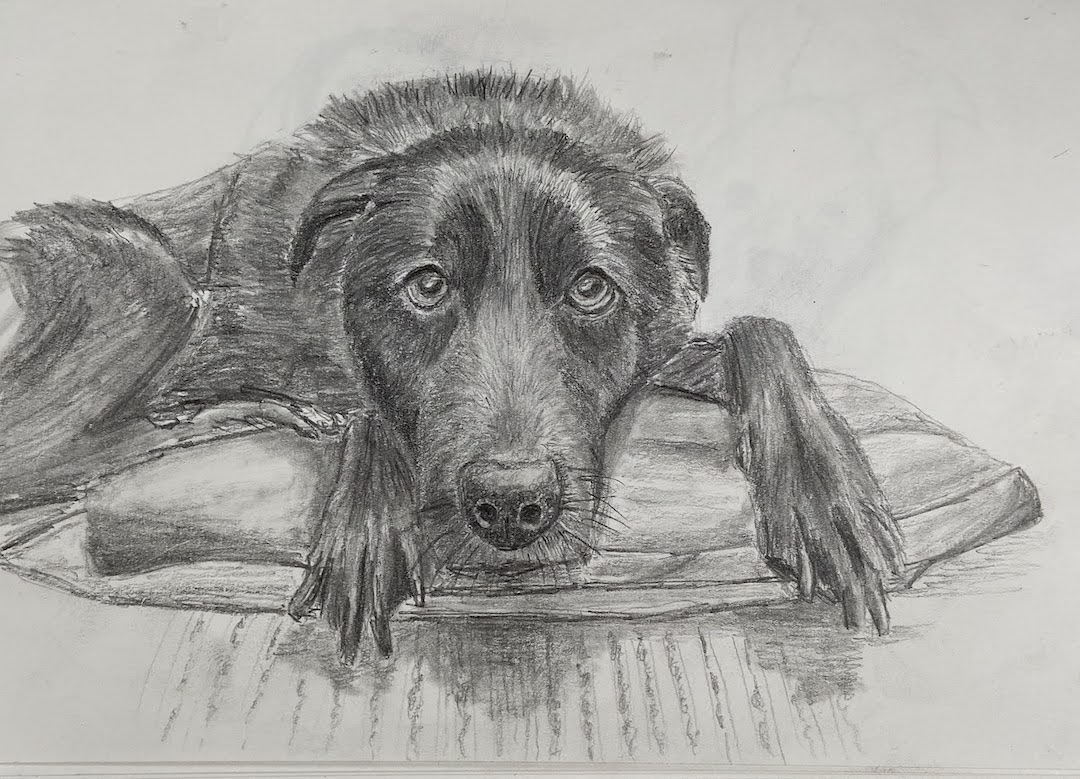
Vedder | 8 x 6” | Graphite on Paper

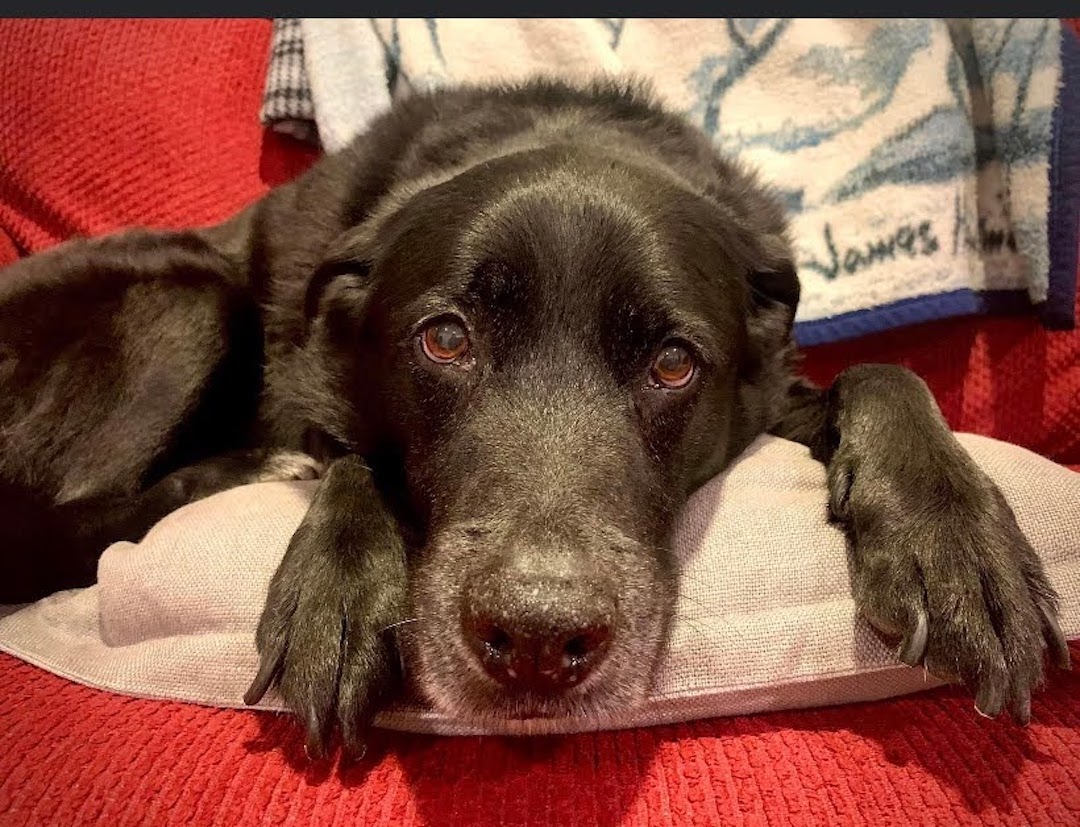
This is a friend’s dog, Vedder, who I’ve never met… the dog, not the friend. I only know about this adorable black lab (I’m guessing… looks like a black lab, hoping he’s a rescue dog, too) because I occasionally check Facebook and he manages to take a lot of really good photos of his dog. As a doggy dad myself, I know how hard it is to get a good pic of your dog, especially a black one. 

I’ve been spending a lot more time this year working on dog portraits and other dog related compositions. Many of them have fallen short of anything resembling artwork, thus the lack of posts on this topic. However, some things have started to click lately and I believe it’s because I’ve returned to the core exercise of drawing instead of painting dogs. I’ll bounce back to painting them very soon, but sometimes my brain needs a reset in terms of how it translates between my eyes and the canvas. 

Vedder was all about getting the face, especially those soulful eyes, just right. I’m pretty happy with the outcome, especially since the initial drawing block-in required very little adjustment. In other words, the proportions of the face and related features was accurate from the outset, something I hadn’t been getting right with the brush and canvas. 

Drawing dogs is very tedious, but it’s offset by very rewarding outcomes. The process of drawing hair via thousands of “strokes” is a test of patience, which artists really need, but oftentimes it can be elusive as you’re excited to get a composition done. Vedder is an older pup, how old I’m not sure, so he has features such as white hairs and a well-used dog nose. These are very tricky to get onto the paper with graphite only. As you can tell from this composition I missed the mark on that front, but the rest of the details I hope capture the personality of Vedder. I’ll have to cross post this on Facebook to see if my friend has an opinion. 

On the technical front, I used 3 pencils – HB, 2B, and 4B. The paper is very basic, no idea what it actually is because it’s a sketchbook that I usually tote around on trips when I want to get some sketching done to capture the place for posterity. Very convenient, but the paper has no teeth which makes it hard to layer hair strokes with value shading.

Thanks for reading… and GO HUG YOUR DOG!

#artbern #berntx #crashboomzip #painting #art #abplanalp #bernabplanalp #austinartists #rescuedogs #bestfriends #dogsofinstagram #dogsofinsta #dogstagram #oilpainting #fineart #petsofinstagram #contemporaryart #fosteringsaveslives #dogsofig #adoptme #takemehome #austinpetsalive #mutts #muttsofinstagram #snouts #wetnoses #blacklabs #hugyourdog

Flat as a Cat’s Tail in a Room of Rockers

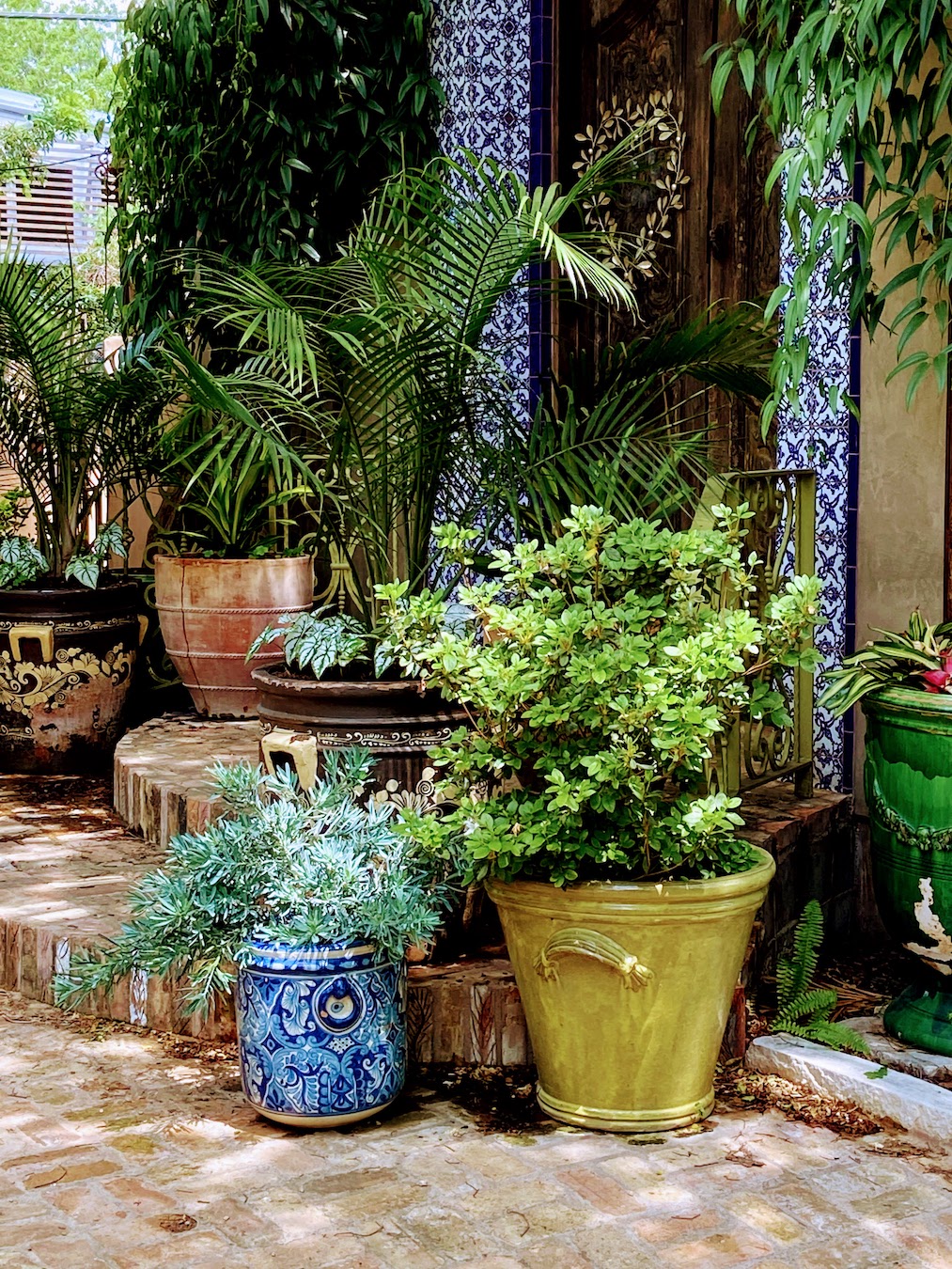
3 Pots | 9 x 12” | Oil on Paper

A composition comes around sometimes and slaps you in the face, a hard reminder that you don’t know jack squat about painting. In this case, 3 Pots told me I need to work harder on my plein air compositions, starting with the basics. There’s something addictive about plein air painting, even on the bad days that seem like you can’t get anything right.

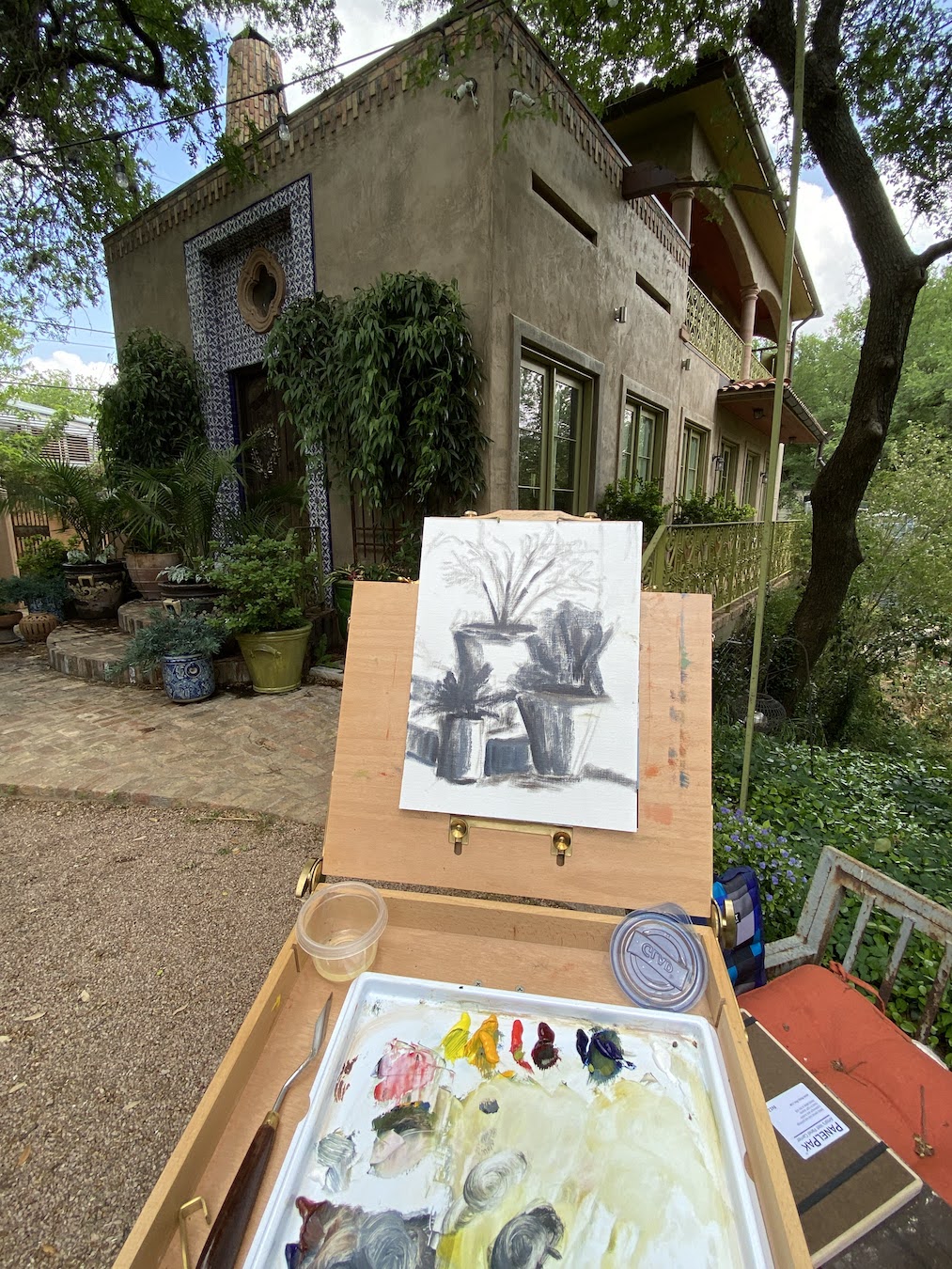
This plein air session was at a workshop in Austin with Laurel Daniel, an exceptional artist and talented instructor. We were at Jennifer’s Gardens in central Austin and during the afternoon session I focused on 3 pots that were sitting on some terra cotta steps. They were in the shade, error #1. The green plant was in a green pot and the blue plant was in a blue pot, error #2. I decided to paint them anyway, error #3. 

Despite the challenges in the field, one thing I did get right and was pretty excited about, was the initial block in. I was able to quickly get all 3 pots laid in properly and to scale without issue, something a few years ago I would have needed a few sessions to get right. Then everything went flat. 

Chronic Muted / Flat Plein Air Work

For the life of me I couldn’t get enough value contrast going, as if I was actually ignoring that basic design tenet. I really noticed in when I returned to the studio a few days later and was frankly amazed at the mono-value of the entire composition. There was also no getting around the design error of green pot on green plant and blue pot on blue plant. 

I considered throwing it in the bin, but opted to spend a dedicated 2 hours, and not a minute more, to see how I could fix the core elements. The first step was to really push the darks throughout, which I would find later was the crux of the issue. I need to really recognize what “dark” looks like in outdoor lighting – more practice should remedy this issue. The next step of the fix was to blast the contrast in values next to the darkest darks with the brightest, most saturated hues. While I ended up painting over some of these areas later, the establishment of what the value range should entail was very helpful. Remember, error #1 was shitty composition selection, everything shaded and no lighting contrasts. 

The remainder of the rework was trying to establish nuanced color differences between the artificial color of the pots and the “same” natural colors of the plants. This part was surprisingly interesting, something I’d never done before, but it proved a valuable learning experience that I know will come in handy with urban landscapes in the future. 

I have another “flat” plein air piece to fix, but likely won’t have the patience to tackle it for a few weeks, but I will do a side by side comparison with 3 Pots when it’s done so we can see if I learned anything… or if I’m just a hopeless idiot sometimes. 

Thanks for reading!

#artbern #berntx #crashboomzip #painting #art #abplanalp #austinartists #atxartist #atxart #atxlife #jennifersgardens #laureldaniel #pleinairaustin 

Darwin Was Wrong

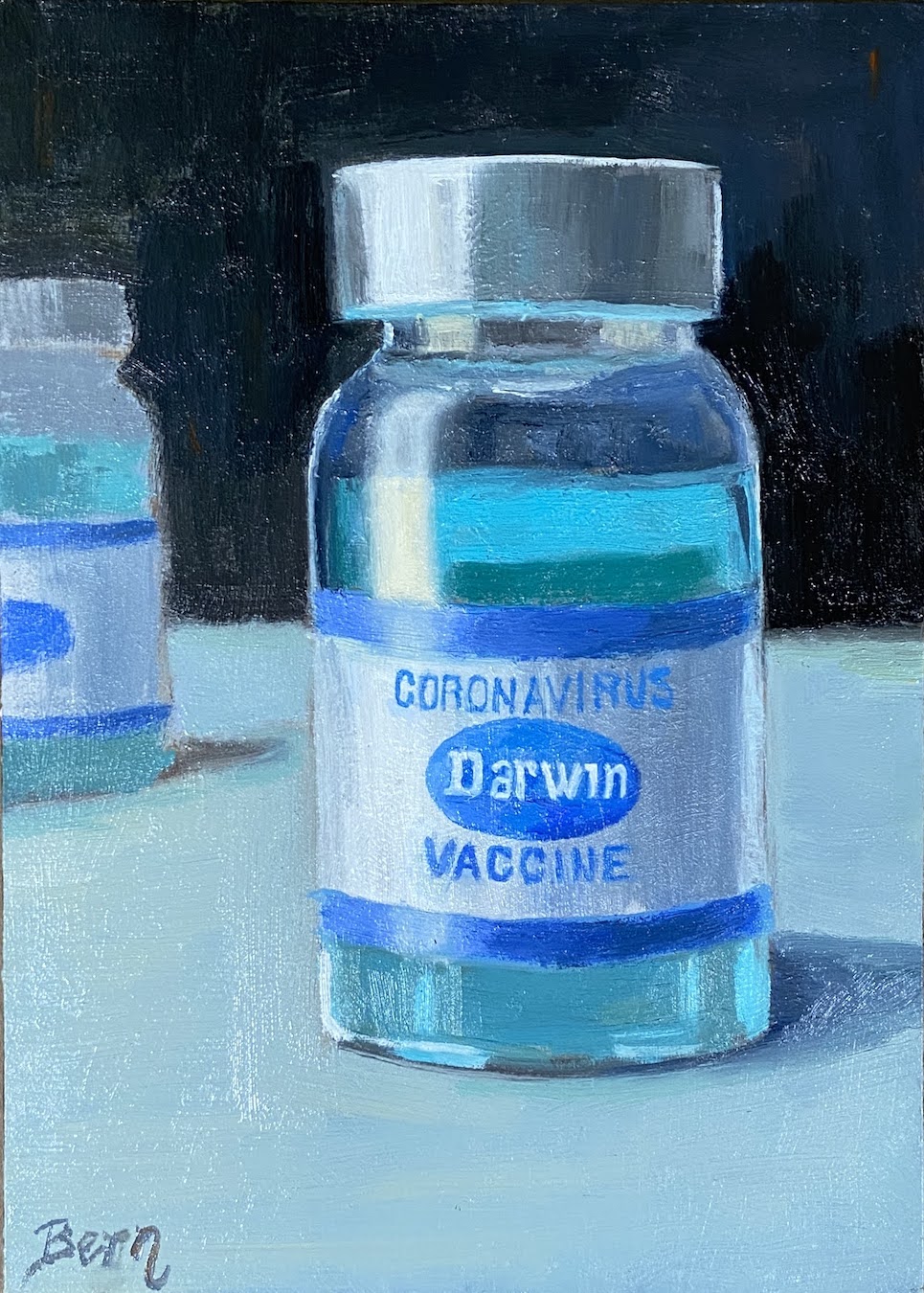
Darwin was wrong vaccine
Darwin | 5 x 7” | Oil on Board

I’ve been working on this piece off and on for the past few weeks. Sometimes I can get my head locked onto an idea that is not necessarily a bad concept, but I overlook the execution challenges, which are either a) well above my skill level, or b) something I forgot I hate doing. In this case it was the latter, specifically my reticence for painting anything with lettering. It’s so tedious, difficult, and frankly it blows my mind up a little every time I try. 

The reference photo for Darwin was essential because it provided the actual Pfizer vaccine label details, and this particular photo was handy because it had that laboratory look and feel. I was drawn to the blue hues and the metallic lid, so I tried to emphasize those elements. Let’s be honest, a vial of vaccine is, well, not the most compelling still life.


From a technical perspective, there were a few challenges with Darwin. The most obvious was the lettering, which I did free hand in the hopes that it would have a painterly feel to it, as opposed to using a stencil with perfect lines and symmetry. However, even with a stencil, the biggest challenge would have been the contour of the round vial and the very subtle changes the letters make based on their positioning. Lastly, the sea of blues was very tricky because the source of the blue color is unknown and yet it permeates the table and the vaccine liquid itself. 


It was also very important to point out that the “Darwin” name was replacing the vaccine manufacturer’s name, in this case Pfizer. I haven’t done a lot of compositions with alternative messaging, but this idea jumped in my head one day and it seemed to convey a number of thoughts and opinions, which could be open for interpretation depending on your own perspectives and beliefs. 

For me, I’ve always said that Darwin was wrong, and the COVID pandemic is the poster child of this sentiment. Survival of the fittest doesn’t apply to humanity – it hasn’t since the Bronze Age. The “strong” are frequently challenged to counterbalance the obstinance, stupidity, incompetence, and most of all, the narcissism of the “weak” within our species. Would Darwin advocate for a vaccine? I think not – pretty sure he was a herd immunity kinda guy. But was he an anti-vaxxer?  Or is Darwin actually right when it comes to COVID, namely that once the vaccines were rolled out, 99% (or something close to that figure) of deaths were the unvaccinated. Hmmmm… something to think about.

You gotta love the non-committal nature of messaging through art! 

#artbern #berntx #crashboomzip #painting #art #abplanalp #austinartists #atxartist #atxart #atxlife #COVID #darwin #vaccinesrule #darwinwaswrong #pfizervaccine #vaccineswork #hangupanddrive

ARRAY show at Art for the People Gallery! 

My favorite Austin gallery has included one of my recent pieces in their current group show, Array

Sunrise Trail View (12” x 9”, oil on board) is a plein air piece I did recently in Sedona, Arizona. You can find more about this piece from an earlier blog post here. If you live in Austin, I highly recommend swinging by Art for the People Gallery, as it has a wide range of fun, quality artwork for, well, the people. You can find more information about the current show, Array, at AFTPG web site. If you’re not in Austin, note that all of the pieces (including Sunrise Trail View) are available for viewing / purchase in their online store. 


I have a few more pieces that I started plein air in Sedona, so if you like Sunrise Trail View, stay tuned for a couple others in the coming months. 


Thanks for reading!

#artbern #berntx #crashboomzip #painting #art #abplanalp #austinartists #atxartist #atxart #atxlife #sedona #pleinairaustin #artforthepeoplegallery #aftpg 

Channelling Artistic Hate

Mirror Pond, Austin TX | 6 x 8” | Oil on Linen Board

Taking in more of the great Spring weather, I headed out to do some more plein air. This session was at a place called Mirror Pond in Austin, very close to Lady Bird Lake and part of the Zilker Nature Preserve, which was the first nature preserve created in Austin back in 1935 (learn more at AustinTexas.gov). No dogs allowed, so my canine assistant, Zip, could not join me today to keep the pesky squirrels away. 

Mirror Pond is gorgeous and tranquil when it has water, but I was pretty sure today it would be dry, which it was. What I wasn’t expecting was such a pretty site despite the lack of water. I probably wouldn’t have noticed half of the cool geological formations had there been a pond to ogle over. 

For those of you not familiar with plein air painting, one of the challenges is finding subjects that you can paint quickly and not get scuttled by the fast moving sun and shadows. I’ve included a gallery of photos below that show this effect and why it’s important to a) move fast, and b) take lots of photos early so you have something to work from in the studio to finish the work.


This composition started out as nothing more than a “get out there and paint” goal, but once I got the piece back in the studio and began fiddling around with some compositional ideas, it sucked me in for hours! 

I was asking myself “why the hell am I painting a cedar tree again?” As noted in previous posts, I hate cedar trees for many reasons, but it seems that I can channel that fury-based energy into artistic currency. In this particular case, I pivoted my initial focal point from the sideway limestone arch to the interestingly shaped cedar tree above it.

The first thing that caught my attention was the cool shape of the cedar tree; it’s actually the inverted shape of the limestone arch upon which it sits. See it? It’s not perfect, but close enough to draw my interest. Secondly, I used some artistic license to accent the red (representing my burning hatred of these trees) of the cedar limbs to make the entirety of the greens pop. It also had the unintended side effect of increasing the value contrast against all the other greens in this composition. 

Painting Mirror Pond has also reminded me that the craft of plein air is often about making a mediocre landscape come to life. Not sure if I managed to pull it off this time, but I learned a lot along the way.

#artbern #berntx #crashboomzip #painting #art #abplanalp #austinartists #pleinairaustin #cedarallergies #austinparksfoundation #zilkernaturepreserve #atxartist #atxart #atxlife

Play Hard, Sleep Hard

Dangling Paws 2 | 16 x 12″ | Oil on Canvas Board

There are many great facets of our canine companionships, not the least of which is the bond built through play sessions, especially the kind that simply wear them out! Dangling Paws 2 conveys the perspective of the doggy parent watching their pup sleep (but not in a creepy way) after a long session of fetch, most likely with that tennis ball in the background. 

The paw is the focal point of the composition, but ensuring it didn’t dominate the entire painting required a lot of finesse and patience, of which I have an abundance of neither. I liken it to going to a nice restaurant only to have the night ruined by a loud table who invariably has some douchebag who can’t handle his alcohol screaming at the top of his lungs all night to tell story after boring, nonsensical story. Yeah, that guy… I didn’t want the dog paw to turn into a painting version of that guy.

The trick for me was to make the head bereft of details, focus on basic forms and emphasize the anatomy that really matters with a dog’s head – nose, eyes and ears. It was also very important to make it slightly cooler in temperature, which would push it back and allow the paw to stand out, but not too much. 

I had a number of re-do sessions before I got the blue hues just right, namely not too blue and cool, otherwise the paw became too dominant, i.e. douchebag paw! To get it to work, there were two things I had to meter properly. First, the cool blues were tempered by light orange to knock down the saturation, but also mixing in a tad of ivory black. Second, the paw fur needed to be a lot darker without much blue. I might cringe re-reading this post in the future when I learn a more “proper” way to solve this problem, but I opted to create two foundational blacks. One was a mix of Burnt Sienna, Ultramarine Blue (UB), Cadmium Yellow Medium, and Indian Red; the second mixture was primarily Ivory Black and UB with a splash of Indian Red. 

Building up the texture of the hair along the leg was a lot of trial and error. I thought about switching the dog’s hair color to brown so it would be easier to adjust values, but ultimately I stumbled onto a lucky suggestion. I was re-watching a painting video by Johanne Mangi, who does great dog portraiture, and she mentioned, almost in passing, that she used Venetian Red to make the most black-of-black fur colors. She said it was counterintuitive to add red of any kind to darken blacks, but she insisted it worked. Next thing you know I’m slapping a skeptical stroke of Indian Red straight from the tube onto the paw… and I’ll be damned if it didn’t work! 

I thought about using a palette knife for the paw pads, similar to what was done in Dangling Paws 1, but I liked the results from the brushwork a lot, so opted to leave well enough alone. I purposefully excluded longer hairs between the pads because I like to reserve that effect for older dogs, which in my experience all seem to get shaggy paw pads as they age. I’ll tee that up for Dangling Paws 3 or 4. 

The gallery below is done in chronological order so you can see the roller coaster ride of the process. Sometimes a piece just paints itself – I know a lot of artists out there will disagree with that and say that never happens – but we can all agree sometimes they fight you on the easel, but you have to stick with it and remember it’s part of the creative process.  

Thanks for reading and if you have a dog, go play!

#artbern #berntx #crashboomzip #painting #art #abplanalp #austinartists #rescuedogs #bestfriends #dogsofinstagram #dogsofinsta #dogstagram #oilpainting #fineart #petsofinstagram #contemporaryart #fosteringsaveslives #dogsofig #adoptme #takemehome #austinpetsalive #mutts #muttsofinstagram #snouts #wetnoses #blacklabs

Attack of the Cedars!

Cedar Season | 5 x 7” | Oil on Canvas Board

#artbern #berntx #crashboomzip #painting #art #abplanalp #austinartists #pleinairaustin #cedarallergies #HOL #bartonsprings

Cedar Season is my second plein air session of the year… I’m falling behind and need to get outside more often as Spring is upon us. However, to my credit, it’s not easy going into the field in Austin in January and February because cedar allergies are at peak. But last month I doubled up on the Claritin and headed into the woods along the Hill of Life and Barton Springs Greenbelt.

I brought my trusty painting sidekick, Zip, to help keep an eye out for any suspicious squirrel activity. Actually, I should say she’s my aspiring painting sidekick, of which this session was an initial interview. The real question was to see if she could manage 2-3 hours of watching me paint, or otherwise occupy herself without wandering around wreaking havoc with her 12 ft leash. 

Let’s be clear – I hate Texas cedar trees. They account for all of my sinus headaches in January and February, and anywhere they grow, they take over the landscape. Supposedly they’re not an invasive species, but last time I checked “invasive” was defined as “(especially of plants or a disease) tending to spread prolifically and undesirably or harmfully.” So, like I said, they’re invasive. 

Why did I opt for a painting of cedars? Well, it turns out they create a very pretty landscape when you’re buried in a forest trail of the damned things. I also wanted to tackle the challenge of all the greens, trunks, and cast shadows.

A few compositional decisions that seemed to work well. First, the cedar trunks are a brownish red color, so I used a heavy dose of Alizarin Crimson to accent the focal areas of the larger trees; I believe that mix also has some Indian Red, too. The second decision was to make the cast shadows very dark, which works well (at least I think so… what about you?) in creating more contrasts and a sense of tree coverage. 

In terms of the sidekick interview, Zip got the job! She was very relaxed and entertained by my strange activity, but occasionally treats fell from the sky… so she was content. 

Thanks for reading!