Breath of Plein Air!

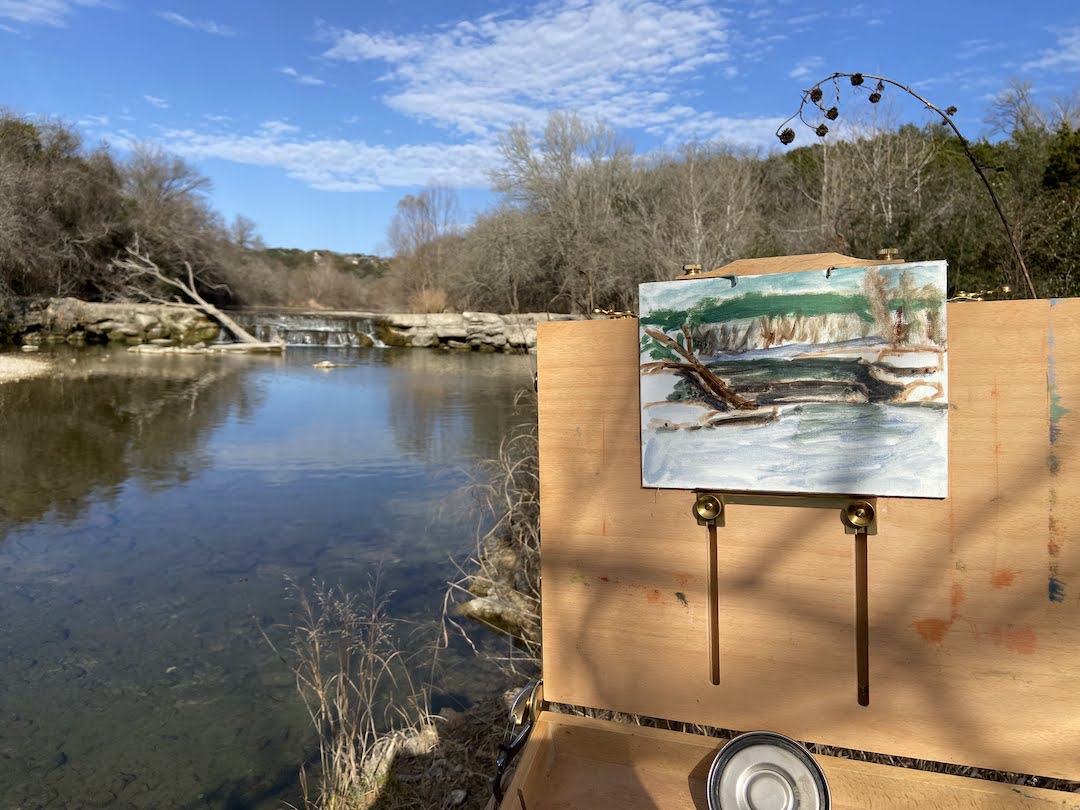
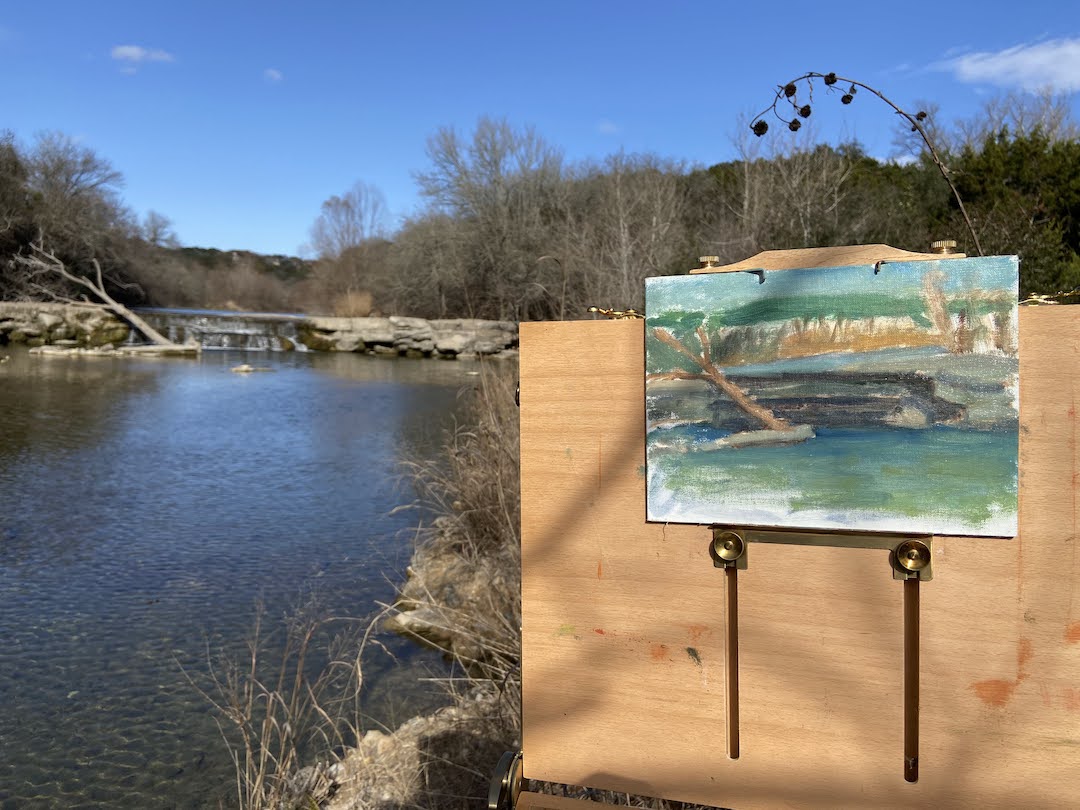
HOL Dam Falls | 7” x 5” | Oil on Canvas Board

One of my 2022 art-related resolutions is to do more plein air work. I’ve managed to log a couple of days in the field near my house to start the year; this is the first of those sessions. 


There is a trailhead in my neighborhood to the Barton Creek Greenbelt called the Hill of Life (HOL). At the bottom of the HOL (about 1/2 mile long and 300′ elevation drop) is Barton Creek, which is the source of these falls, unofficially called the HOL Falls. Over the past few years, however, due to the massive growth in Austin’s population (I’m lookin’ at you California and Florida), endless festival cycle, and general obsession the world seems to have with Austin, this area has been overrun and trashed with douchebags and idiots who are obsessed with Instagram selfies at the swimming holes along the creek. But I digress…


On weekday mornings, however, there is a respite from the obnoxious, disrespectful throngs and I can enjoy the greenbelt as it was intended. On this day I set up along the creek bank about 100 yards downstream from the falls. I made the aesthetic decision to represent a more springtime landscape, namely all the green trees in the background, but the remainder of the scene is accurate. 


It was a gorgeous morning with a very light wind. The sun was a little obscured by high clouds, but there were enough moments when it peeked through that I got a good read on shadows and value contrasts. Plein air session are always entertaining because something unplanned invariably happens – wind blew my trash bag up and onto my paints, tall reeds also brushed against my painting in the breeze a few times (nature’s paintbrush I suppose), and of course I forgot a wet canvas holder so I had to MacGyver a packing solution for the hike home. 


Overall I’m happy with the outcome, but the greens and atmospheric perspective are off. I’d like to get to the point where my plein air has a sense of place like Laurel Daniel, but that’s going to take a lot more practice… which I don’t mind given how fun it is to paint outdoors! 


Thanks for reading!


#artbern #berntx #crashboomzip #painting #art #abplanalp #austinartists #pleinairaustin #hilloflife #HOL #bartonsprings #closetheHOLtrailhead #sosalliance

Sedona Plein Air Workshop – Part 1

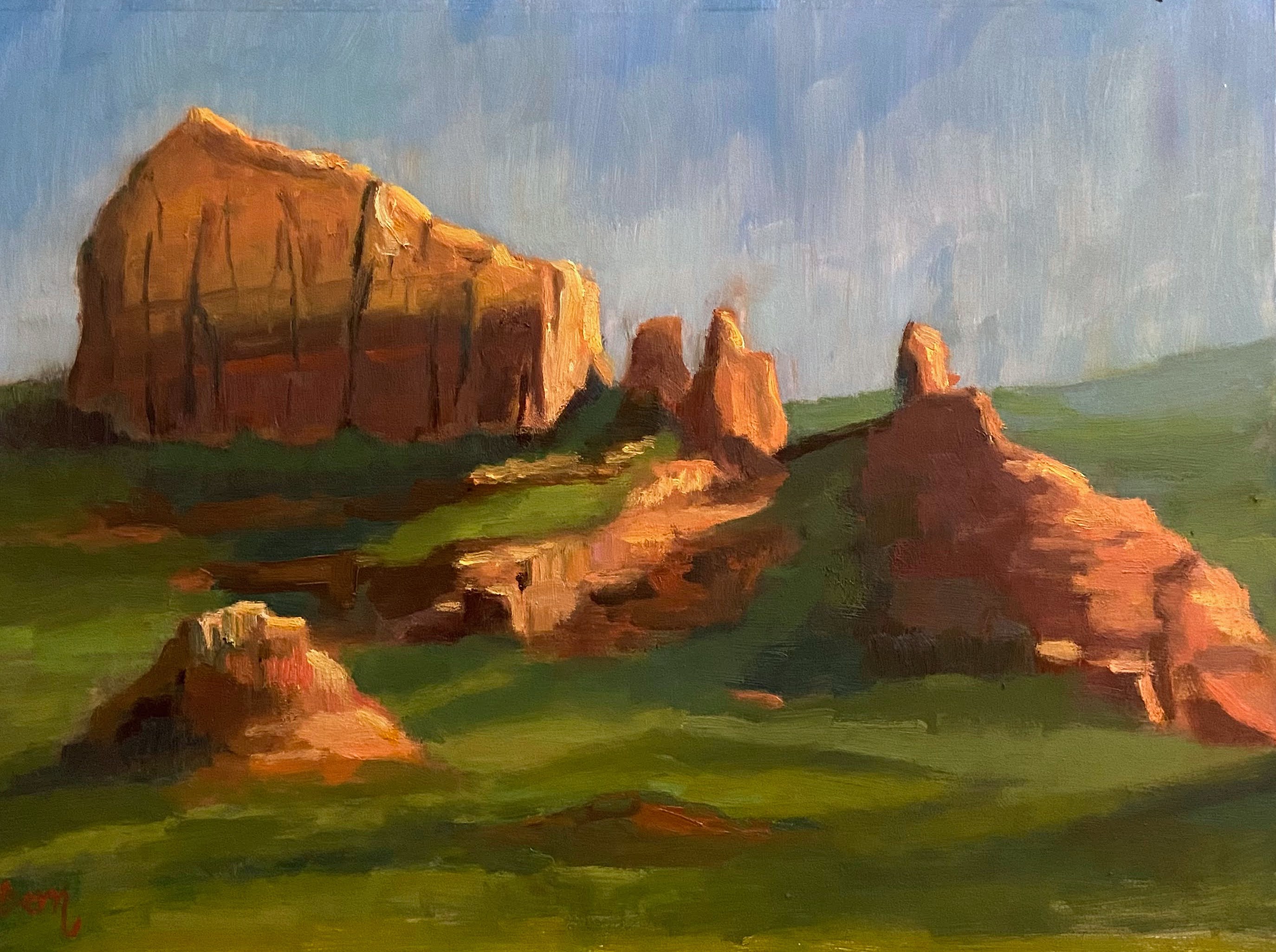
Sunrise Trail View, Sedona, AZ | 12” x 9” | Oil on Board

In November, I attended a plein air workshop in Sedona, Arizona, led by Bill Cramer. Bill is a very talented artist based in Prescott, Arizona, so he knows these landscapes very well. His artwork is captivating and a mastery of light and colors – I encourage you to take a look at his work when you get some time.

Our class size was a little large – 10 people – but it was a good mix of friendly artists, the vast majority of who were established professionals with a wide range of styles. Despite having so many students (I consider anything over 6 alot), what you miss out on 1on1 time with the instructor is in many ways made up by observing and chatting with the other artists in the class. This is especially true in plein air workshops because it seems plein air is not a beginner level pursuit of artists, so the attendees tend to be professionals, experienced hobbyists, or overzealous fans of the instructor. Ha! If you’re an artist, you know exactly what I’m talking about. 🙂

The best thing about this workshop was getting to experience this adventure with my mom. She has been painting as a back-up creative outlet to her true love, the piano, but over the years she’s come to appreciate plein air painting, something I’d been talking about for years (despite my lack of actual experience in getting outside to paint on a regular basis). We don’t live in the same state, so painting together is a very rare activity, although we talk about it all the time. To say this was a real treat for me is an understatement… painting side by side, cursing at the same geographical challenges, and experiencing the beautiful offerings of Sedona together was fantastic.

On to the composition, Sunrise Trail View. This piece is a painting in two stages. The first was plein air for a couple of hours in the early morning on location at the Sunrise Trail looking north east. For those of you who know the Sedona area, this is behind the West Sedona Elementary School and Community Pool. I believe the rock formation / mountain is Steamboat Rock, but I’m not 100% sure; maybe someone from Sedona can chime in and clarify.

The second stage was the studio refinement, which wasn’t too extensive for this piece, but it took a few sessions to get it done. One of the trickier parts for me was getting the hang of the technique and strokes to paint the rock formations. It turns out the best approach was to vary brush sizes a little and lay in strokes both horizontal and vertical. My reference photos don’t capture the very rich reds, yellows and oranges of the mountains, so having been on location for a couple days was invaluable in this regard.

Bill Cramer provided some great advice during the workshop and we covered 4 separate locations in the 2 days together. The sites were full of great painting options, plenty of room, and all very different from each other. It didn’t hurt that we had gorgeous weather on both days, so the early starts were worth it.

There are a few other pieces that are partially done from the workshop. I will likely tackle 2 of the 3 in the coming weeks to build on what I’ve learned. Stay tuned!

#berntx #crashboomzip #painting #art #sedona #billcramer #pleinair #arizona #painting #abplanalp

Porto Venere… Don’t Tell Anyone

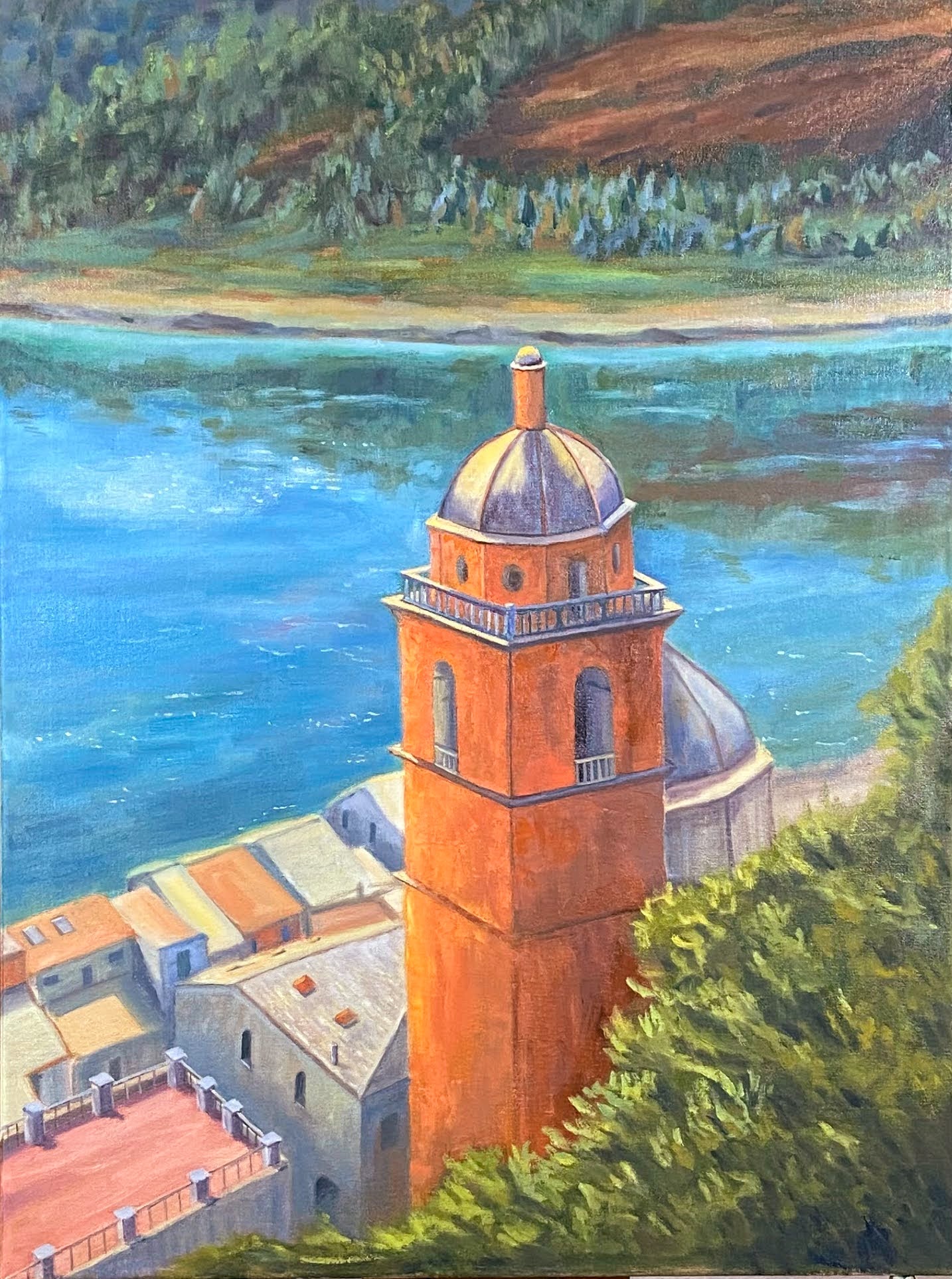
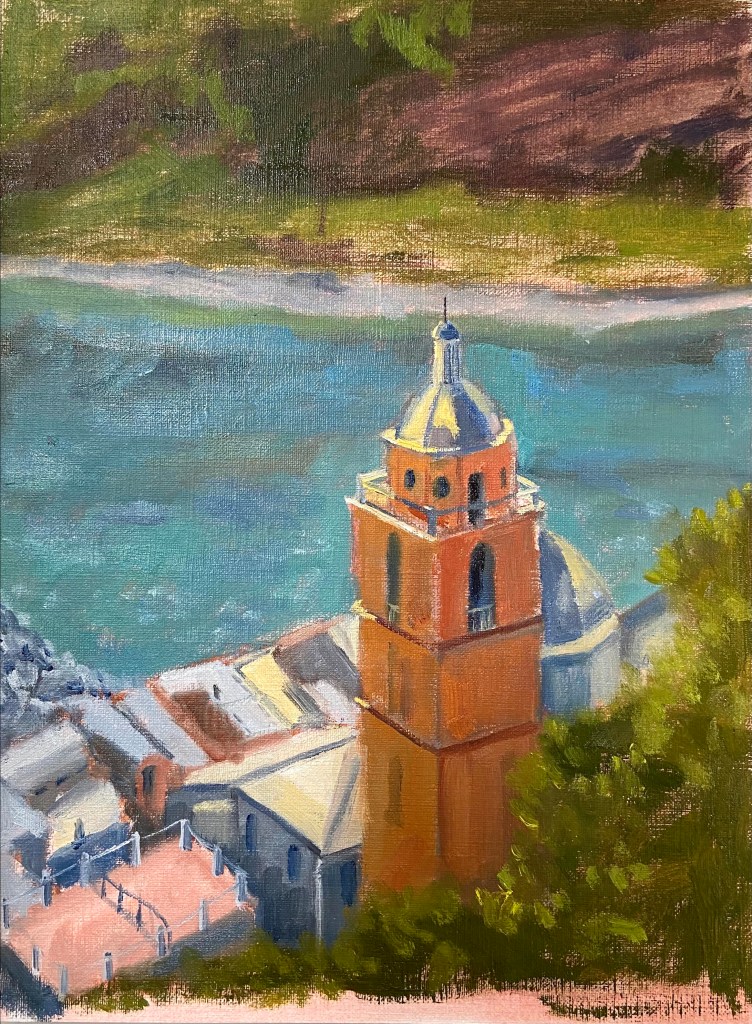
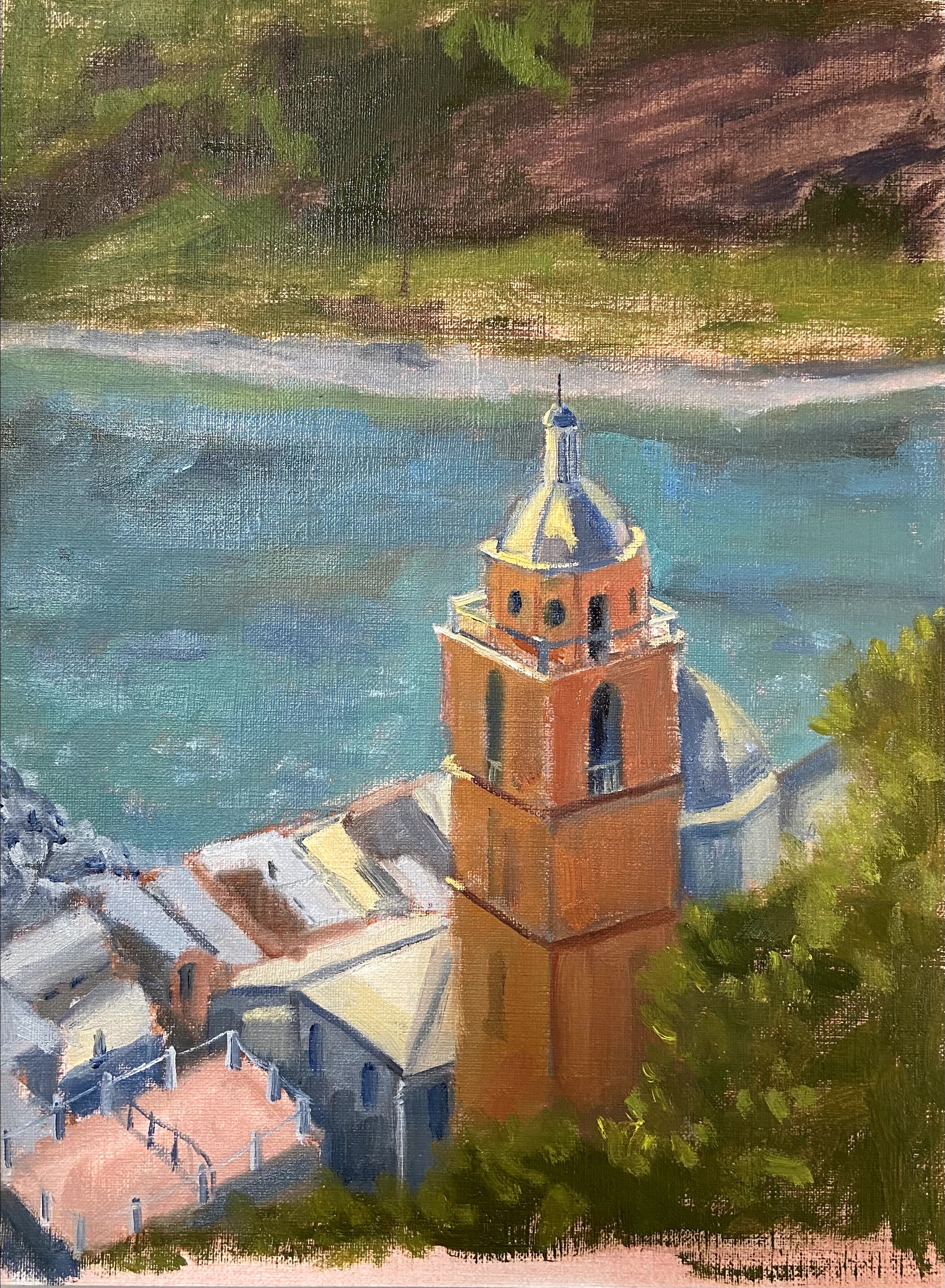
Porto Venere, Italy | 20” x 30” | Oil on Canvas

Earlier this year, I did a quick study of this composition and instantly loved the bones of the work. Sometimes you get a sense for a painting right away and you just know it’s going to be fun to paint!


The original study can be found in this previous post, Porto Venere (study), which was much smaller, 9 x 12” on paper. It was clear that the key elements to this piece were lighting and linear perspective.
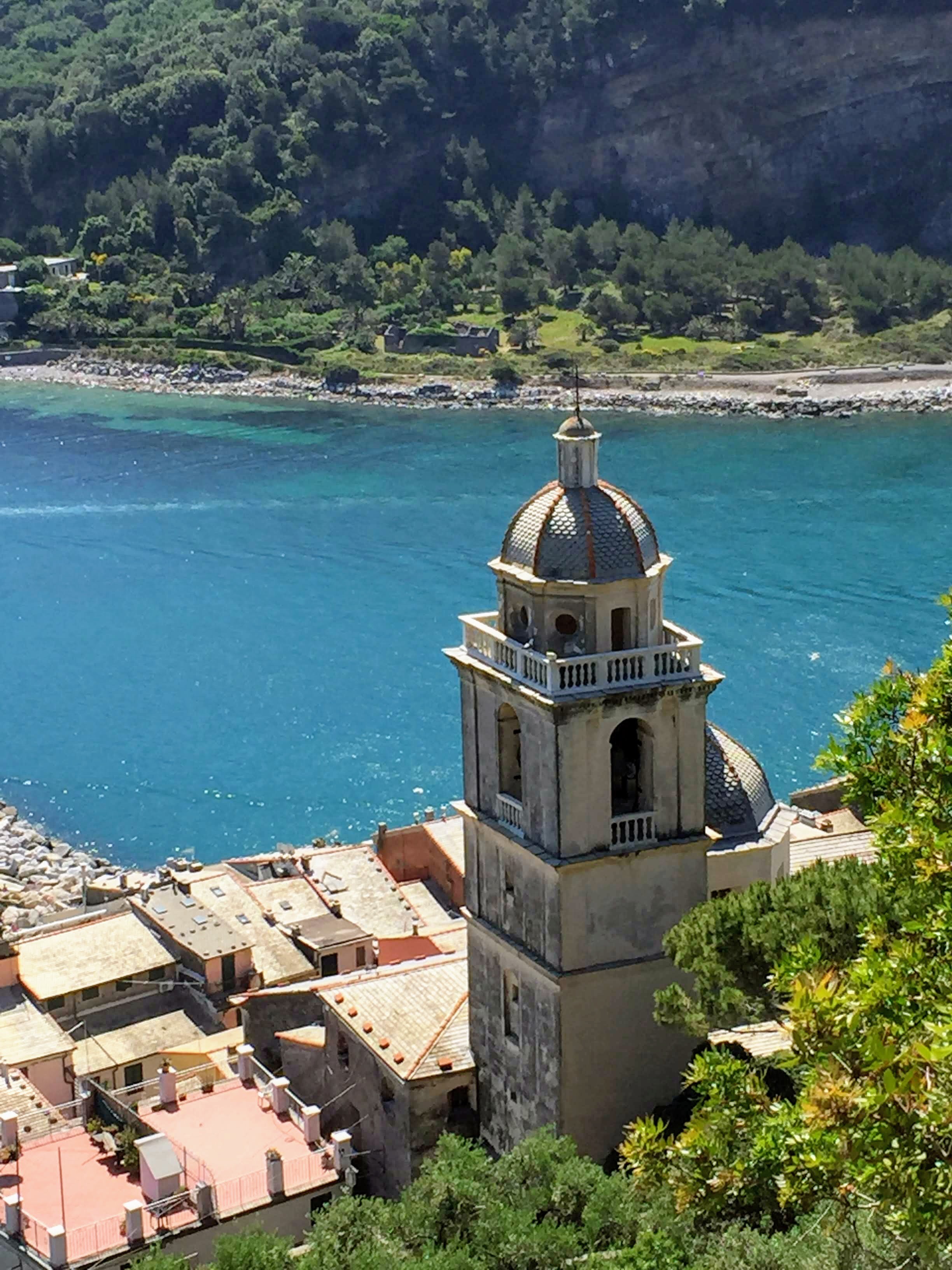
The values in the photo are crap (midday, washed out), so it required some improvisation and memory recall from the day I was actually in Porto Venere. I wanted to make sure the sense of the very bright sun was captured in the light and shadow contrasts, but still find a way to make the rooftops surrounding the main tower look interesting and not entirely washed out. To help get an idea of what good looks like, I referenced some works by Kanna Aoki (https://www.kannaaoki.com), who has a great talent for capturing the essence of bright sunny days in San Francisco. 


The linear perspective is always a challenge (albeit a fun one) when dealing with cityscapes, but this piece was all about the tower. I took the reference photo from the castle on top of the hill upon which the town is built, so my vantage point was above the tower, but getting the lines right was still very important to convey the size of the building. The trickiest part, however, was the dome. Rather than try and explain the myriad ways it tripped me up, go ahead and try to draw just that part of the building. Too many lines and curves for a mere mortal to tackle. 


There was also a wonderful Bob Ross moment as I experimented with the tower. I was mixing some orange color options on my palette and decided to quickly lay down a little paint on the canvas with a palette knife. The intent was to simply dab a little on the canvas, but my hand slipped and spread a big splotch! That happy accident, turns out, gave the impression of old time stucco, or whatever these old buildings are crafted from, and I loved the texture and realistic result. Nowhere else on the composition did I use a palette knife technique, so it helps add complexity to the piece and focus the viewer to the tower.

 
Last note is the use of reflections of the landscape in the water, which is not in the reference photo. I redid the water numerous times, and each time I used a variation of blue without reflections it dominated the painting and became a distraction. The reflections, I think, give a lot more depth and perspective, which I’m happy with, but one day I’ll have to learn how to do muddled reflections so the water doesn’t look so still. 


If you get a chance to go to this part of Italy, stay in Porto Venere and avoid the crushing crowds of the Cinque Terre. Just don’t tell anyone else – it’s a wonderful place because it’s still a bit of a secret.


Ciao! 


#portovenere #italy #cinqueterre #berntx #crashboomzip #painting #art #artatx #austinartists

Porto Venere

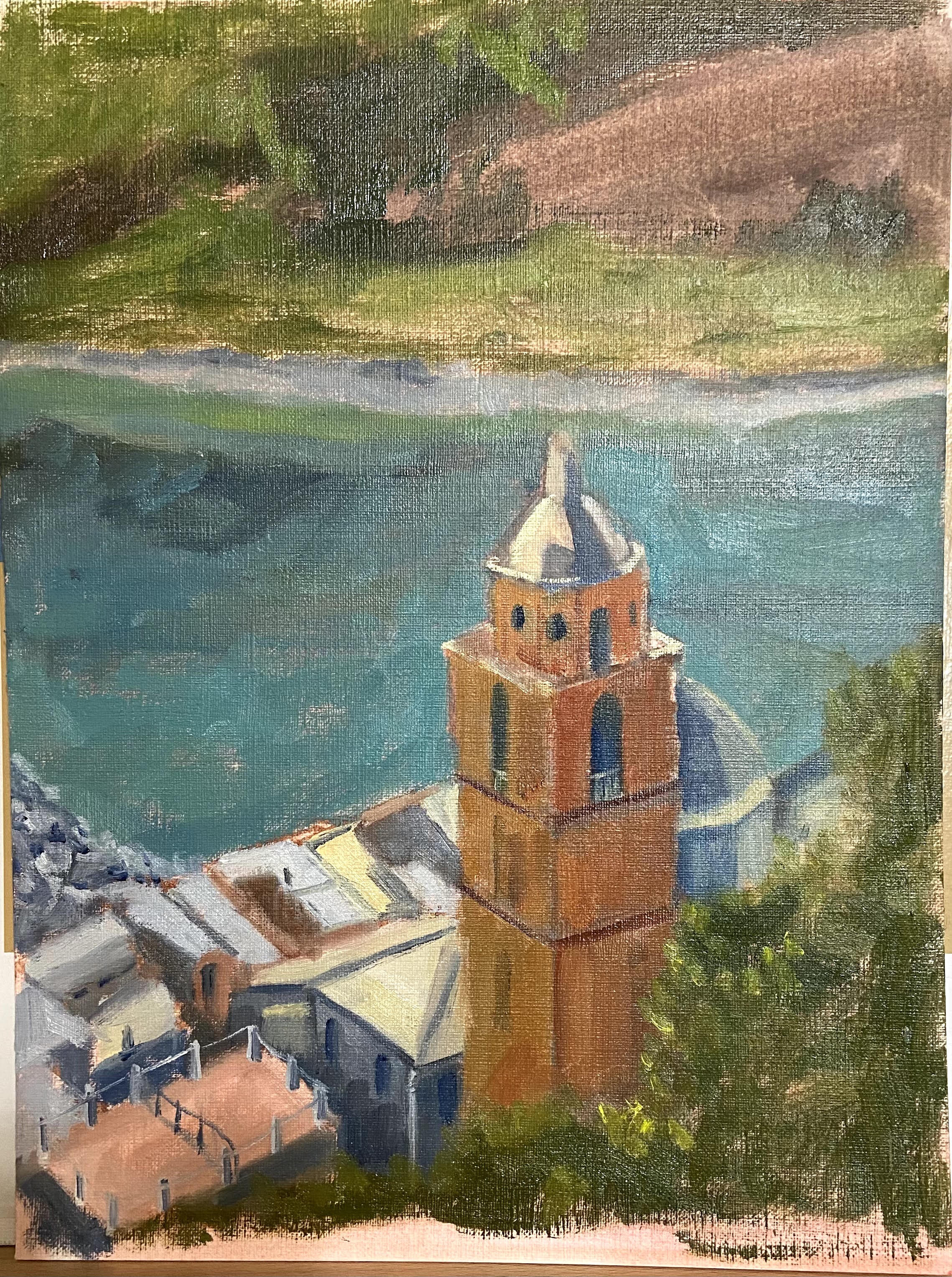
Porto Venere (study)| 9” x 12” | Oil on Canvas Paper

This composition has been on my short list for awhile, so I’m very excited to have put brush to canvas finally. The subject matter is a photo I took from the hillside in Porto Venere, Italy. The power of the sun shining on the church tower with the beautiful blue water in the background was an ideal setup for this piece. It kinda painted itself.

I’ve done a number of practice (studies) pieces in the past to get an idea of what I need to consider prior to tackling a larger composition. It’s extremely helpful to get a sense of proportions, values, and start thinking through edits that will make the piece work regardless of what’s in the photo or real life. My problem with doing a study is that I always end up getting sucked into the details – I just can’t help it – so they drag on and I lose the value of doing a practice piece.

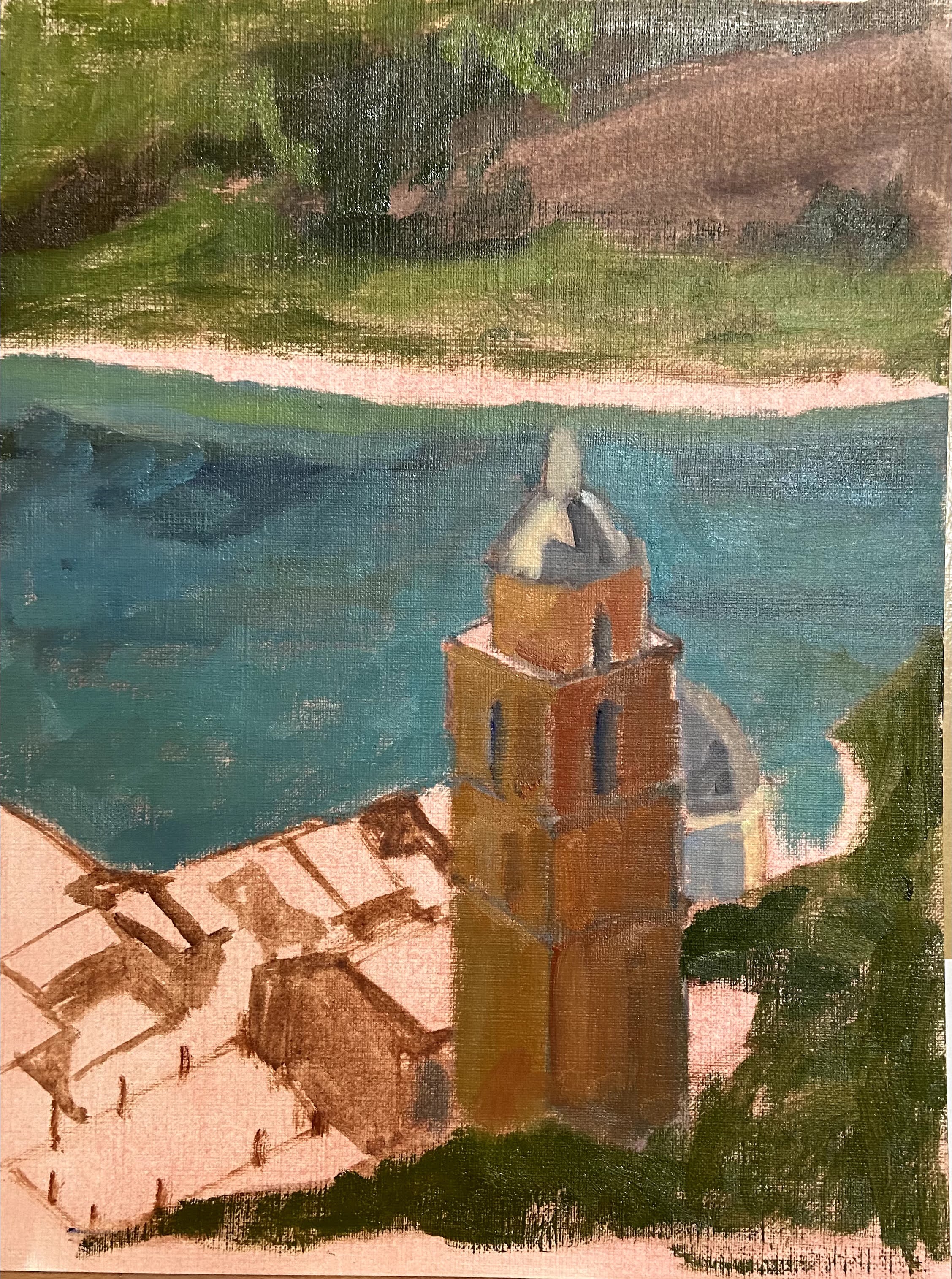
To solve this problem, Porto Venere was time bound to 2 hours after the block-in was done. I literally ran a stopwatch to ensure I stayed true to the spirit of the study and focus on the compositional core elements, not the fine details. It forced me to make quick decisions and gave the piece a more painterly style, which I like and will try to incorporate into the full-size painting.

#portovenere #italy #cinqueterre #berntx #crashboomzip #painting #art

Rothenburg ob der Tauber

Oil on Panel | 9” x 12”

This composition is from a trip we made to Germany not too long ago, although after this awful year it seems like a hundred years in the past. Since traveling isn’t an option, I’ve decided to start painting great locations as a meager alternative.

If you Google Rothenburg ob der Tauber, this scene is what will show up in the list of photos. While I agree it’s an outstanding view, I wanted to drive the focal point to the clock tower instead of the orange wooden house in the foreground.

This is the end of a late Fall day, which wasn’t very clear without the addition of bundled up people walking through the streets. I struggled with the decision to add people to the piece, but in the end I wanted to convey the sense of season and a more idyllic time without tourists.

New Orleans Street Car

Oil on Paper | 8” x 10” 

This is a study of one of New Orleans’ iconic street cars, specifically the Saint Charles line, which are a national treasure and are on the register of National Historic Landmarks.  

The intent of this study was to capture the fantastic late afternoon light as it enveloped the street car scene. There’s a lot of green, but the metallic nature of the street car is reflective and a distinct texture against the backdrop of the old New Orleans oak trees. 

This study gets me excited to do a larger composition, which will have similar lighting but some additional details that I didn’t want to tackle with this test drive. I’m happy I took careful notes regarding the color mixtures, too. Always take color notes! 

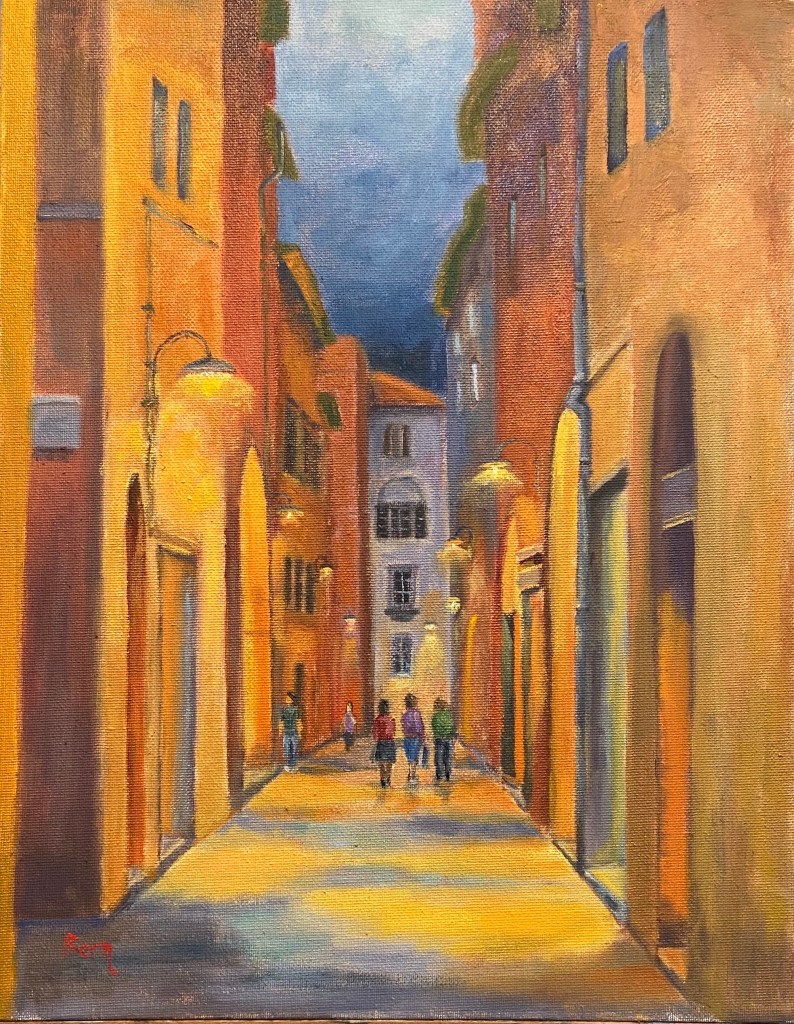
Aperitivo Time!

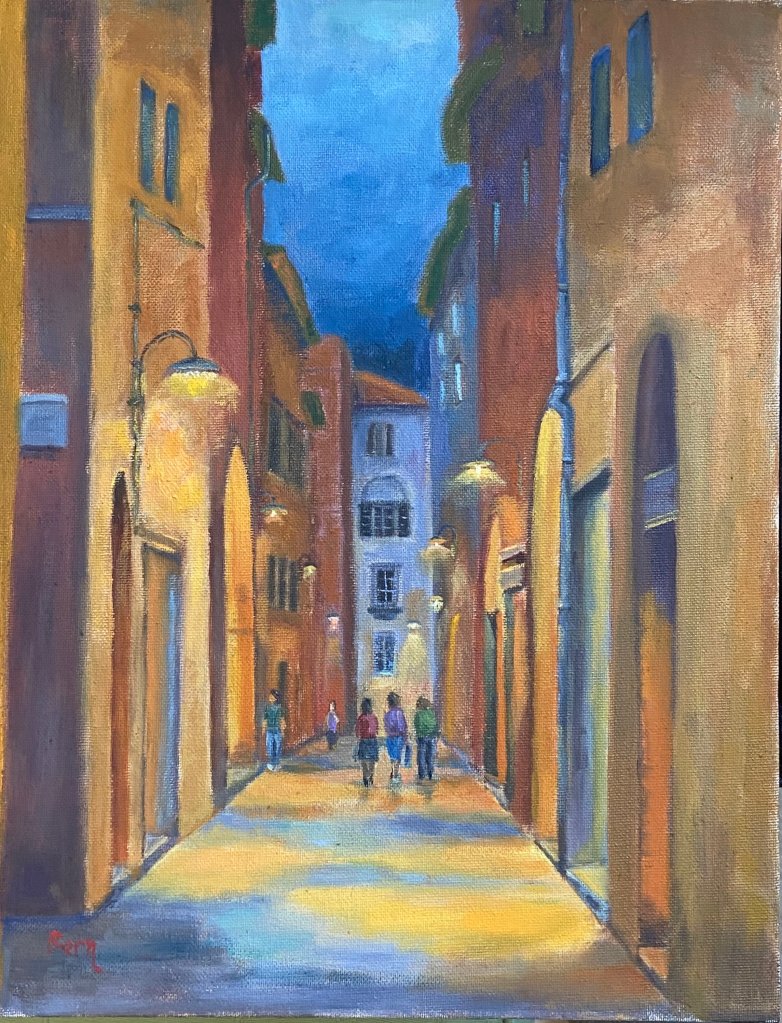
Painting | Oil on Canvas Panel 11” x 14” 

I’ve had the privilege of spending multiple vacations in Italy and am of the opinion that it is simply one of the most fantastic places in the world. The people, food, wine, traditions and, of course apperitivo time! 

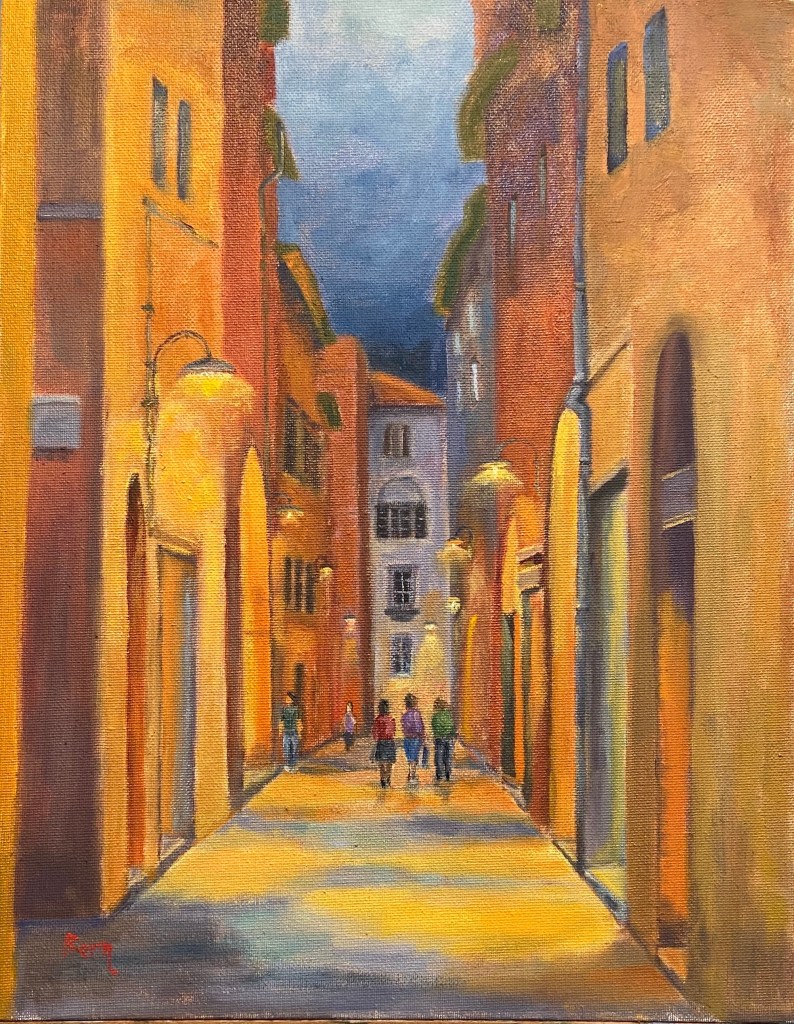
Final painting of Aperitivo Time
Aperitivo Time!

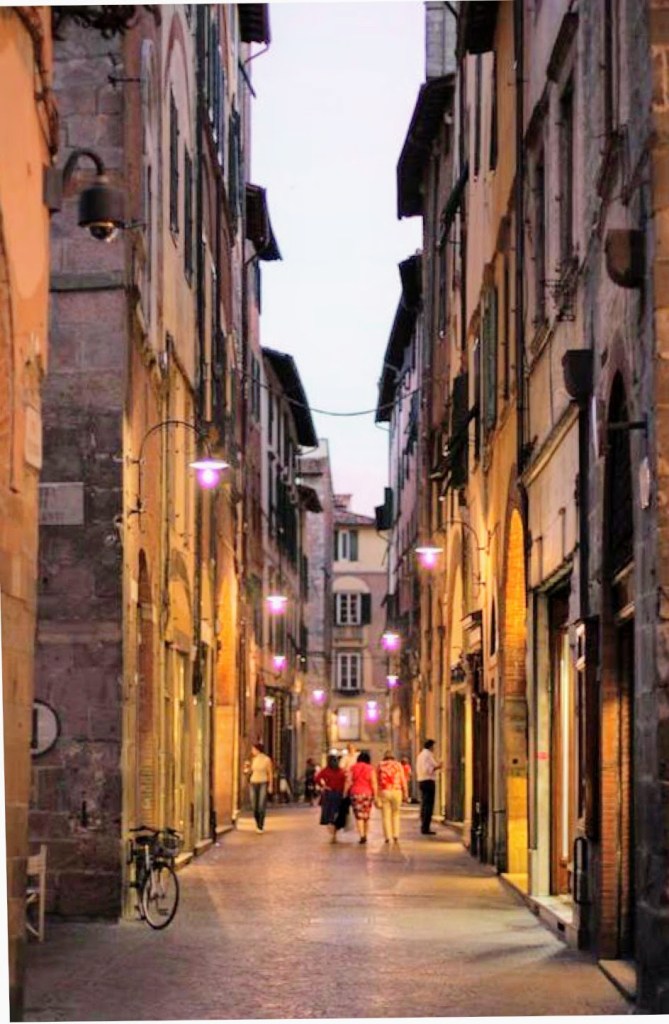
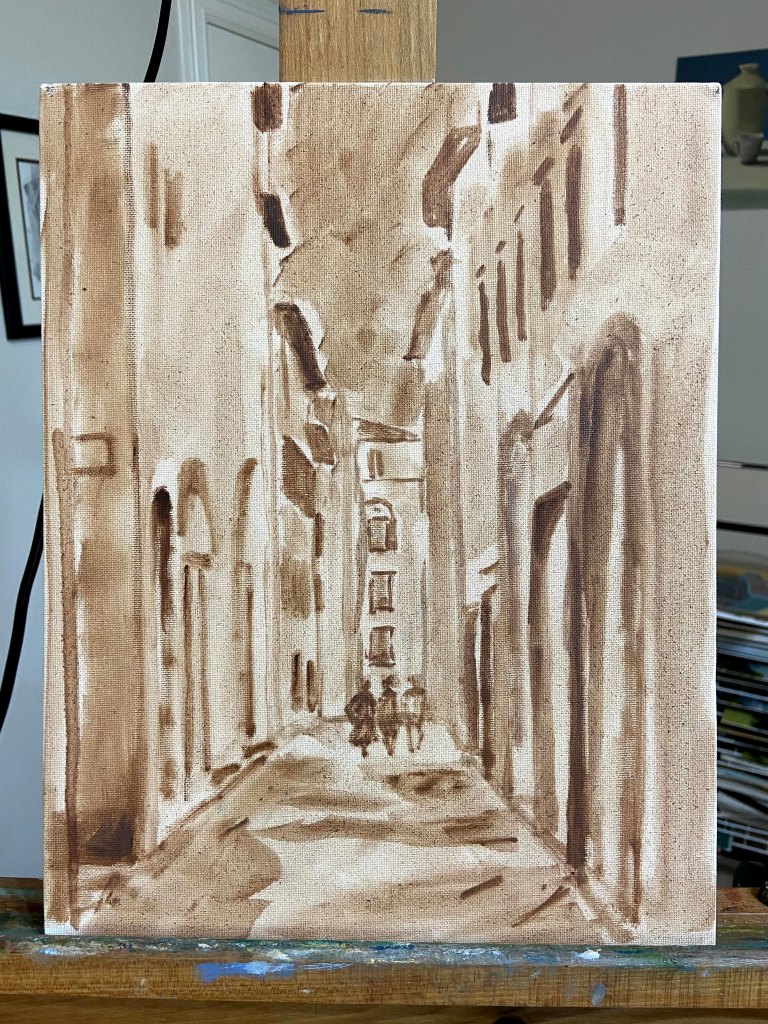
This particular scene is from a street in Lucca, Italy. The reference photo is earlier in the evening, just when the street lights go on, but I pushed the timing back a few hours so the lighting was more prominent. And just like magic, it was apperitivo time – break out the Aperol and snacks! If you don’t know what I’m talking about, rather than stumble through an explanation, just Google it yourself and promise yourself that one day you’ll go experience it first hand. Now back to the art…

This was another session to work on street scenes with people milling about their business (see the previous composition on this topic here, Lilliputian Italian Evening Painting). Ironically, the people were the easiest part of the composition, as the rest of the street and buildings took a lot of rework and adjustments along the way. Not sure why, but sometimes things don’t go smoothly. The other challenge was the surface of this particular canvas board. I had to really load up paint on the brushes in order to make progress, which was due to either the very toothy surface or the fact that it was very absorbent – this canvas board really drank down paint. 

This piece is also meant to be displayed in softer, yellow lighting. It was an experiment that I haven’t purposefully tried to do in the past, but the result is pretty cool. See the side-by-side comparison below, one with “normal” lighting, the other under the yellow/orange soft light. I feel like it adds to the mood and to some degree makes the street glow. 

Progression gallery below shows the block-in, early color layout, and final composition.

Lilliputian Italian Evening Painting

Italian Evening | Oil on Canvas Paper | 6 x 8

I’ve been working on a large seaside landscape piece for the past week and ran into a brutal reality… people! The focal point is a group of brightly colored boats sitting on very saturated blue green water, which has been enough of a challenge in and of itself. I had made good progress on that part of the composition and then realized how many people were in the photo along the harbor walkway. Initially, I thought I’d simply wave my artistic license wand and exclude them, but came to the realization that it would be very creepy and vacuous without people enjoying the sunny day.  

Here’s the problem – I can’t paint people!

The large landscape is on temporary hold while I figure this out; I’ve bounced over to this small piece as a way to practice painting Lilliputians. 
This is an evening landscape, I have no idea where, but I’ve declared it to be Italian, which aligns with my current artistic needs. I kept things loose and painterly, but tried to leverage high contrast values to emphasize the lighting on both the building walls as well as the light spilling out of the restaurants. The people were put in last, and I’m pretty happy with the outcome, although I used 5 or 6 different brushes to figure it out.

One thing about painting people into a landscape – it will make you remember to step away from the painting repeatedly to see if they look “right”. To look at them up close is a real horror show – oddly shaped legs, disproportionate torsos, and some of the worst wardrobe decisions ever made. But step back 6 feet and they look fine. 

There are also some areas of the window sills and exterior wall faces that were done with a palette knife, wet into wet paint, which worked well in terms of giving a realistic, aged look. 

Some notes on color mixing:

  • Green awnings = cobalt teal + variations of yellows including cad lemon yellow, cad yellow deep, and cad yellow light. Darker areas are a more traditional mix of ultramarine blue + cad yellow deep + alizarin.
  • Orange red exterior walls = another wide range that used burnt sienna, cad red medium, cad yellow light, and ultramarine blue. 
  • Lights = exterior lights leaned more towards Naples yellow and a touch of cad red light and white. Interior lights utilized the outside lighting mix plus cad yellow light. 

Lastly, I finally remembered to spread the palette around the entire painting to balance the hues. This was especially true across the vertical faces of the building exteriors, giving the scene a better sense of continuity. 

Thanks for reading!

Yosemite – El Capitan

Started a new project this week, El Capitan in Yosemite National Park. This is a massive wall of rock that is a marvel to see in person. I haven’t been able to find them on the photo, but there are a number of climbers on the wall. If I hadn’t taken the picture myself I wouldn’t believe it either.

This composition is actually a study to get some key aspects of the hues and values figured out prior to doing a much larger piece. This particular effort is being done on a 12×18 canvass board, all oils, using palette knife only.

Figuring out the variations of grays, both sunlit and shaded, is proving to be an enjoyable challenge. This is a great way to really learn the subtleties of warm and cool grays.

Another session or two and this preliminary piece should be done. Still need to get the right half of the shadow area done, but it’s moving along at a faster clip now that the value scale has finally been figured out. There’s more paint on this piece than I’d like to admit.


Heceta Head Lighthouse

This was a fun one! This is Heceta Head Lighthouse on the Oregon Coast. Breathtaking coastline and this area is particularly rugged and beautiful. One day I’ll replicate this painting en plein air, but for this iteration I had to use a reference photo. At least the photo was taken by myself, so I had a sense for the place; hoping some of that personal experience made it into the final work.

This piece is on 12″x18″ gesso panel and took about 8 hours to complete. While I still have a couple of minor highlights to add, this is close enough to the final product to call it done. I have never painted ocean, so the waves were a challenge, but I’ve started taking some lessons with a new instructor for a few hours every other week, and she was a tremendous guide when I ran into problems. If you like landscapes, check out her work at Mary Watkins Fine Art.

The palette is what I’m most excited about with this piece. While there’s a lot of (for me) technical skills that come into play with the water/waves/rocks, it’s the hues that I’m most excited about. Mary was very instrumental in teaching me about landscape warming and cooling using hues I hadn’t considered. Previously I had thought in terms of strict color wheel compliments to adjust saturation, but I learned how to think through the balance of what makes up colors that trend towards one end of the spectrum or another. For example, the use of Lemon Yellow, Cad Yellow Medium, or Yellow Ochre was actually a critical decision for this entire piece. Can you guess the winner and why?

Reference photo and progression timeline below. Enjoy!