New Orleans Street Car

Oil on Paper | 8” x 10” 

This is a study of one of New Orleans’ iconic street cars, specifically the Saint Charles line, which are a national treasure and are on the register of National Historic Landmarks.  

The intent of this study was to capture the fantastic late afternoon light as it enveloped the street car scene. There’s a lot of green, but the metallic nature of the street car is reflective and a distinct texture against the backdrop of the old New Orleans oak trees. 

This study gets me excited to do a larger composition, which will have similar lighting but some additional details that I didn’t want to tackle with this test drive. I’m happy I took careful notes regarding the color mixtures, too. Always take color notes! 

Vernazza

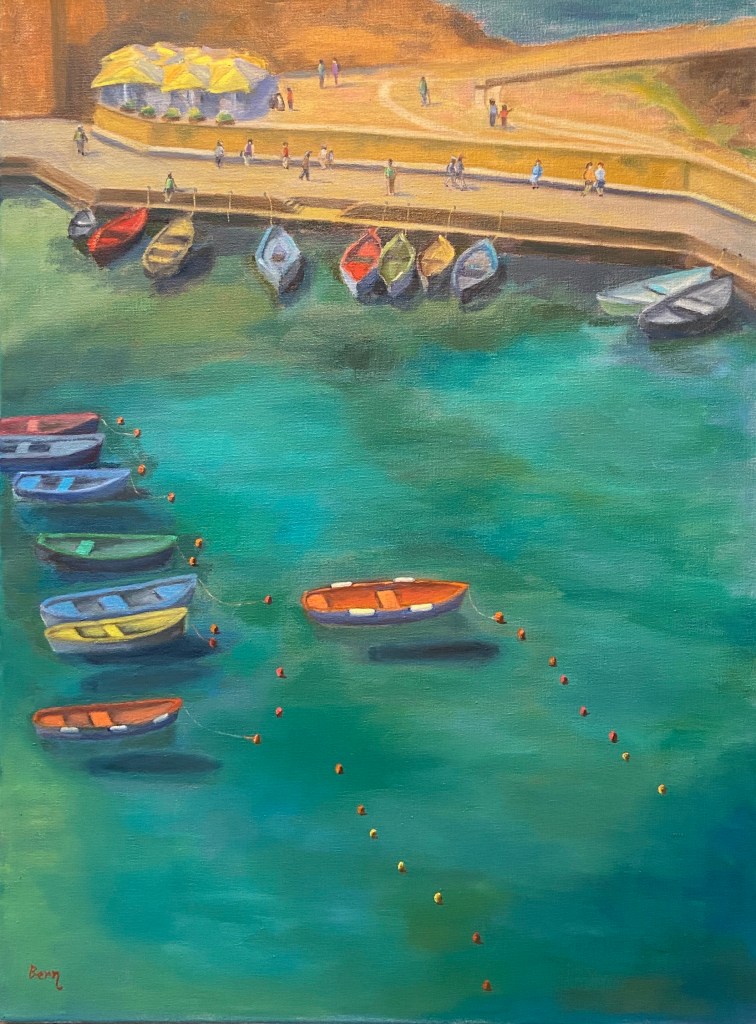
Vernazza | Oil on Canvas | 18” x 24” 

Vernazza-Italy-Cinque-Terre-painting-art-Bern-Abplanalp
Vernazza Harbor

It’s hard to declare any of the hundreds of bucolic coastal towns of Italy “the” iconic Italian coast, but Vernazza makes a lot of those lists for good reason. Granted, the crowds make it down right awful, but the windows of time outside of the hordes, or better yet beyond the tourist season entirely, show how perfection can be achieved. When it comes to painting, however, it gets a bit intimidating.

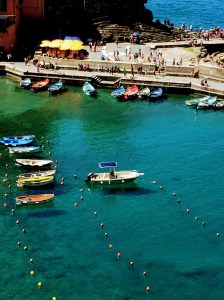
The reference photo is from a lookout along the from Monterosso al Mare to Vernazza, a beautiful stretch of the Cinque Terre that affords stunning views of the coastline, vineyards, and even some live music along the way. As we neared Vernazza on a cloudless day, the late morning sun lit up the colorful boats of the small harbor. It just had to be painted! 

Vernazza-Italy-Cinque-Terre
Vernazza, Italy
(Cinque Terre)

The challenges with this composition were varied and steep. I actually started it in early April, then had to set it aside for a month because it wasn’t progressing as I wanted and a breather can help recharge the artistic part of my brain in ways that sheer obstinance cannot. 

To be clear, it’s very unlikely I will ever paint another landscape from this angle, i.e. from hillside looking down at a steep perspective. Aside from all the unusual shapes it creates and skewing of details that you simply don’t see from a more familiar horizontal angle, it’s really hard to create a painting with depth when THERE IS NONE! I rarely yell in these posts, as I tend to be pretty even tempered and patient, so yelling isn’t part of my communication style, but in this instance I had to yell at myself after I came to the realization after having spent numerous sessions and countless hours on this painting that the reason I was having trouble creating depth was because there was virtually none. When you look down on a landscape at this angle, you absolutely kill the depth because there’s no reference in the distance. Hell, there isn’t even a horizon line, which means many of our painterly tricks to create depth as the scene recedes are non existent. 

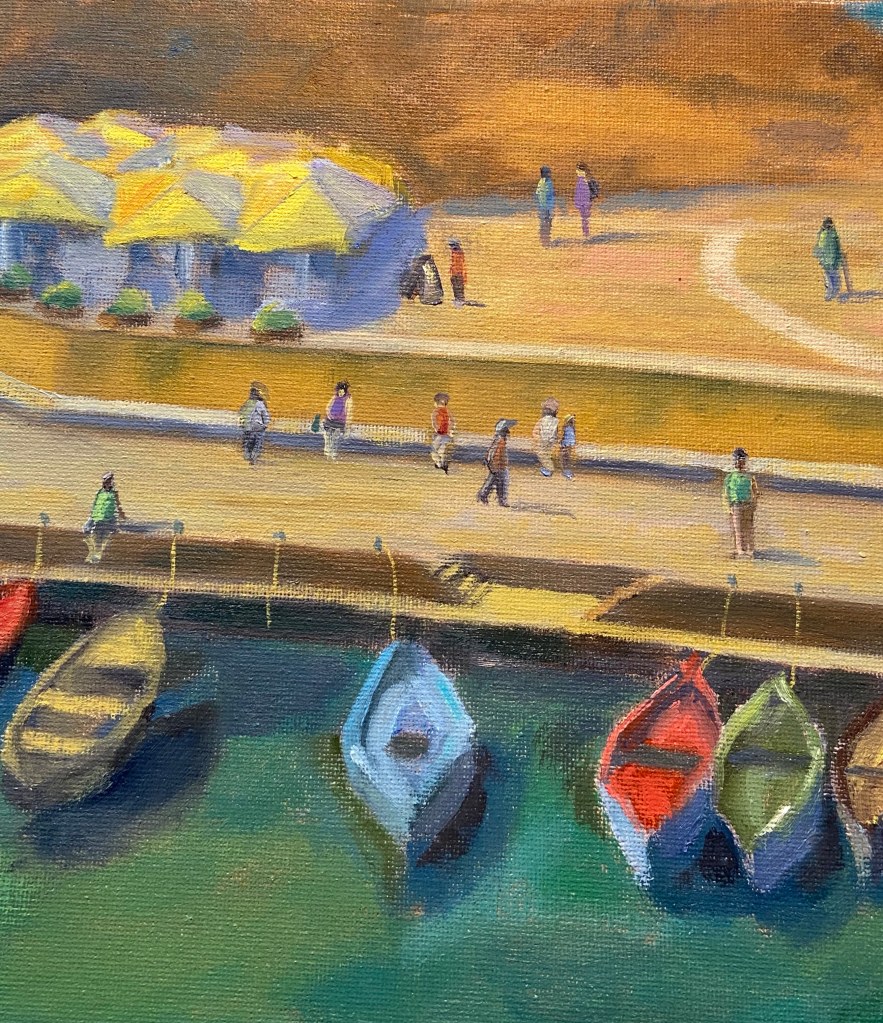
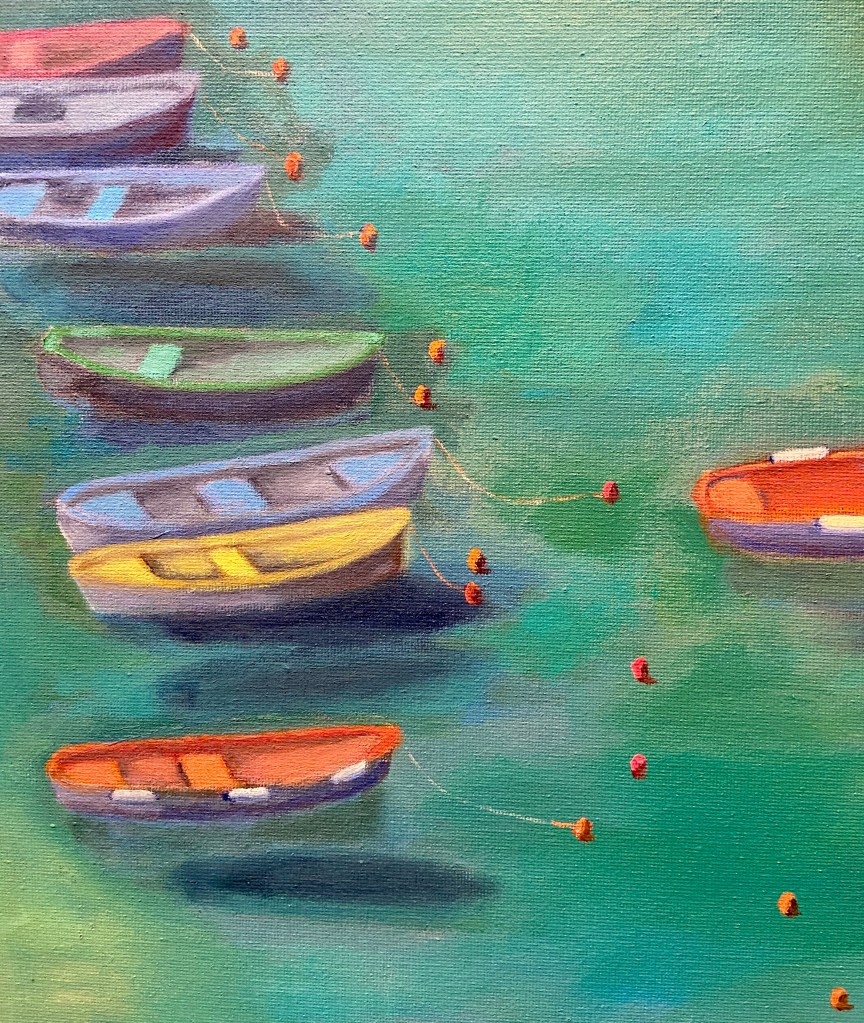
Despite the compositional challenge, I’m pleased with the outcome and I love the wide range of colors. And to some degree there is “depth” to the composition, namely in the dark shadows of the boats on the shallow harbor sea floor as well as the buoys floating on the water, helping guide the viewer around the painting. They look like they’re floating on a sea of blue-green, and, well… believe me, they are. Go see for yourself one day.

Aperitivo Time!

Painting | Oil on Canvas Panel 11” x 14” 

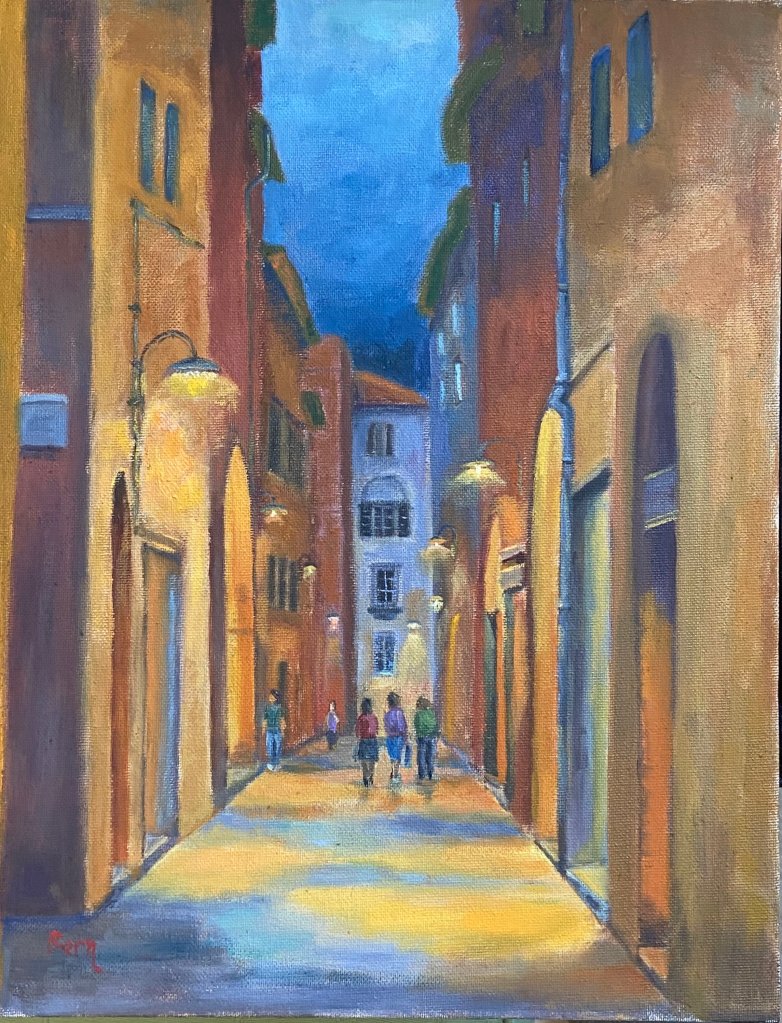
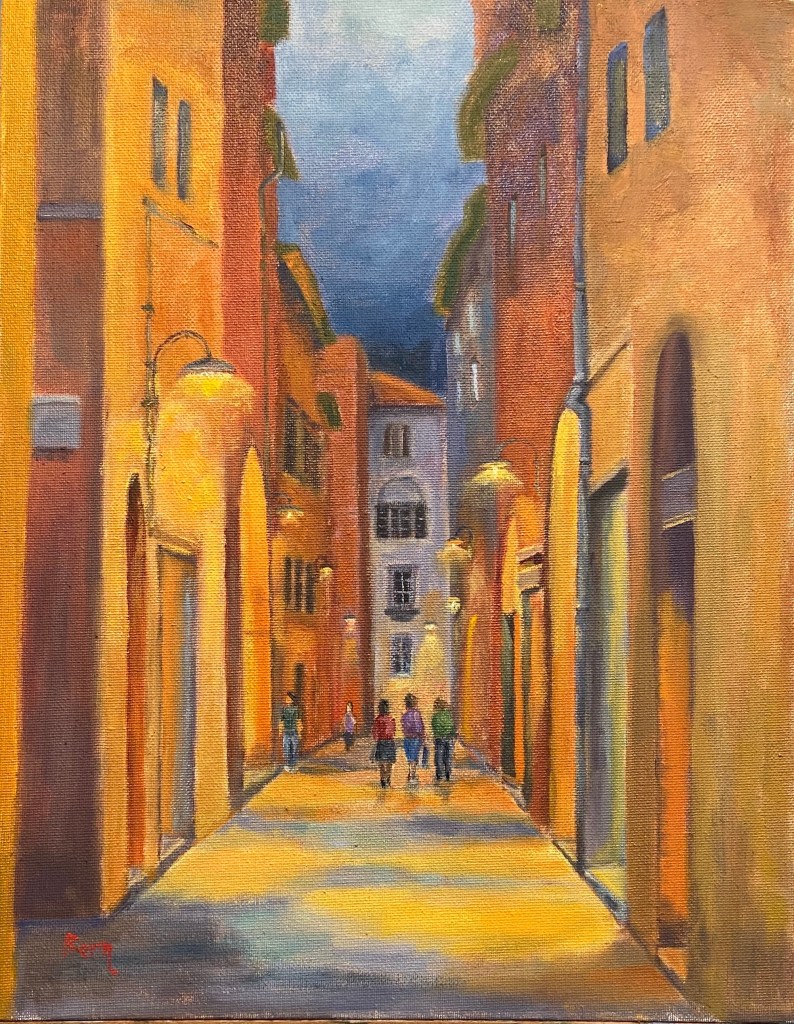
I’ve had the privilege of spending multiple vacations in Italy and am of the opinion that it is simply one of the most fantastic places in the world. The people, food, wine, traditions and, of course apperitivo time! 

Final painting of Aperitivo Time
Aperitivo Time!

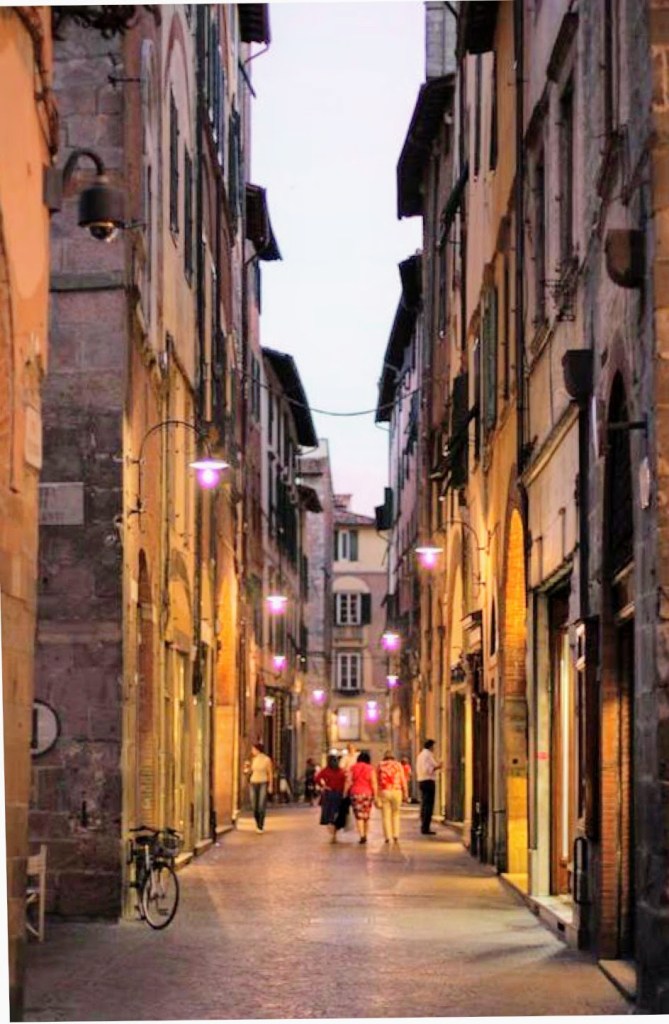
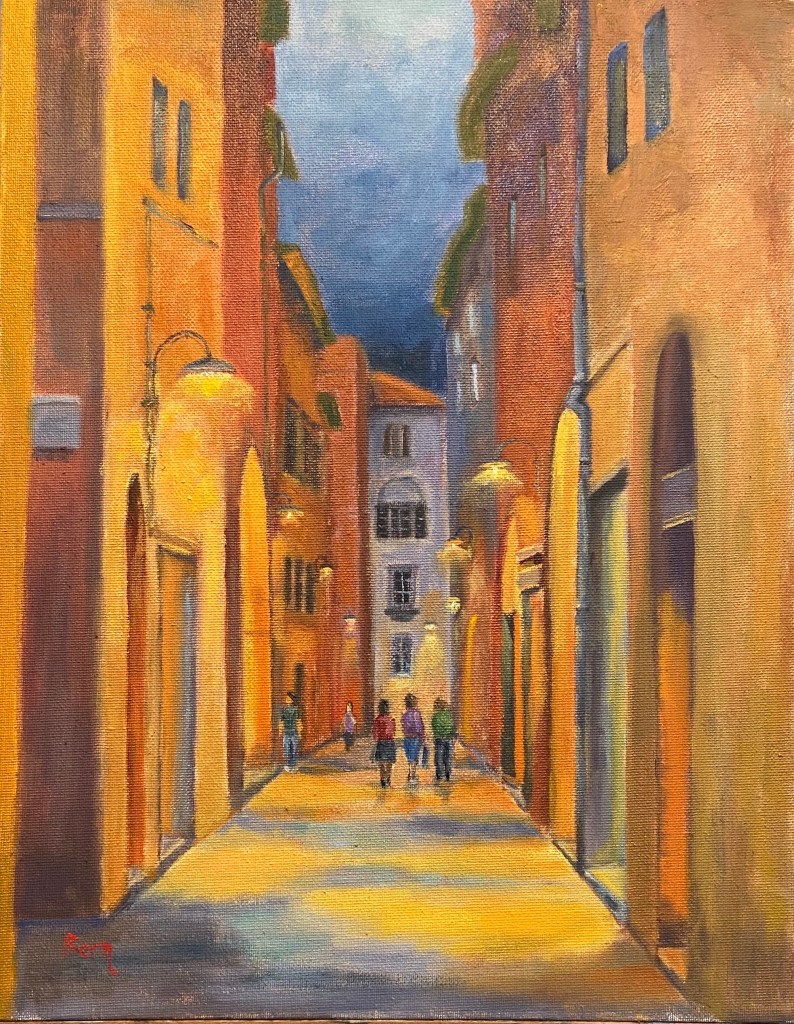
This particular scene is from a street in Lucca, Italy. The reference photo is earlier in the evening, just when the street lights go on, but I pushed the timing back a few hours so the lighting was more prominent. And just like magic, it was apperitivo time – break out the Aperol and snacks! If you don’t know what I’m talking about, rather than stumble through an explanation, just Google it yourself and promise yourself that one day you’ll go experience it first hand. Now back to the art…

This was another session to work on street scenes with people milling about their business (see the previous composition on this topic here, Lilliputian Italian Evening Painting). Ironically, the people were the easiest part of the composition, as the rest of the street and buildings took a lot of rework and adjustments along the way. Not sure why, but sometimes things don’t go smoothly. The other challenge was the surface of this particular canvas board. I had to really load up paint on the brushes in order to make progress, which was due to either the very toothy surface or the fact that it was very absorbent – this canvas board really drank down paint. 

This piece is also meant to be displayed in softer, yellow lighting. It was an experiment that I haven’t purposefully tried to do in the past, but the result is pretty cool. See the side-by-side comparison below, one with “normal” lighting, the other under the yellow/orange soft light. I feel like it adds to the mood and to some degree makes the street glow. 

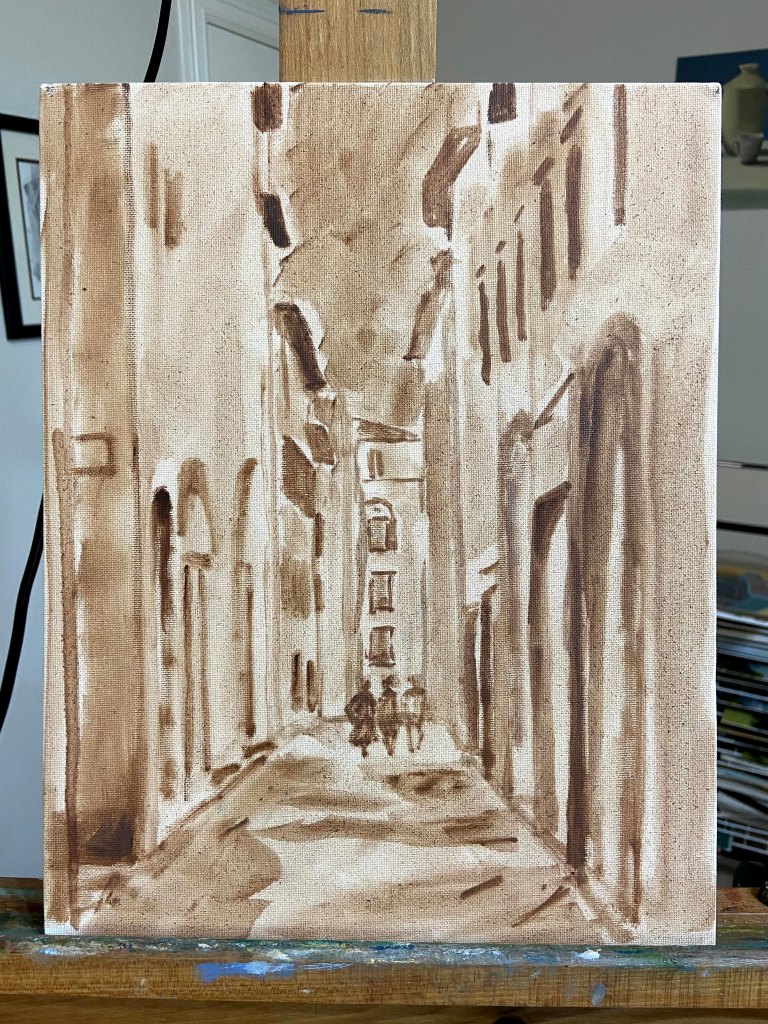
Progression gallery below shows the block-in, early color layout, and final composition.

Lilliputian Italian Evening Painting

Italian Evening | Oil on Canvas Paper | 6 x 8

I’ve been working on a large seaside landscape piece for the past week and ran into a brutal reality… people! The focal point is a group of brightly colored boats sitting on very saturated blue green water, which has been enough of a challenge in and of itself. I had made good progress on that part of the composition and then realized how many people were in the photo along the harbor walkway. Initially, I thought I’d simply wave my artistic license wand and exclude them, but came to the realization that it would be very creepy and vacuous without people enjoying the sunny day.  

Here’s the problem – I can’t paint people!

The large landscape is on temporary hold while I figure this out; I’ve bounced over to this small piece as a way to practice painting Lilliputians. 
This is an evening landscape, I have no idea where, but I’ve declared it to be Italian, which aligns with my current artistic needs. I kept things loose and painterly, but tried to leverage high contrast values to emphasize the lighting on both the building walls as well as the light spilling out of the restaurants. The people were put in last, and I’m pretty happy with the outcome, although I used 5 or 6 different brushes to figure it out.

One thing about painting people into a landscape – it will make you remember to step away from the painting repeatedly to see if they look “right”. To look at them up close is a real horror show – oddly shaped legs, disproportionate torsos, and some of the worst wardrobe decisions ever made. But step back 6 feet and they look fine. 

There are also some areas of the window sills and exterior wall faces that were done with a palette knife, wet into wet paint, which worked well in terms of giving a realistic, aged look. 

Some notes on color mixing:

  • Green awnings = cobalt teal + variations of yellows including cad lemon yellow, cad yellow deep, and cad yellow light. Darker areas are a more traditional mix of ultramarine blue + cad yellow deep + alizarin.
  • Orange red exterior walls = another wide range that used burnt sienna, cad red medium, cad yellow light, and ultramarine blue. 
  • Lights = exterior lights leaned more towards Naples yellow and a touch of cad red light and white. Interior lights utilized the outside lighting mix plus cad yellow light. 

Lastly, I finally remembered to spread the palette around the entire painting to balance the hues. This was especially true across the vertical faces of the building exteriors, giving the scene a better sense of continuity. 

Thanks for reading!

Zip’s Flowers

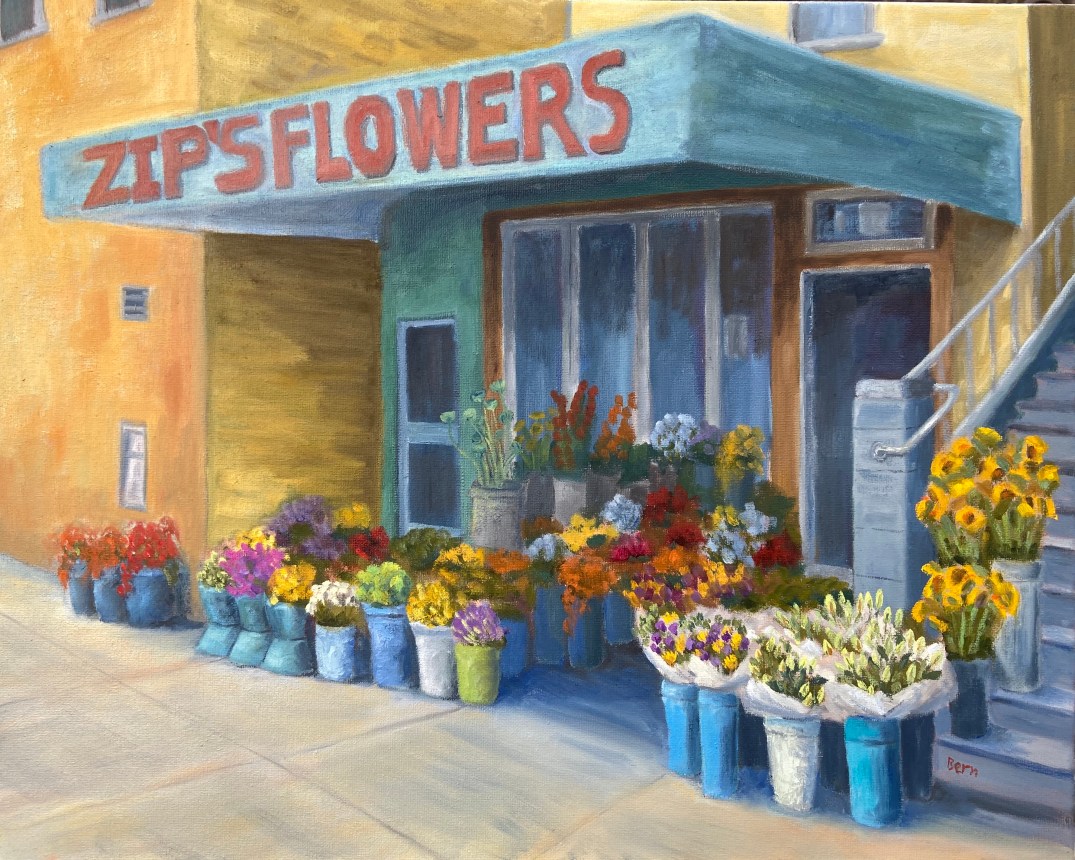
Zip’s Flowers: 20″x16″, oil on canvass

Sometimes art is very cathartic, but at times it can be maddening. However, I’ve learned over the years to rethink the frustration and consider those pull-my-hair-out-of-my-head moments as learning experiences, and more often than not it works. When I just can’t get a piece to work, either compositionally or from a technical skills perspective, if I focus on what I need to learn to fix it rather than become irritated at my shortcomings, I tend to get back that Zen painting zone.

Zip’s Flowers has been a long learning experience! Wars have taken less time to finish. That said, it’s chock full of newly acquired knowledge, of which I’m very excited about. There’s also some personal interest in terms of the background of this photo. This flower shop is a few blocks down the street from where I lived one summer in San Francisco. We lived in a great neighborhood along the border of the Mission and Castro districts, on 18th between Hartford and Noe. This flower shop, now called Urban Flowers, was along the way to the dog park. My wife would take the dogs at least once a day to the dog park. One day, the 1 year old puppy, Zip, decided smelling the flowers was no longer satisfying, so she opted to taste them. As the story goes, she reached out and grabbed a dangling flower from one of the pots and proceeded to knock the whole thing over! I wasn’t there, but my wife said the people at the shop were very friendly and weren’t concerned about Zip’s flower chomping. Of course I had to see this for myself, and a few days later I was walking Zip past this flower shop and sure enough, she tried to gobble down a basket of roses as we walked by.

The composition itself was probably the hardest hurdle to overcome, which I took license to adjust reality to make things work. The reference photo shows a wide variation of building colors and construction materials, so some adjustments had to be made on various fronts to make it look less contrived – ironically, the reality in the photo was too hard to believe in a painting. The values also had to be exaggerated to give depth and a sense of place, whereas the photo was very flat. Finally, the amount of tissue papered flowers was overwhelming and a bit distracting, so that was scaled back significantly.

My favorite part of this painting is the right foreground. First, the flowers in white paper came out much better than I had anticipated and they really frame that side of the painting. I also like the realism they add to the scene. Secondly, I’m very happy with the tall yellow sunflowers going up the stairs. These two elements combine to draw the viewer into the painting (hopefully) and consider wandering through the rest of the composition.

The sheer multitude of color is initially distracting for me, but once I stepped away from it for a day and returned to the completed piece, the colors were more welcoming and a source of excitement.

Do you like this piece? I’m guessing people either love it or hate it, given the colors and somewhat busy nature of the scene. Suggestions and observations are welcome.

Danube – larger scale

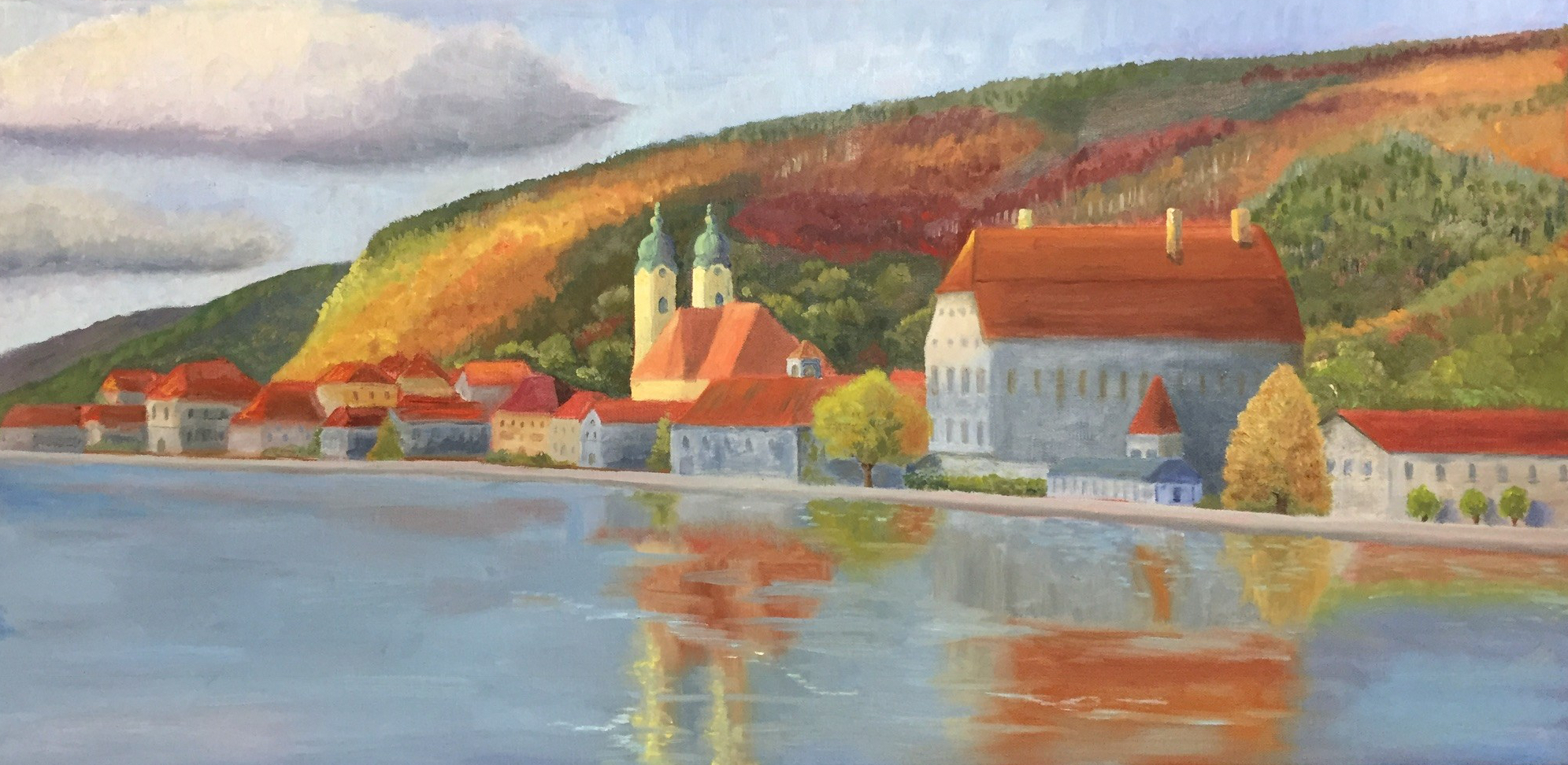
Took another shot at the Danube river village. Originally did a small piece on canvass last year, which was challenging but fun. Took another go at it, but this time on a larger scale, going up to 24” x 12”, which for me is a considerable size leap. It worked out well, albeit slow going. The finished piece is ok, but I clearly leaned too heavily on the warm, red end of things, instead of capturing the fading cool light at the end of the day, which was the setting on this piece. That said, it came out pretty well and I learned a lot about details and the need to consider atmospheric perspective.


4652473C-68F2-460D-9FF0-A270A462CA6C

Danube River Village

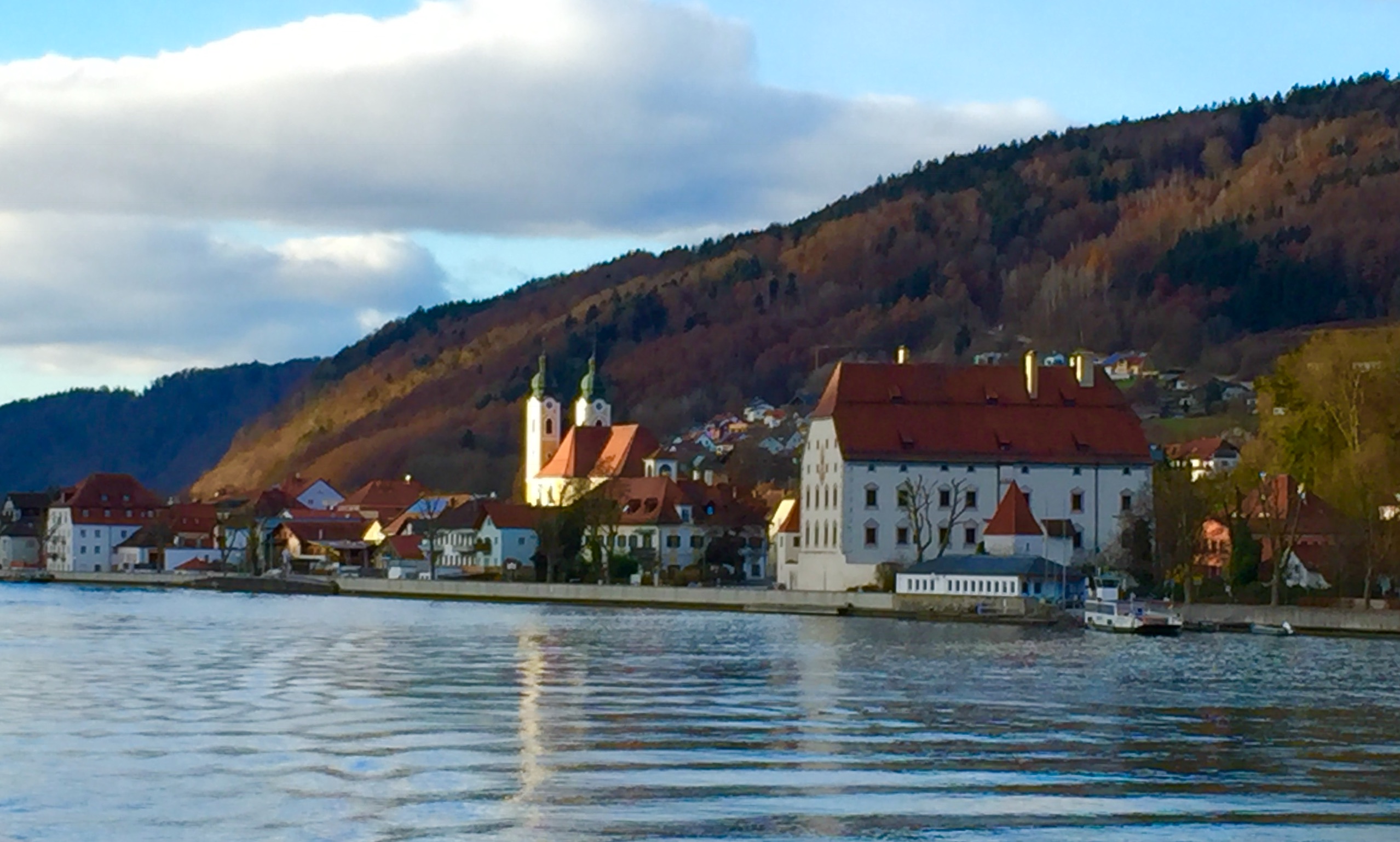
New project today from a photo along the Danube. My wife and I were visiting the Christmas Markets this past year, mostly in Austria and Germany. They were fantastic! Along the river these idyllic scenes were commonplace. We had ridden bikes along the river the day before and visited this church.

img_0192img_0044img_0043

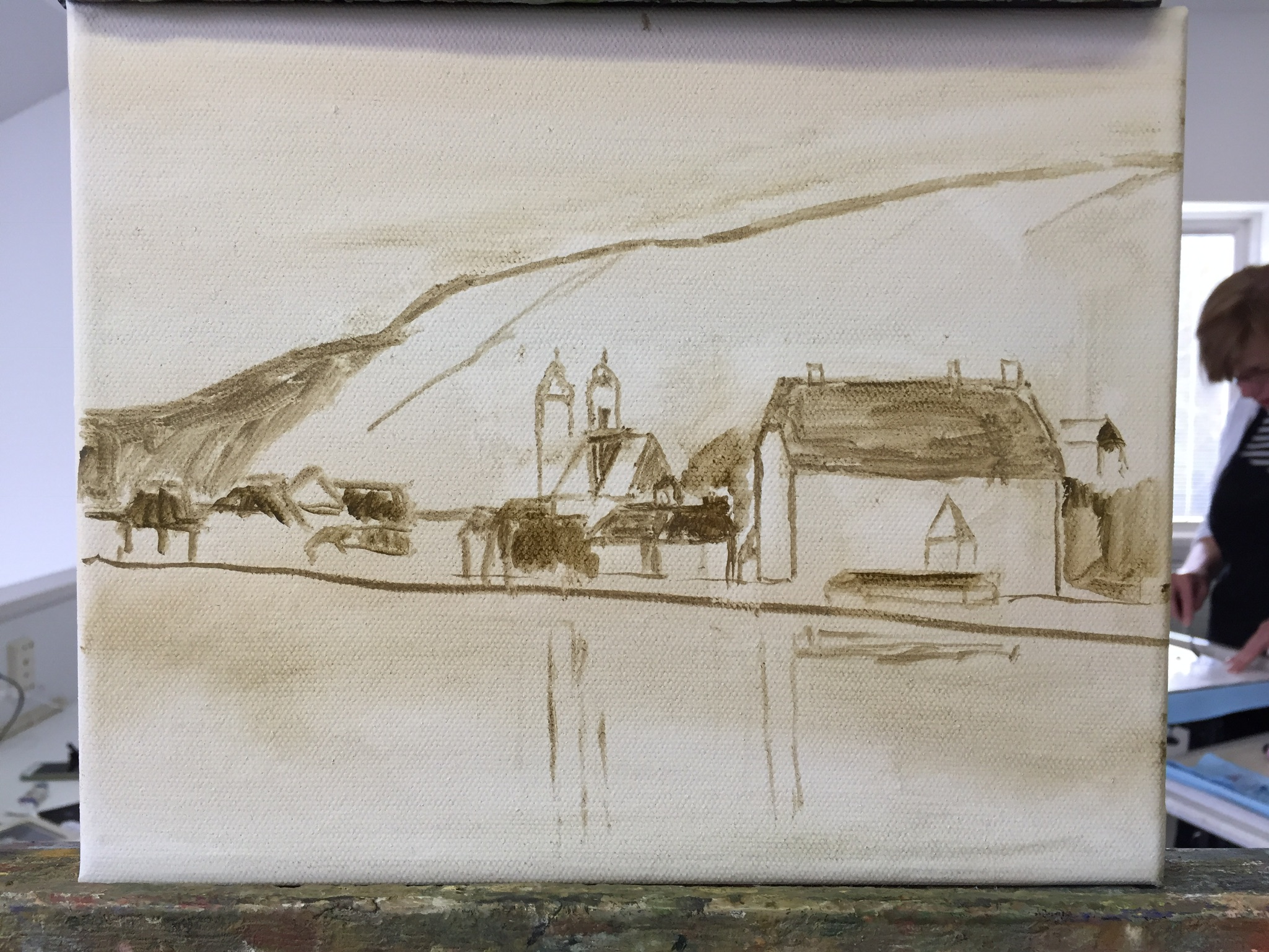
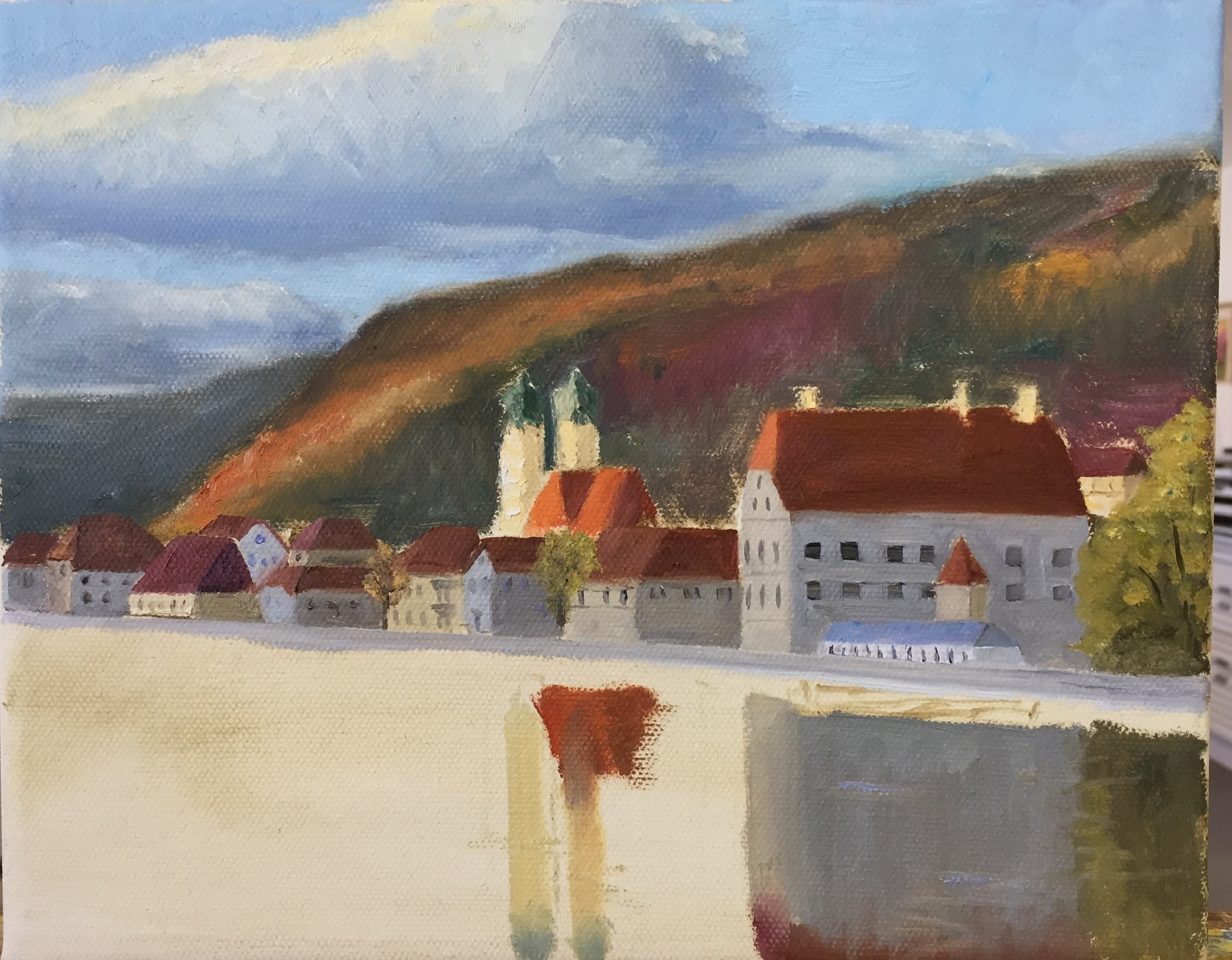
Smaller canvas this time around. Working on loose and colorful, with very strong contrast in values where the late day light is hitting the tops of the buildings. This post is about 3 hrs of work. Moved a little slow at the start to get the sketch right. Usually I draw the subject before trying to paint it, but opted to jump right in this time.

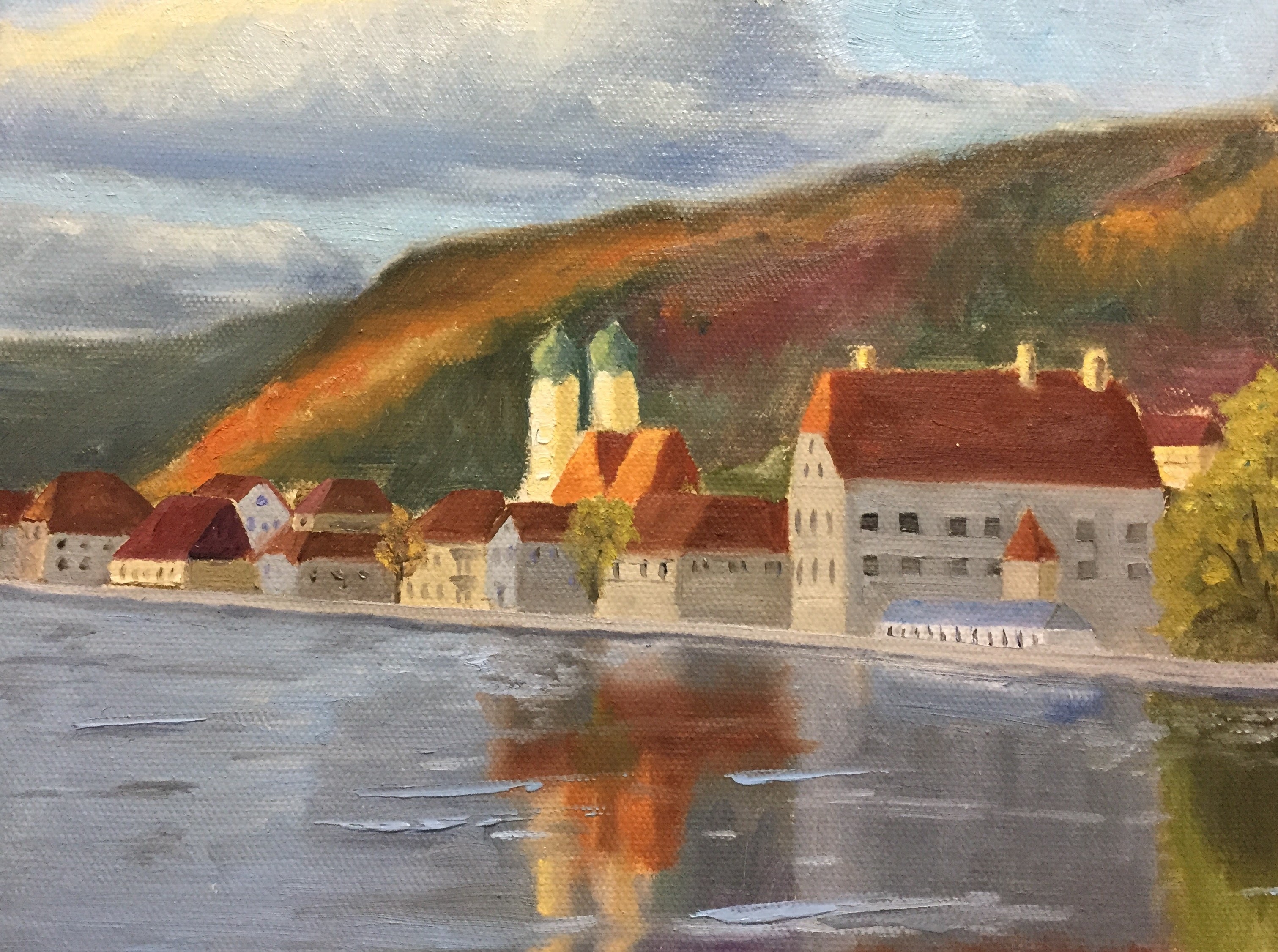
Updated progress: Couple of hours working on the detailed village. Getting the proportions and values in the shaded areas took patience, but very rewarding. One more session focused on the water reflections should get us most of the way there.

img_0046

Forgot to add the finished painting from a few months ago. I like how this turned out but need to practice with more river landscapes.

IMG_5766

Yosemite – El Capitan

Started a new project this week, El Capitan in Yosemite National Park. This is a massive wall of rock that is a marvel to see in person. I haven’t been able to find them on the photo, but there are a number of climbers on the wall. If I hadn’t taken the picture myself I wouldn’t believe it either.

This composition is actually a study to get some key aspects of the hues and values figured out prior to doing a much larger piece. This particular effort is being done on a 12×18 canvass board, all oils, using palette knife only.

Figuring out the variations of grays, both sunlit and shaded, is proving to be an enjoyable challenge. This is a great way to really learn the subtleties of warm and cool grays.

Another session or two and this preliminary piece should be done. Still need to get the right half of the shadow area done, but it’s moving along at a faster clip now that the value scale has finally been figured out. There’s more paint on this piece than I’d like to admit.


Heceta Head Lighthouse

This was a fun one! This is Heceta Head Lighthouse on the Oregon Coast. Breathtaking coastline and this area is particularly rugged and beautiful. One day I’ll replicate this painting en plein air, but for this iteration I had to use a reference photo. At least the photo was taken by myself, so I had a sense for the place; hoping some of that personal experience made it into the final work.

This piece is on 12″x18″ gesso panel and took about 8 hours to complete. While I still have a couple of minor highlights to add, this is close enough to the final product to call it done. I have never painted ocean, so the waves were a challenge, but I’ve started taking some lessons with a new instructor for a few hours every other week, and she was a tremendous guide when I ran into problems. If you like landscapes, check out her work at Mary Watkins Fine Art.

The palette is what I’m most excited about with this piece. While there’s a lot of (for me) technical skills that come into play with the water/waves/rocks, it’s the hues that I’m most excited about. Mary was very instrumental in teaching me about landscape warming and cooling using hues I hadn’t considered. Previously I had thought in terms of strict color wheel compliments to adjust saturation, but I learned how to think through the balance of what makes up colors that trend towards one end of the spectrum or another. For example, the use of Lemon Yellow, Cad Yellow Medium, or Yellow Ochre was actually a critical decision for this entire piece. Can you guess the winner and why?

Reference photo and progression timeline below. Enjoy!


Lamar Bridge into Austin

Getting close to finishing this Austin urban landscape piece. The view is from the south across the river towards downtown. The city has grown a lot since this photo was taken, so those familiar with the area might wonder why I excluded some buildings; not the case, they just weren’t there a few years ago.

Oil on gesso board, mostly brush work, done in studio with photo reference (included below). The bridge was tricky, despite having done a couple of practice drawings. It’s been an exercise in patience, having to redo various parts, but it’s been a great “learner” piece, specifically with the sky and water. I’ve started taking some formal art lessons every other week, and my teacher gave some great guidance with the sky and the water reflections. Confidence with these elements is 10x what it was a month ago. Not sure if it comes through in the photos, but the colors are rich, probably a tad too saturated, but the values and reflections are solid enough to carry the composition.

The bridge needs some tweaks to the facade so it’s not so flat, the addition of cars on the road, and a few street lights. At that point I’ll call it done. One more short session should do the trick. I’ll post the final product this coming weekend.