“Rescued” – molds and molds and molds

IMG_3641

As mentioned in the previous post, the process for creating the dog paw prints wasn’t straightforward. The challenge was finding a way to get the real prints of all 3 dogs on the canvass without having it look like a distorted mess. Sure, there are plenty of reasons to do a piece with the messy prints splayed across the canvass, and I’ll readily admit that is a good idea, too. However, that was not the direction for this project.

The other challenge was ensuring the actual prints of Crash, Boom, and Zip were used. I didn’t want to do a photo-based, realism approach, i.e. take a picture of the paws and free paint the shapes. I really wanted to have the touch and active presence of CBZ on the canvass. This became very important to me as the work progressed because it would be a forever connection to our beloved pups; a way to always reach out and touch their “real” paws.

So if you haven’t barfed from the sentimentality, you appreciate the concept… hopefully. The original thought was to slather some non-toxic kid paint on the dog’s paws and let them run on the canvass. That’s such a bad idea for so many reasons. Just think about it for a minute if you don’t know what I mean. The next idea was to paint the dog’s paws and then press their paws on the canvass myself, in a more or less controlled fashion. Aside from the obvious battle of wills that would ensue, of which I would surely be on the losing side, this doesn’t work well because the prints are muddled with hair marks, making the prints largely indiscernible. I know this because I did a trial with Boom, the mellow dog, by shaving his paws and following the technique noted above on a practice canvass. It looked like poo.

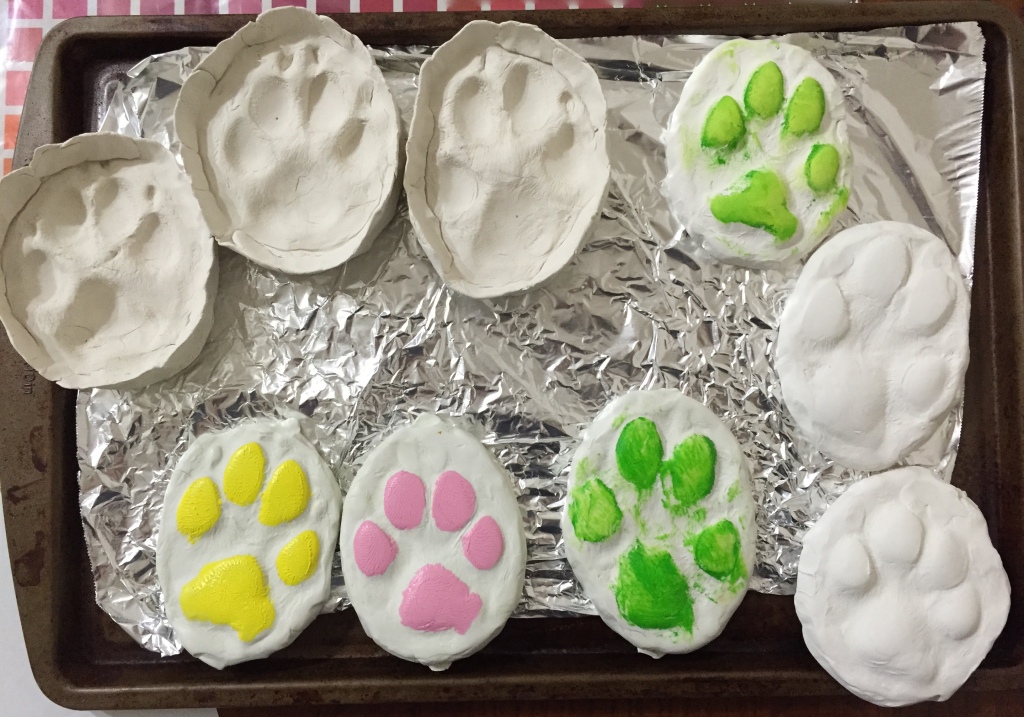
The final answer was molds in molds. The photo included has the molds I used plus one set I didn’t. The 3 molds on the top left and the set of 3 on the bottom left. Process went like this:

  • Pressed the dog’s paw into a round of molding clay.
  • Baked the molds for 30 minutes. These are the top 3 molds in the photo.
  • Using non-drying clay, pressed into the dried molds and pulled them out. These are the bottom 3 colored ones.
  • These non-drying clay molds held their shape, but could be manipulated, so I pressed each one gently down onto a flat surface to flatted out the paw prints so it would transfer the shape better.
  • Applied thin layer of paint to the clay molds and pressed carefully onto the canvass. This provided the general shape and worked surprisingly well.
  • Applied free-hand touch ups and additional layers of paint on paw prints on canvass.

The other 3 molds (on right side of photo) are a failed attempt to create oven dried impression molds as described with the non-drying clay above. They are great 3D molds of the dog’s prints, but turns out the paint doesn’t transfer well to the canvass because the paw pads are too well done, i.e. they are rounded and can’t be pressed flat to make a good stamp. One of those things you try and then feel like a moron for having overlooked such a simple mistake.

All the molds are reusable, so I can recreate this project again if I wanted to. The best part is that my wife gets the painting she asked for, plus a mold of each dog’s front left paw.
“Rescued”

IMG_3636

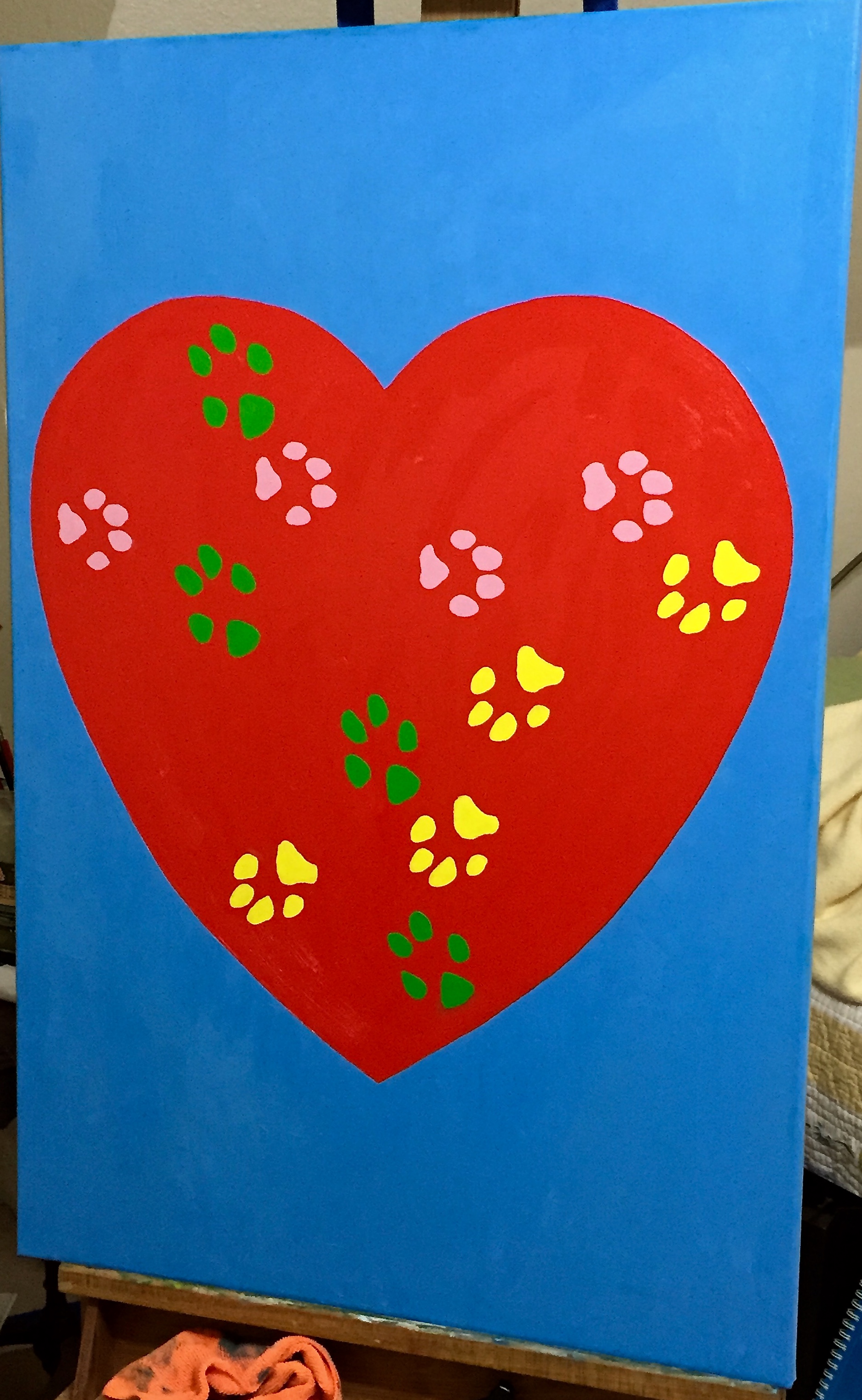
“Rescued” is done and hung on the wall downstairs in our powder room! This was my first “commissioned” piece, done for my wife who wanted something with a lot of saturated color and big! The design is entirely from her and the passion and love she has for rescuing dogs, of which we’ve had the pleasure of fostering 114… and counting. When my wife says “rescue”, she means literally rescued from the kill list at the Austin pound, not “rescue” from a pet store (don’t do it… just adds to the breeding problem), and these dogs are often in really bad shape – parasites, detached intestinal walls, starvation, neglect, flea infestations, ticks, kennel cough, Parvo and more.  But she nurses them back to health, even waking at all hours of the night to feed them meds every couple of hours, and finds each one of them loving homes. She is amazing!

She also had the primary design in mind, of which you see in the picture – a large heart with the paw prints of our 3 dogs (yes, rescues all of them) on it. We had a lot of fun collaborating on the details, although she would say there was some stress involved in figuring out the right colors for each dog’s prints, which ended up as follows:

  • Pink – Crash, female, age 13
  • Green – Boom, male, age 12
  • Yellow – Zip, female, age 3

The process for getting the dog’s paw prints on the painting is worthy of a separate post, so I’ll pause here today and give an update on that entertaining adventure in my next update.

Tech details of the painting for those interested:

  • Canvass, 24″x36″
  • Colors were almost straight out of the tube, but had to make some small tweaks:
    • Blue background – Titanium White + a small amount of Pthalo Blue + tiny bit of Orange.
    • Red heart – Cad red medium
    • Green paws – Permanent Green Light + Titanium White
    • Yellow paws – Lemon Yellow + Titanium White
    • Pink paws – Titanium White + small amount of Alzarin Crimson
  • I added the Titanium White in heavier doses with the yellow and pink paws because it helps add opacity to those more transparent colors. Sitting atop the red heart it was helpful to cut back on the bleed through.

For the dog rescue lovers out there, the group we work with, Austin Pets Alive, is fantastic and is by far the most influential and impactful rescue group in Austin, perhaps all of central Texas. If you want to learn more, check them out.

Creative Thinkers

Gave the brush and pencil a rest today, but always thinking about art. This post is a very interesting, quick read. Glad to see many of the great creative minds didn’t shun sleep. 
Charted: How history’s most creative people organized their days

French Countryside Loire Valley – Practice sessions continue on 2 fronts

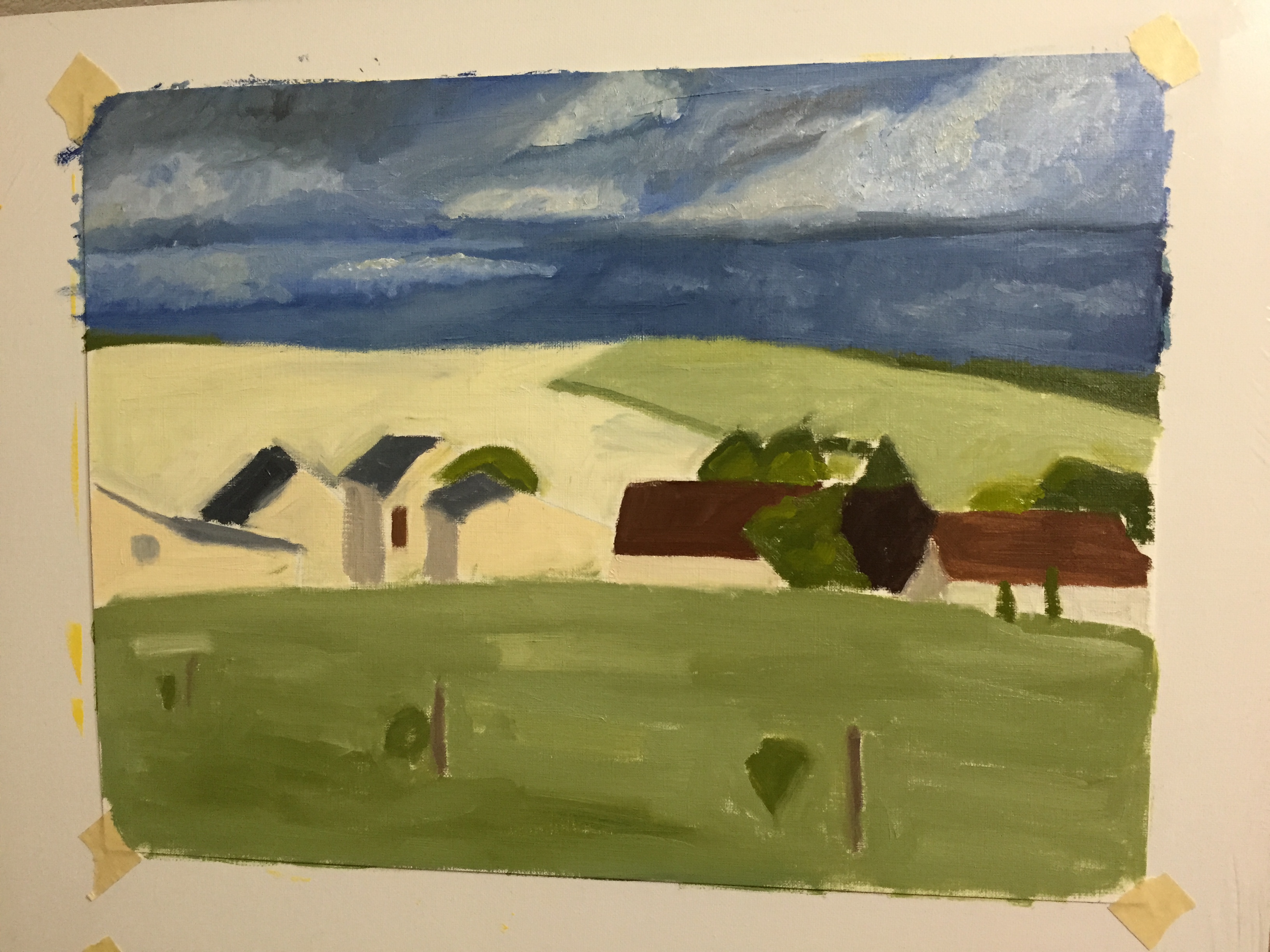
More progress this weekend on the practice sessions for the Loire Valley countryside piece. Added the first pass at details to the sky on the oil on paper. I’ve done clouds in graphite before, but never detailed painting. Learned a lot about what not to do, most notably trying to be too precise and layered paint to thickly. Need to go with looser brush strokes and thinner paint, I think. Advice is welcome, so comment if you have some helpful guidance please.

The second pic below is a practice session on my iPad. Still getting the hang of the Paper 53 app tools, but it’s been very helpful in drafting possible compositional elements that I wouldn’t otherwise have taken the time to do with paint. It’s very limited when compared to real painting and drawing, but it’s an invaluable drafting tool for layout and testing ideas.

IMG_3617 IMG_0002

Loire Valley Landscape

Started a new project today. I’ve sketched this one a few times already, but intend to use this as a reference point for the actual painting whereby I’m going to try to emphasize the storm clouds in the background, add some color to the foreground with flowers, and insert some actual people doing stuff in the village area to draw the viewer into the scene. This first effort will be a quick draft painting on paper to get the values and compositional elements figured out. If that goes well, I’ll parlay this into a larger piece.

IMG_2423
Reference Photo – Loire Valley, France
IMG_3612
Sketch on paper
IMG_3613
Initial block-in. Focus on values and basic color scheme.

iPad sketch with “Paper by 53” app

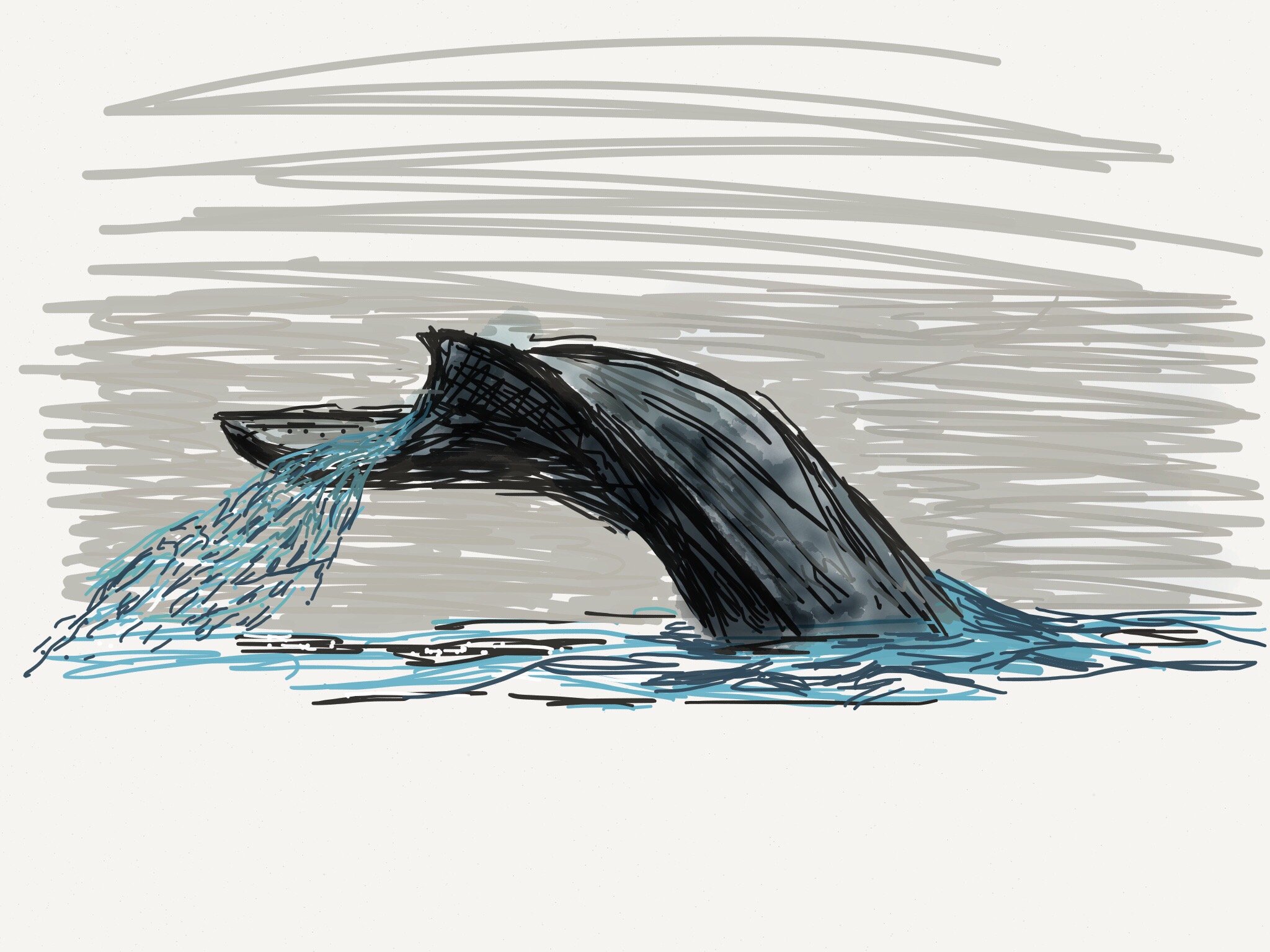
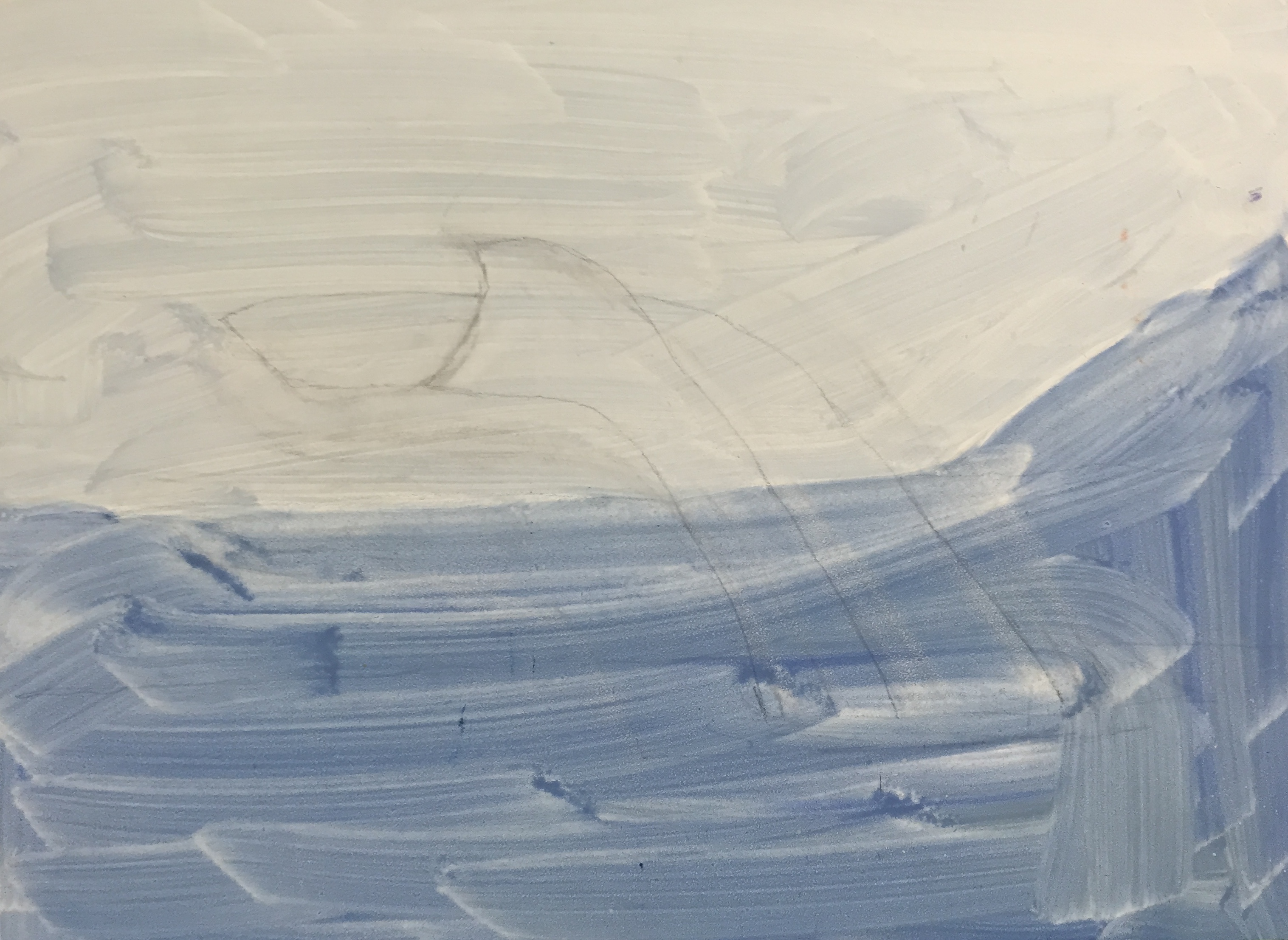
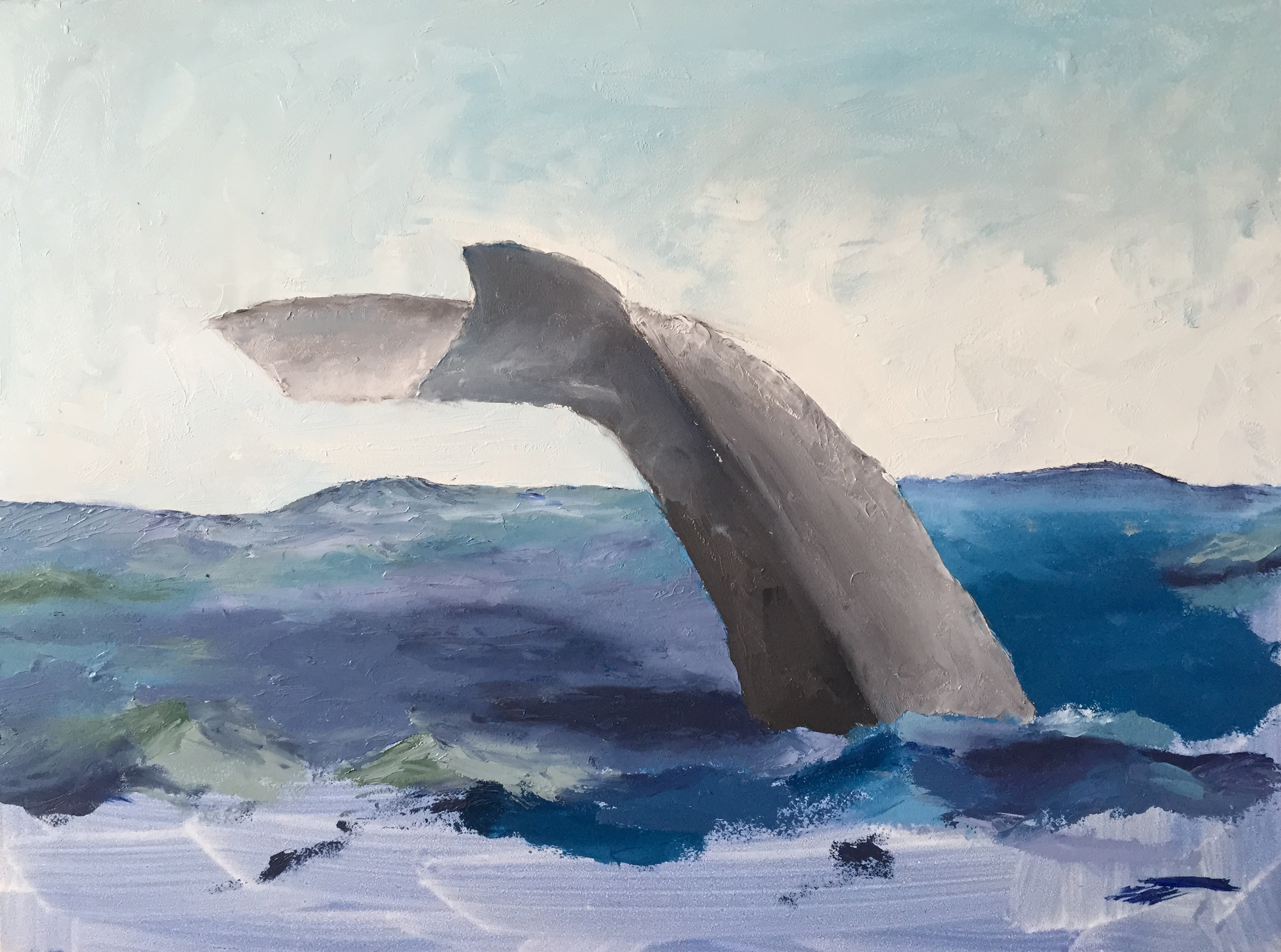
Used a new art app on my iPad today and it was surprisingly easy to use, yet had a good range of options to create great sketches. 

Did this whale tail in about 30 minutes, including fumbling time with the app features. Might prove to be a great way to do quick art on the go while traveling without supplies, or in bed where graphite and eraser debris are unwelcome. It was a lot of fun!


Giverny update

Focused on the water again today. Also added some ripples to give the sense of movement. It’s not great, but good enough for now. Think it’s time to make some updates to the foliage and wrap this one up.

IMG_0251

IMG_0252
Closeup of recent foliage updates.
IMG_0253
Close-up of water ripples.

Giverny – There’s no panic in painting!

Took another stab at Giverny. Added the remaining foliage in the lower left bank, added the wooden posts, and took yet another whack at the water.

This water is looking much better than past efforts. Did some research and practice sessions to work on the technique. Pretty sure this will be easier the next time I take on moving water because it will be from a clean slate, but correcting/updating this piece is tricky. Regardless, I stuck with my “don’t panic, there’s no panic in painting” mantra and pressed forward. I’m happy with the progress, but the water will have a couple more sessions of work. However, for the first time, I feel like the basic structure and feel is in place. Yeah, some of the greens are too saturated, and the gray sky reflection (the white-ish part in the center) isn’t working yet, but it’s a huge stride past where I’d been stuck before. Feel like I’ve pushed past a plateau and can build from this. That said, anyone with helpful advice is more than welcome to offer; as you can tell from past posts on this project, I could use the help.

Reference Photo
Reference Photo
Water attempt #5!
Water attempt #5!

Going Big!

Started a new project this past week. I won’t reveal the final design details, but suffice to say its going to be very different from anything I’ve done so far in many ways:

  • No reference photo: Instead it’s inspired by my wife, who is the source of this great idea, and it’s something very personal for both of us. While I don’t have the convenience of a picture to look at whenever I need guidance, I get to collaborate with her and evolve the idea together as it comes out of her imagination.
  • This is BIG! At least for me. This is going to be twice the size of any work I’ve done in the past – 24″ x 36″.
  • The technical challenges are very different, too. At first I thought it would be much easier because I’m using mostly just 2 colors, but neither are straight from the tube, which means the need to mix enough volume to cover the entire area is something of a challenge, which I didn’t realize until I was already running out of the first batch. You really have to mix a large volume up front so the area is covered in a contiguous hue, or else it will look uneven, i.e. the top half will look darker, lighter, duller, etc than the bottom half. In a landscape painting, even a large piece, you can get away without worrying about slight variations because you use it around the entire piece to create depth and texture to the objects, but this is a modern piece that needs continuity (at least for part of it.. hint hint of what’s to come) throughout.
  • The other technical challenge is doing the large heart shape freehand. I didn’t use a stencil, and actually took some time to create a demo piece on a much smaller scale to get the proportions and shape aligned with what my wife wanted. Then it was a matter of dusting off some high school math on ratios to translate to the larger format, i.e. the 10″ x 11″ heart is what dimension on the 24″x36″ canvas? Patience on the drawing front paid off.

The photos below show the staging and completion of stage 1. I promise you, stage 2 and the challenges involved will be very exciting, so stay tuned for updates in the coming week.

IMG_3528 Reference drawing/painting. This was used to get the palette choices figured out and the proportions and shape of the heart established. The original idea was red on yellow, but all we could see was McDonalds, which led to a lot of laughter as we tested out new background options. The baby blue was final decision. The heart is cadmium red + a little white + a little permanent green light. The blue is Titanium White + a little Pthalo Blue. Looks greenish on this test piece b/c the yellow was bleeding through.

IMG_3530

This is what 24×36 looks like on my easel. It dwarfs the pieces stacked up on the floor – still dealing with renovation messes, so all the art isn’t back up on our walls yet.

IMG_3531

Transferred to the canvass, the red heart is looking great!

Finished with Phase 1 after getting the blue background slathered on. Getting the line crisp along such a large object made my shoulder ache, but it was great practice for painting adjacent wet paints. No easy feat, especially with the curvatures of the heart. I had to rotate it around the easel many times to get the right painting angle.

The color combination in real life is a little less saturated, but it works really well together. Hats off to my wife for making the palette call on this one. I wouldn’t have thought to go with such bright hues, but it works really well. Finally, the picture doesn’t show the texture contrasts – I used a palate knife for the blue area and brush for the heart. More on that later.

IMG_3533