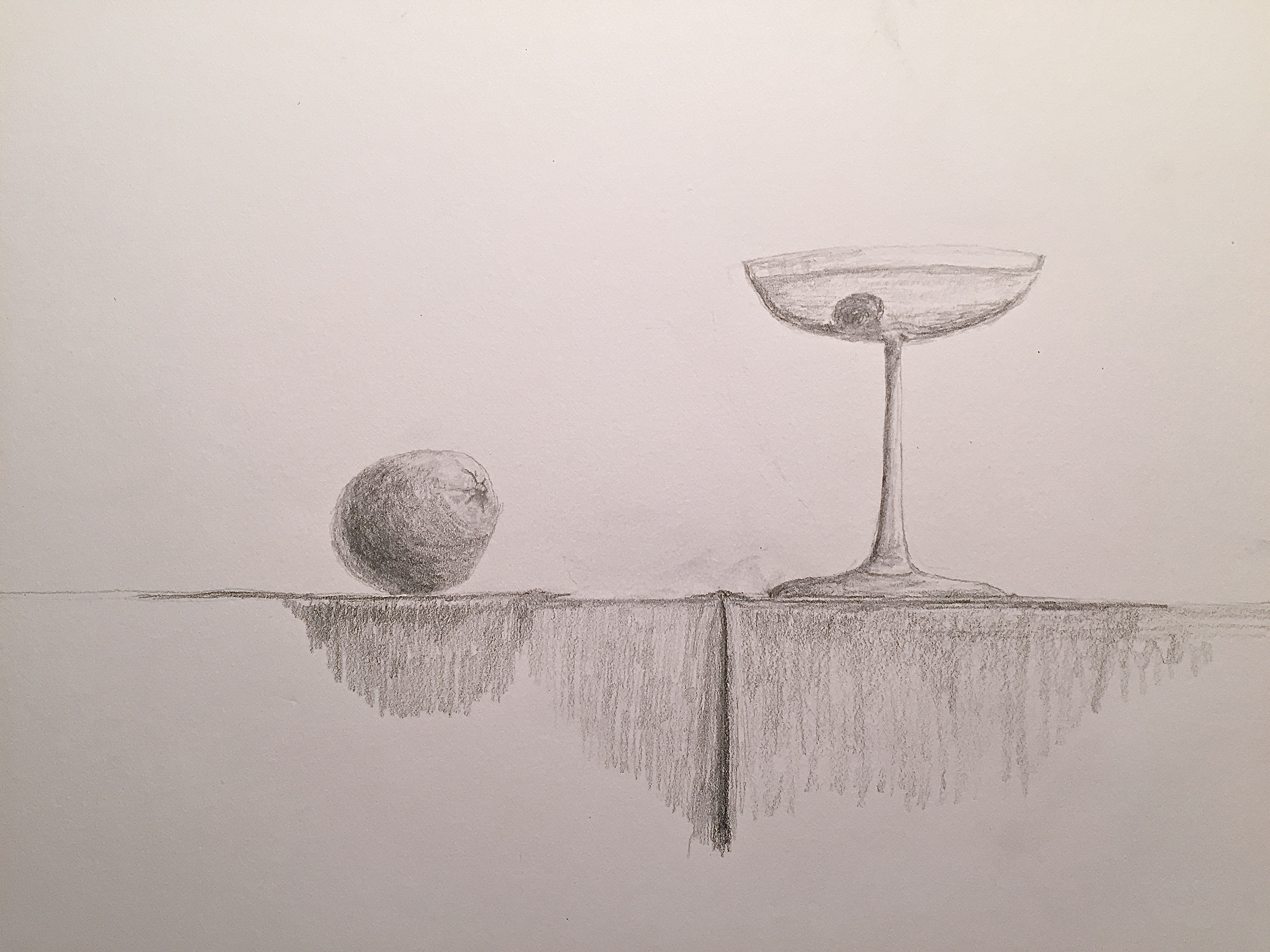
No reference photo or “live” subject for today’s sketch. This is a Manhattan and it’s trusty partner, the orange. Nuf’ said.
No reference photo or “live” subject for today’s sketch. This is a Manhattan and it’s trusty partner, the orange. Nuf’ said.
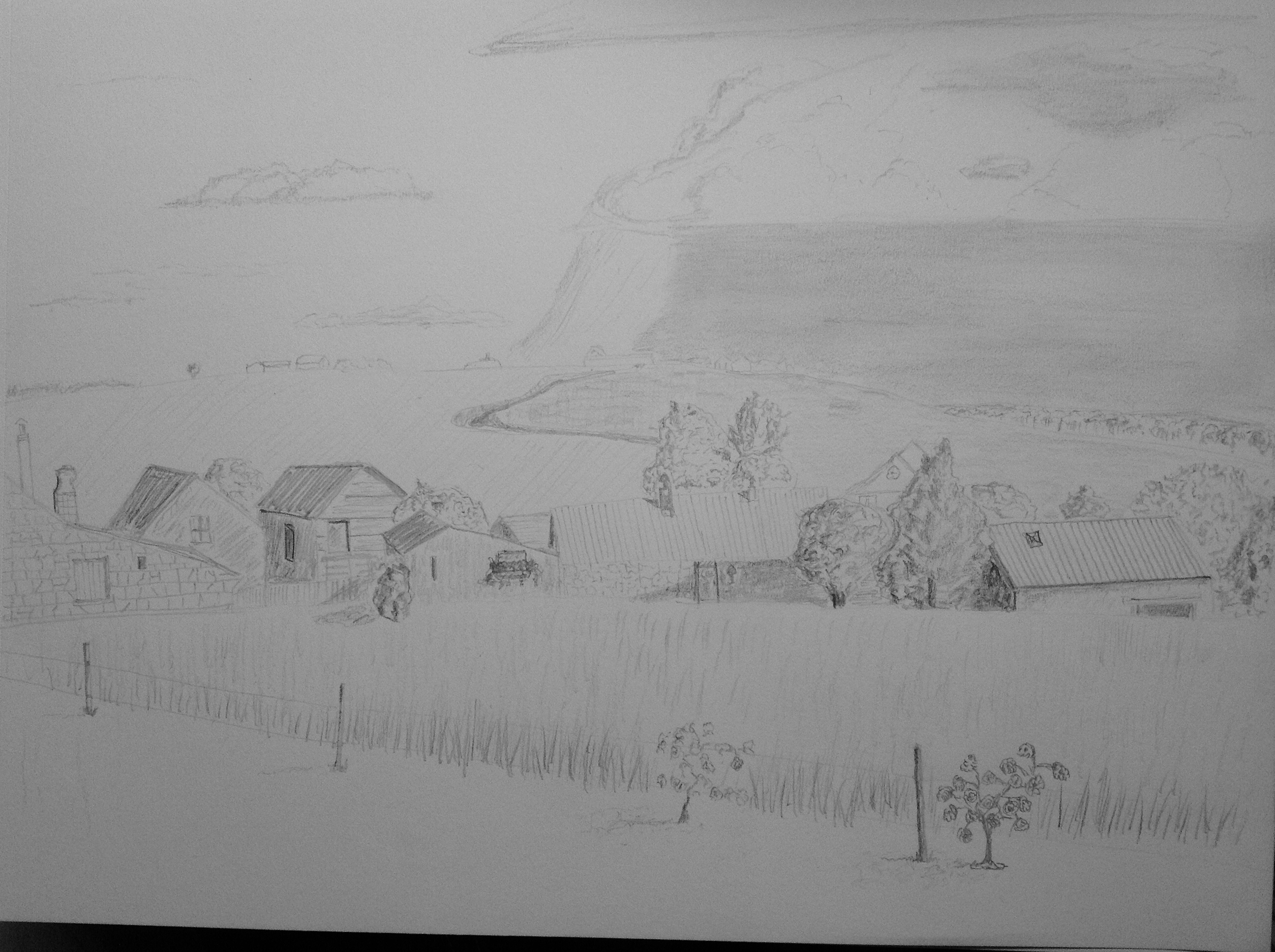
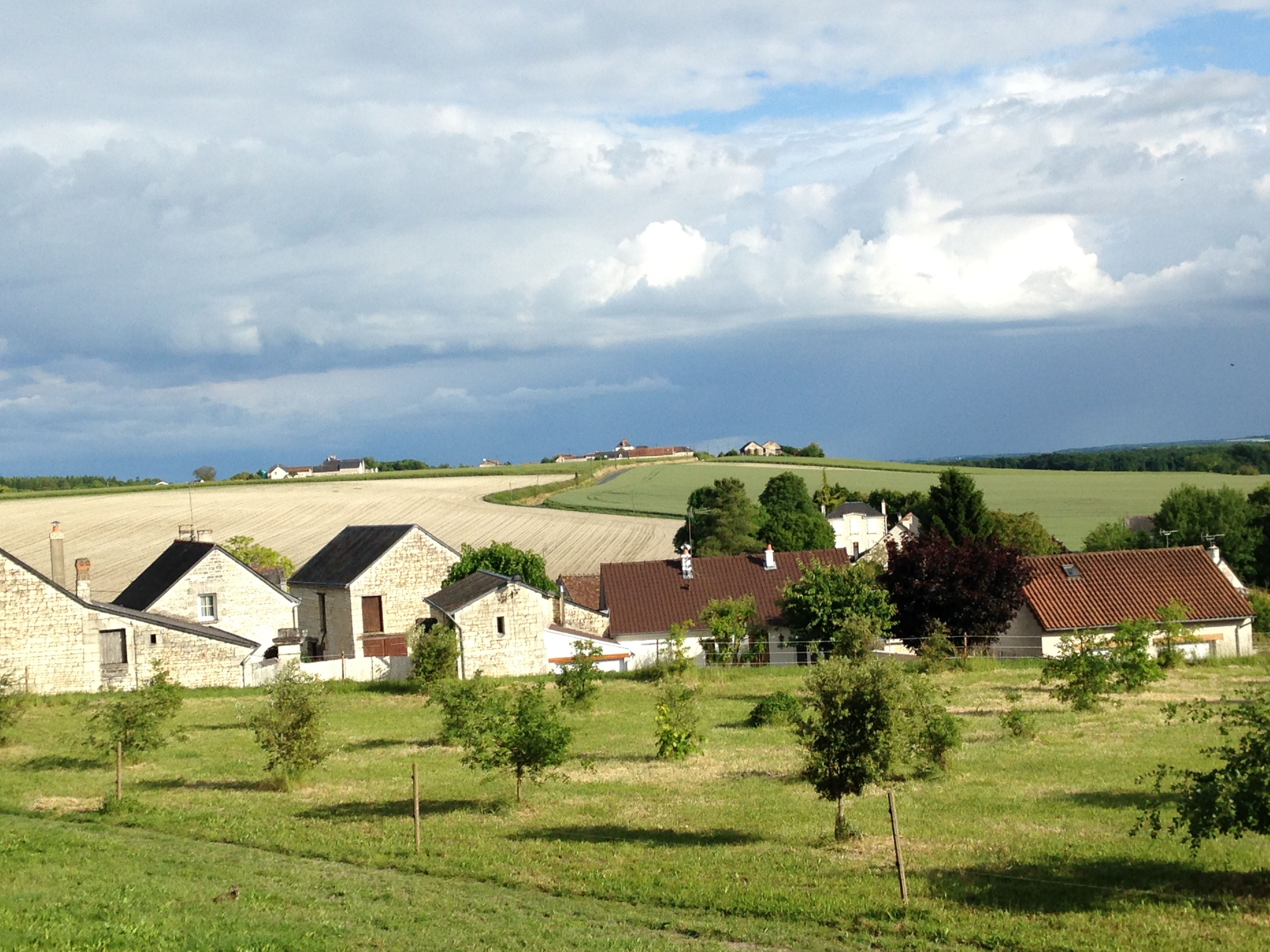
Today’s sketch inspired by my wife and our anniversary trip to the French countryside in the romantic Loire Valley region. The light was very strong from the right side of the sketch, so the shadows were very pronounced, as was the coming storm, which never materialized by the way. The rose bushes in the foreground are testers – not part of the actual reference photo, but rather a suggestion from my wife in hopes of adding some bright color to the soon-to-be painted version. Never sketched a rose bush before, but I think it’s a great addition to the sketch.
I’m probably just dodging the real challenge of wrapping my pretty vase in saran wrap, which essentially may ruin the piece, but at least I had the pleasure of completing my first white linen table cloth top and folds. Painting the palette knife (with a palette knife) was a little difficult with the gold/brass colors where the wood handle meets the metal neck, but it’s close enough given it’s not the focal point of the work. I also kept it a little soft so as to not draw too much of the composition’s attention. Also got some of the red of the vase in the cast shadow by simply working wet alizarin into the cast shadow darks – pure, dumb luck. Did all of this work with a palette knife, which is becoming an addictive tool.
Next session will tackle the cellophane challenge head-on. But for now I’m happy with the supporting cast.

With a few deep breaths, and some tasty wine for liquid courage, I dove into the cellophane stage of this composition. I carved out a little more than an hour tonight to get the ball rolling. I was pleasantly surprised with the progress, but I will admit that my inner artist was struggling with laying gray tones on top of the pretty red vase in the name of cellophane.
It was rough going initially b/c there weren’t enough value contrasts between the white table cloth and the wide range of cellophane grays and cast shadows. Then I remembered the advice from David Cheifetz during his workshop a couple weeks ago – “Value is king! A painting with the right values but wrong colors will still look pretty good.” I’m not about to put that on a tshirt or a bumper sticker, but its great guidance. I stepped away from what seemed like the right dark and light grays and made both ends of the spectrum more extreme, darker grays and lighter grays. It seems to have worked so far.
The real power of the cellophane image won’t really come together until the grays are laid in properly and then the bright, white highlights are added on top. That’s what gives the cellophane it’s shape and texture. I’m still not entirely convinced this will look like the real thing when I’m done, but stepping back from this first stab at it, I was able to see the shape of the cellophane starting to come together. The key is going to be establishing that clingy sensation with the highlights. Fingers crossed…
[The grays of the cellophane are primarily 2 setups: Ultramarine blue + burnt umber + white OR white + ivory black. I’ll probably add a 3rd option for the cooler side of the cellophane (right side, away from the light source) of UB+raw umber+white. ]
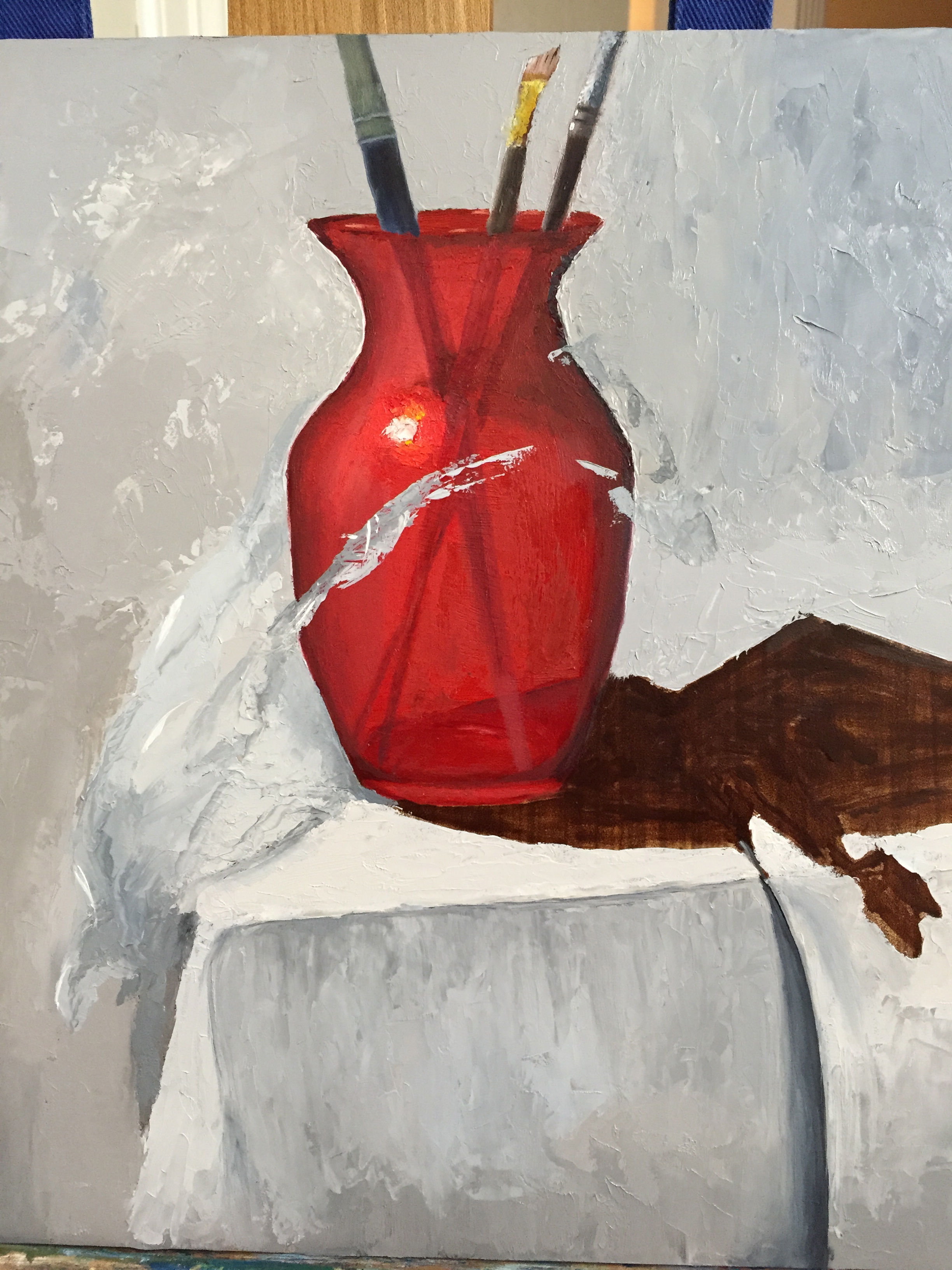
Not to the cellophane yet, but good progress overall. More meaty update later this week.

Day 4 turned into a hurried 1/2 day due to the winter storm that blew in during the morning. A couple of inches of sleet and icy roads forced me to head home around 12:30 before the roads south became impassable for the night. Good thing I did because the drive was very precarious for that first hour. But before I had to leave…
David spent another 90 minutes working on the cellophane objects, bringing the piece to its glorious completion. While it’s not as refined and polished as some of his other work of the same subject, it was still very impressive given the timeframe. It was very interesting to see the cellophane come to life, but he also spent a lot of time getting the drapes in the tablecloth just right, which was surprisingly fun to watch. Nothing in his composition is done half-ass; it’s all-in on every element.


I had a little time to work on my vase and cellophane composition before having to head out to avoid the worst of the winter storm. I was able to apply a lot of what I had learned, along with hands-on guidance from David during class, to get the painting in a good position for success. The vase is coming along nicely, and while I didn’t get to start on the cellophane elements, I’m excited to work on this project, very excited!
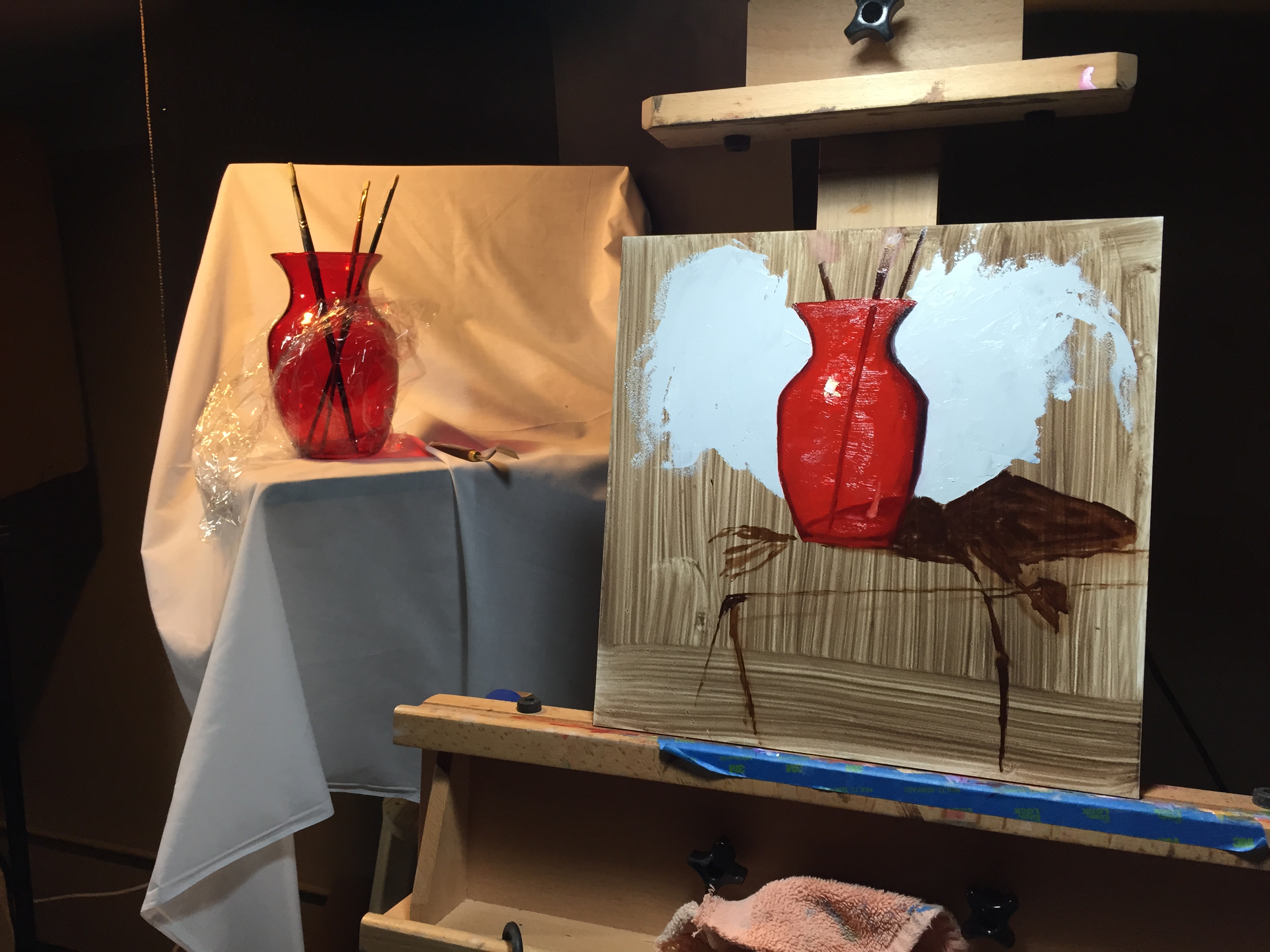
I’ll definitely take another Cheifetz workshop next year. He’s an excellent teacher and a true master of his craft. It was also nice to meet so many skilled artists and friendly people during the workshop. It was a great group and there wasn’t an annoying person amongst the lot, which is saying something given there were 10 students. I can’t wait to get the painting knife back in my hands this weekend!
Another great day at the workshop. We did a lot more painting today, but things started off with an hour of David doing a demo. He picked up where he had left his painting off from yesterday. Very interesting as he demonstrated more technique and color strategies for the support cast of objects. I learned another volume of painting secrets, well secret to me at least, and was able to apply many things immediately to my painting later in the day. Watching David create one of his signature compositions before my very eyes was worth the price of the workshop alone.

We spent more time working on our paintings today than the first day. I spent a lot of time working slowly and carefully with the painting knife, never picked up a brush today. After 5 hours of painting I started to get much more comfortable with the painting knife, getting a feel for how to manipulate the paint on the surface of the board, as well as gaining more comfort in knowing where the paint was on the knife and where it needed to be on the knife for tricky angles.
David continued to work the room constantly during our workshop today. I spent numerous sessions of 1on1 time with him as we worked through some of the challenges in my painting, of which there are many. He told me that I was tackling a very difficult subject on many fronts – the water pitcher is hard to do b/c it’s reflective, has a wide range of values, the shape is tricky, and the coloring is far from straightforward. No better time to dance out of my comfort range and skill level. Needless to say, David was willing to demonstrate solutions to me directly on my painting.

The lighting in the studio is great for our painting work, but it’s awful for taking pictures of the work. I’ve posted my progress below, but will try to get a better shot tomorrow with some decent lighting. It has a long way to go, but I’ve already learned so much that it’s hard to believe it’s only been 2 days.


Day 3 we shift gears to a new composition, so I’ll have to finish my first knife painting back home later this month.
I’m attending a 4 day workshop taught by David Cheifetz in Lindale, TX. Learned a ton on the first day alone, especially regarding what makes up a great still life composition and how to set it up. I always knew David was a great artist, but he’s also a very engaged, effective instructor, too.
Each student has their own still life setup, but you get to learn so much from his discussions with the other students, some of whom are professional artists! More on that in a later post. My first composition gave me some challenges with getting the ellipse shape of the tea cup just right, so I spent a lot of time working through that challenge. Got started painting with just a short time remaining, so no photo of work in progress yet.
David did a couple of demos to illustrate his knife painting technique and explain the details of his composition. Before I knew it I had a long page of notes. Awesome!
Gotta run to day 2. Couple of quick photos from day 1.

Class in session at studio

My first composition layout. Focal point is the blue water pitcher.
Spent a few more hours on the sea of green. Since the last post, I’ve worked on the back of the landscape, working in more dark tones to get things pushed backwards. But the bulk of time was spent on the large grouping of ferns on the left bank, and the bright pink flowers that are the focal point. Also added some life to the darkest part of the stream and the long grass hanging over it.
Prior to these past two sessions, I spent a little time experimenting with color mixing to get a wide array of greens. Greens are tricky, in my opinion, because there are so many subtle differences, even in the most innocuous of landscapes. It’s also takes some time to control the saturation values properly so the tone of the entire composition is consistent, which seems harder to do with a natural landscape full of green plants.
Next up is the stream, which is really out of whack in the current state, but I don’t think it will take a lot to get it firmed up.
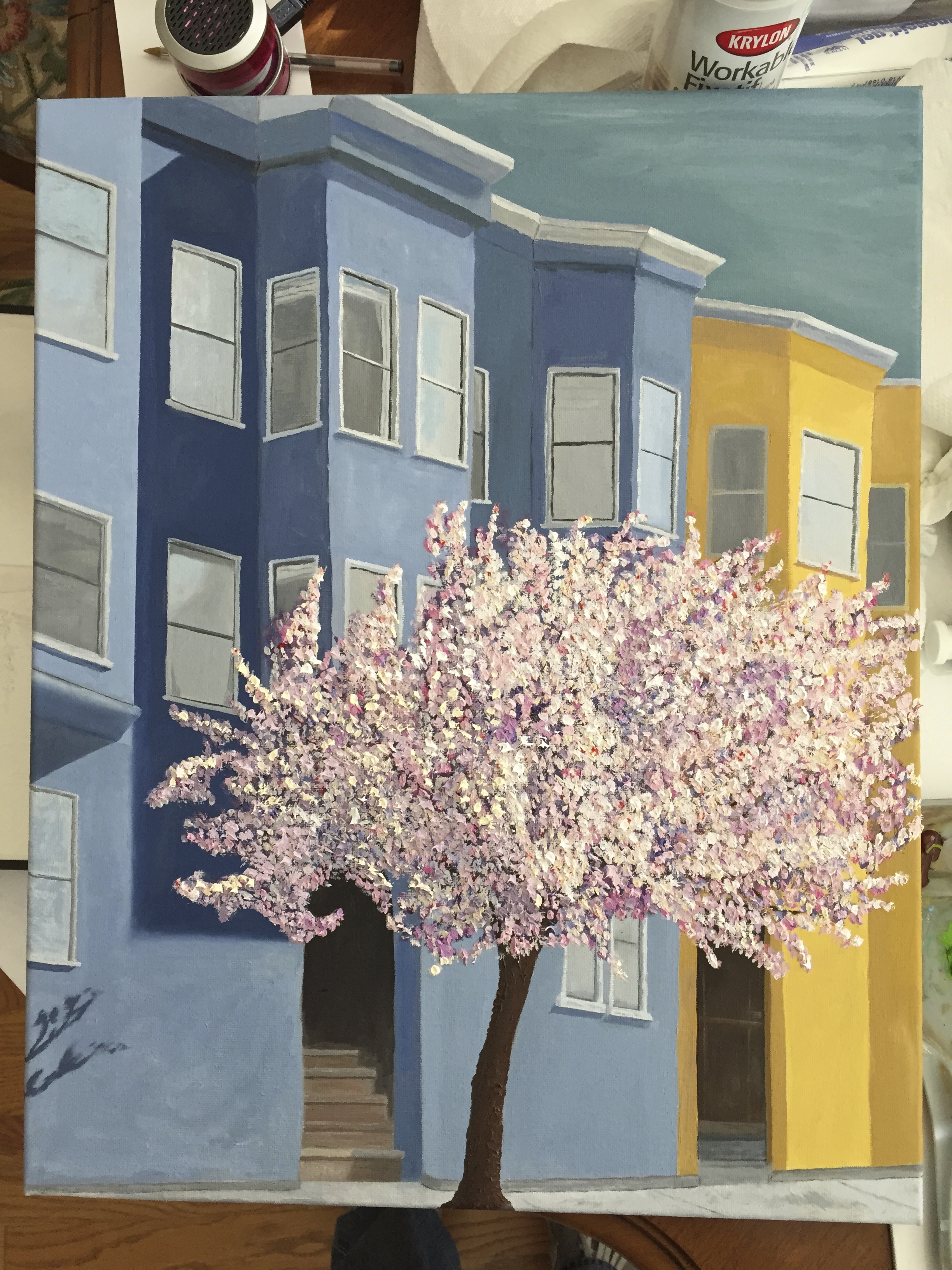
Overdue for this post, given that I finished this one a few weeks past, but better late than never. The final “touches” took more time than I thought, but it was important to get the depth of the tree right, which took some long steps out of my comfort zone with a very high value white to represent the bursting blossoms in bloom. It was a bright day, so the photo looked washed out and a little flat, so I went with my gut on what would work on the pseudo shady side (left side). Probably could have gone a little darker to add the right value contrasts, but at some point you have to say “done”!
In addition to the density and value range updates for the cherry blossom, I added more focus to the windows directly above the main doorway. Notice the curtains in their various states of being drawn up or back.
Having taken time to consider the finished painting for the past month, I’m happy with the technical variation and palette. However, as a composition I think it’s lacking. I tried to draw the viewer into the painting in a few ways: 1) the shape of the tree on left side curled around the entrance to the 2) main doorway with the stairs leading light steps up into the darkness, and 3) with more crisp details in the windows immediately around the top of the tree. There’s also some good compositional layout with the various angles of the building lines. That said, I don’t feel that the painting does enough to engage the viewer. I’d be interested to know what others think, so please offer up your criticisms, comments, guidance.

 Art Bern
